Start with what the label actually says
When older electrical equipment carries an Allis-Chalmers nameplate but its paperwork is missing, begin with the information you can already see safely. A clear exterior photo and a careful transcription of visible wording can help identify the equipment for an initial review. Record the label’s manufacturer name, equipment type, catalog or serial number, stated ratings, and any other legible markings. If a detail is obscured or unreadable, say so rather than guessing.
A nameplate rating is not proof of the voltage currently present in equipment, and it should not be described as live voltage. Keep those ideas separate when explaining the gear. If the equipment remains installed or operating, you may still ask about a sale using information already available to you. Never touch energized equipment. Do not open, operate, or approach it to get a better view, and do not enter an unsafe area to gather details.
Describe the assembly, not just the brand
“Allis-Chalmers gear” may identify a label, but it does not fully describe what an owner has. State whether the equipment appears to be switchgear, a switchboard, a motor-control center, a panelboard, a breaker, a busway assembly, an automatic transfer switch, or another type. If you are unsure, describe its known function and visible configuration without assigning a precise category. The buyer can review the available information and ask clarifying questions.
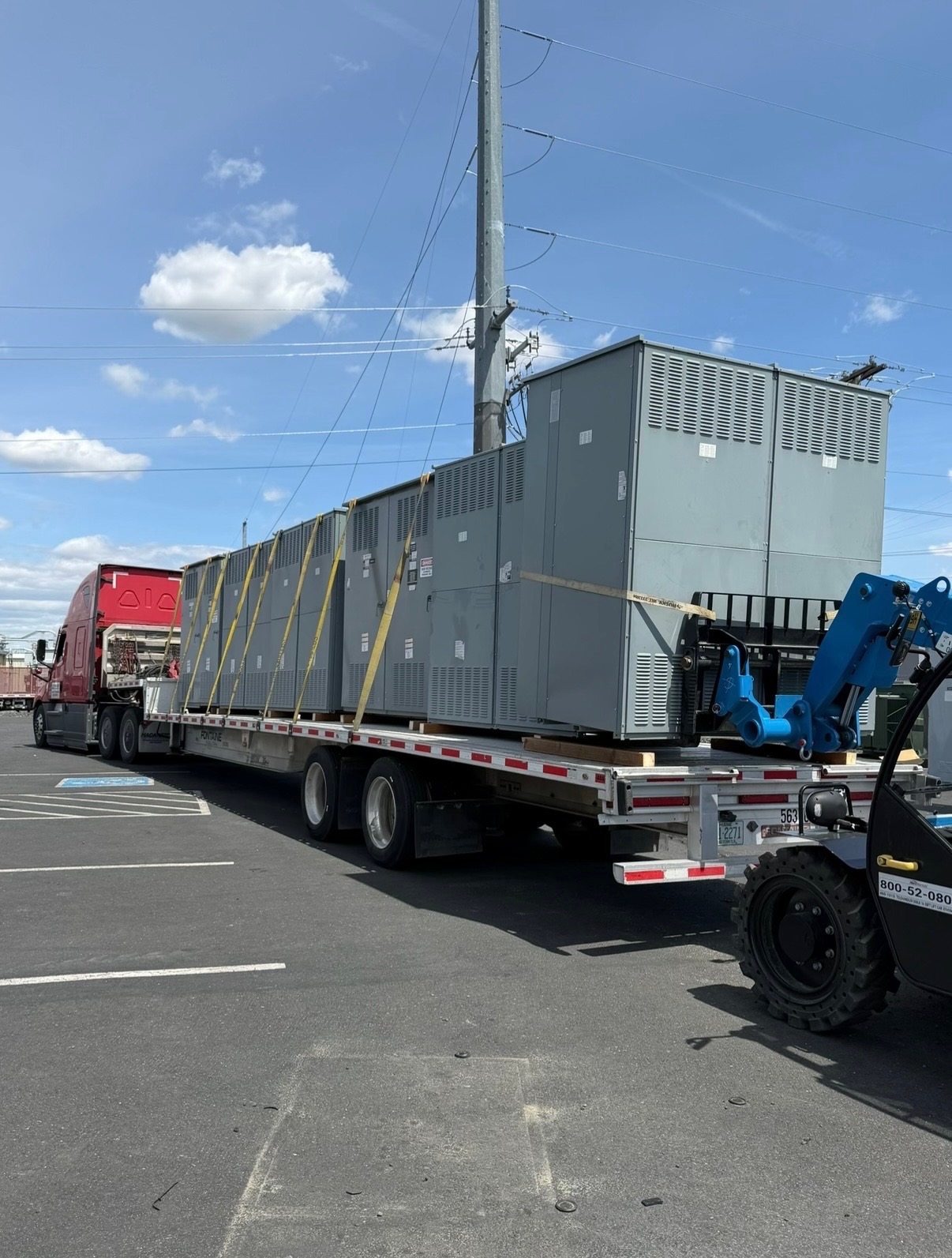
For a lineup or multi-section assembly, give the number of sections and, if known, how they are arranged. Mention visible differences among sections, such as a section that appears to contain metering or a main device, only when that observation is based on accessible information. Do not assume every section is complete or that connected sections share identical ratings. A count and a few clear exterior views can be more useful than a confident but unsupported description.
Make missing parts and uncertainty explicit
Known missing components can materially change how an assembly is understood. Describe parts that are known to be absent, such as a breaker, door, cover, or other component, and distinguish that knowledge from a visual impression. For example, “the breaker is known to have been removed” communicates something different from “the breaker is not visible in the available photo.” Do not remove covers or inspect inside to resolve the difference.
Use plain language for uncertain details: “not confirmed,” “label unreadable,” or “condition unknown” is more useful than filling a gap with a guess. If there are known concerns, such as incomplete sections or parts removed during prior work, share them as information you have been given or can safely observe. Do not claim that equipment has been tested, is operational, or is complete unless that status is actually established.
Share the context you already have
An initial inquiry can include the equipment’s location, ownership or authority to represent the owner, known condition, and any existing inventory or decommissioning records. A safely accessible exterior nameplate photo, general exterior photos, and an equipment list may help the buyer assess what is being offered. You do not need to obtain information that is inaccessible, and sparse documentation does not prevent you from asking whether the equipment may be of interest.
If the equipment is still installed, make that clear. Say whether it is in service, out of service, or whether you do not know; do not treat an uncertain status as a verified fact. You are not being asked to make equipment safe or prepare it for removal. Do not disconnect, move, lift, rig, load, ship, or haul it, and do not hire someone to perform those tasks as part of making an inquiry.
Understand the review and removal responsibilities
The business buys surplus, used, and decommissioned electrical equipment; it does not sell equipment or represent an Allis-Chalmers dealership or manufacturer affiliation. It considers equipment across voltage classes, including equipment from closed data centers and power plants. The actual label and available details matter more than a broad description of the brand, and a review does not guarantee that the equipment will be purchased.
If equipment is purchased, the buyer handles disconnects, crane and rigging work, loading, freight, and hauling. Freight is covered for purchased equipment. The seller does not perform or arrange those operations. A cash offer may be made after reviewing the information, but neither an offer nor a purchase is guaranteed. Payment for purchased equipment is upfront, and the seller is not required to test it.
Prepare a clear inquiry without overclaiming
For a concise description, identify the label as Allis-Chalmers, name the apparent equipment type if known, provide the visible section count, and note known missing parts. Add safely available label details, location, ownership authority, and known condition, while marking anything uncertain. This gives the buyer a grounded basis for reviewing legacy equipment even when drawings, manuals, or prior service records are unavailable.
Before sharing photos or records, consider whether they include information you are authorized to disclose. Keep the focus on details already available; there is no need to access restricted areas or approach equipment for a closer look. A precise account of what is known, what is missing, and what remains unknown is more useful than an elaborate description built on assumptions.