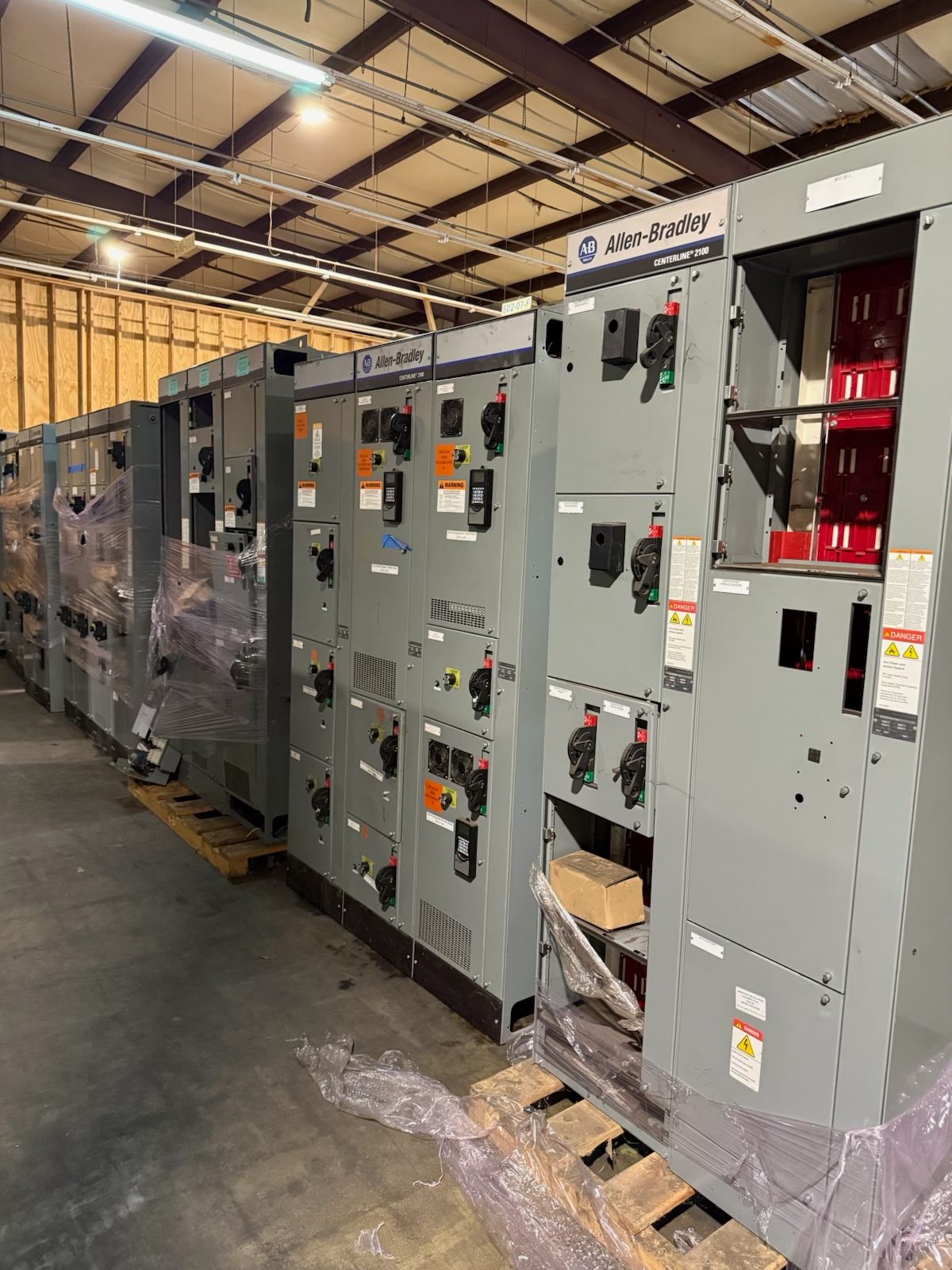
Identify whether the surplus is buckets or a complete MCC
When describing Eaton-labeled motor control center equipment, first distinguish individual buckets from a complete motor control center cabinet or lineup. A bucket is a unit associated with a particular MCC section; a cabinet or lineup may include multiple sections and other components. For an initial inquiry, say whether the equipment consists of loose buckets, installed buckets that remain part of a lineup, a complete cabinet, or a mixture. If you are unsure, describe what is visible rather than trying to classify it by removing anything.
This distinction helps the buyer understand what is actually being offered and avoid assuming that loose buckets include a cabinet, or that a cabinet includes every bucket or component shown in old records. The business buys surplus, used and decommissioned motor-control centers and related electrical equipment, but a purchase is not guaranteed. It buys equipment; it does not sell MCC buckets or act as an Eaton dealership.
Report quantities and visible markings as observed
Give an approximate or confirmed bucket count and explain how you arrived at it, if that is known. For example, distinguish a count taken from an existing inventory from a count estimated from a photograph or old equipment list. If buckets are already grouped or identified in existing records, those descriptions can help. Do not disturb installed equipment or remove covers, doors, buckets, or other parts to improve the count or expose a label.
Share Eaton nameplate or label details only when they are already safely accessible, such as text visible in an existing photo or on an exterior surface that can be viewed without approaching an unsafe area. Include other visible markings, such as a catalog or type designation, if legible. A partial, faded, or uncertain reading should be described as such, not presented as verified. The buyer can consider an inquiry without every marking being available.
Keep equipment ratings separate from present conditions
A label’s voltage rating describes equipment information; it does not establish the voltage present at the equipment now. Report a rating only as written on a safely accessible label, and distinguish it from any known information about whether the equipment is installed, operating, disconnected, or in storage. If present conditions are not known, say so. Equipment can be discussed based on information already available, including when it remains installed or operating, but no inquiry requires a seller to approach it or obtain inaccessible details.
Never touch energized equipment. Sellers must never open or operate equipment, approach energized equipment, or enter unsafe areas. Do not remove live parts or attempt to inspect the interior for a better description. Existing photographs, records, and safely accessible exterior information may be shared voluntarily; missing information is better identified as unknown than pursued through unsafe access.
Be specific about omissions and known condition
Describe known omissions plainly, especially where an existing record or prior inventory identifies a bucket as incomplete or notes missing components. Explain whether that information is confirmed or based on an older document. If no reliable inventory is available, state that rather than guessing. A buyer’s review can then account for the limits of the description without treating an assumed configuration as a verified one.
Share known condition in similarly careful terms: for instance, whether the equipment is described in facility records as surplus, used, decommissioned, or still installed. Do not claim that a bucket works, has been tested, or is complete unless that is supported by information you already have. Testing is not required to make an inquiry. The business considers equipment across all voltage classes, so an unfamiliar or incomplete rating is a reason to report uncertainty, not to rule out asking about it.
Provide the context needed for an equipment review
An authorized seller can provide the equipment’s location, ownership information, an approximate quantity, any existing equipment list, and available photographs. If the buckets are part of a larger cabinet or facility closure, explain that relationship and identify what is included in the proposed surplus. For equipment from a closed data center or power plant, existing records may help clarify whether the description refers to individual MCC buckets, sections, or a broader group of equipment.
Only share information you are authorized to provide and can access safely. There is no need to enter a restricted or unsafe space, create new photographs, or obtain details that are not readily available. A concise description that separates observed facts from estimates gives the buyer a practical starting point and leaves room to ask about any relevant gaps.
Clarify the proposed transaction and handling responsibilities
If the equipment is of interest, the business may make a cash offer, but neither an offer nor a purchase is guaranteed. For equipment it purchases, payment is upfront, and the seller is not required to test it. Freight is covered for purchased equipment. The buyer handles disconnects and the subsequent crane, rigging, loading, freight, and hauling; the seller does not perform or arrange those operations.
For an initial discussion, focus on what is already known about the Eaton-labeled buckets, their quantity, markings, omissions, location, and relationship to any complete cabinet. Do not open, disconnect, move, lift, load, ship, or haul equipment as part of preparing an inquiry. Keeping the description factual and the division of responsibilities clear allows the buyer to evaluate the surplus without asking the seller to handle equipment or enter an unsafe area.