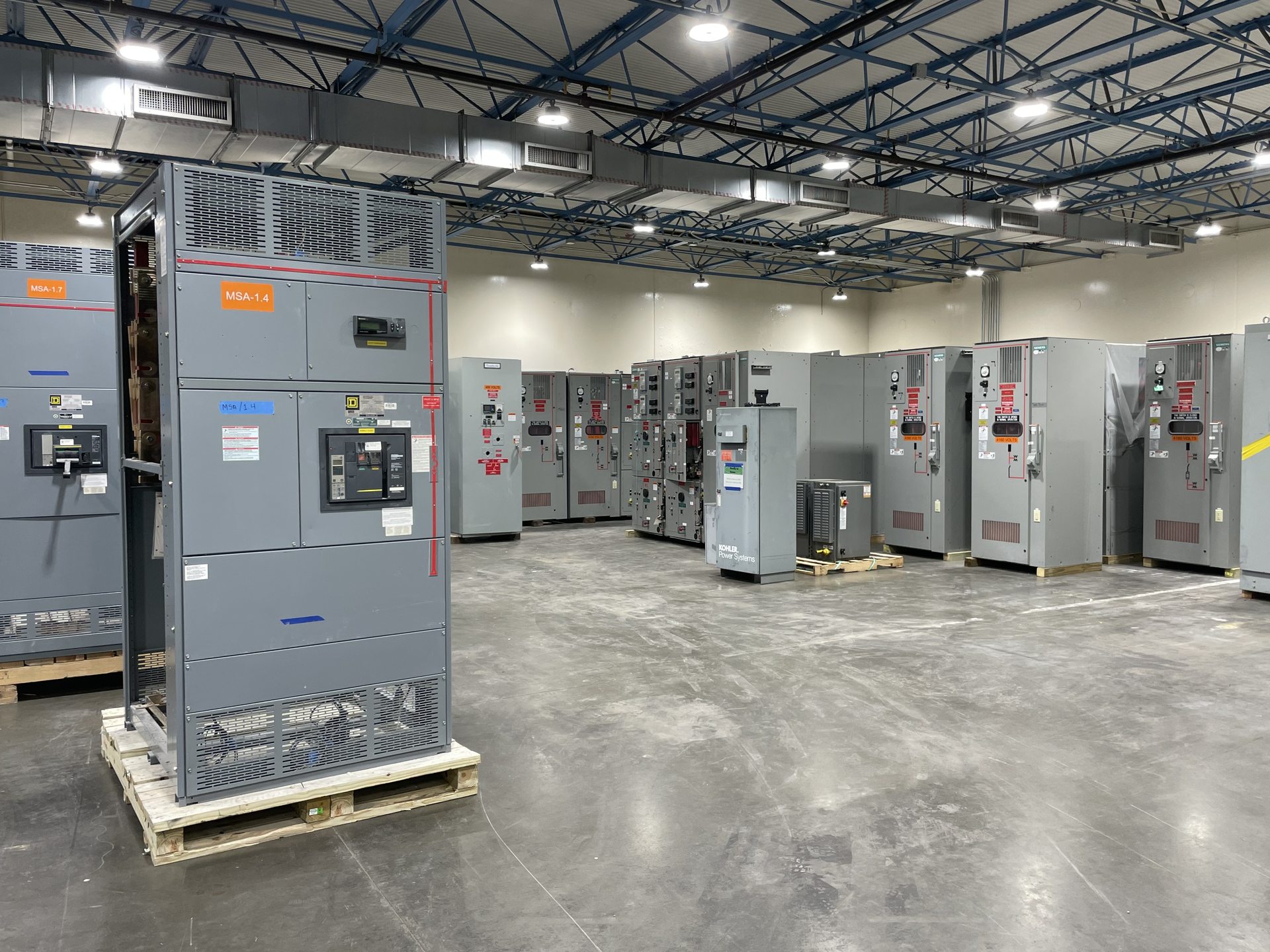
Start with the lineup, not an assumed model
If you are responsible for surplus Siemens-labeled metal-clad switchgear in Indiana, begin an inquiry with the identifying information already available to you. A lineup nameplate can help distinguish the equipment and its stated ratings, while the section count gives a basic sense of the lineup’s size. Neither detail requires you to identify a model family or make assumptions from appearance. If the nameplate is inaccessible, do not approach the equipment to retrieve it; share what you can safely confirm from existing records or a safe vantage point.
The label identifies the equipment as Siemens-labeled, but that does not imply a manufacturer affiliation or authorized dealership. The business buys used, surplus and decommissioned electrical equipment; it does not sell switchgear. A possible purchase depends on the details available and review of the specific equipment, so an inquiry is not a guaranteed offer.
Clarify what the lineup includes
State how many sections make up the lineup, if that count is known, and whether associated breakers are included in the equipment being considered. Those details can affect how the equipment is evaluated as a group. If breakers are absent, uncertain, or accounted for separately, describe that accurately rather than implying they are part of the lineup. Existing equipment lists, project records, or information from the responsible facility team may help answer the question without requiring anyone to inspect or handle the gear.
Also note whether the equipment is surplus, removed from service, or still installed or operating, if that status is already known. You may ask about equipment that remains installed or operating using information already available. Do not open, operate, approach energized equipment, or enter an unsafe area to gather details. Never touch energized equipment.
Separate nameplate ratings from present conditions
A nameplate rating is not confirmation of the voltage currently present at the equipment. When sharing electrical details, identify whether a value comes from a label, an existing record, or a verified statement from someone with direct knowledge. If the present condition or live voltage is unknown, say that it is unknown. This distinction helps prevent a stated equipment rating from being mistaken for a report about current operating conditions.
Condition can be described in similarly careful terms. You may share what is already known, such as whether the equipment is reported as complete, whether breakers are included, or whether the facility has recorded a known issue. Avoid presenting an assumption as a verified fact. Testing is not required for an inquiry or purchase consideration, and sellers should not test equipment for this purpose.
Share useful information without taking on site work
Along with the lineup nameplate and section count, information already available may include photographs, equipment lists, the facility location, ownership details, and a known condition summary. A clear explanation of what is included can be more useful than a large collection of uncertain technical claims. You do not need to obtain details that are inaccessible or require approaching equipment or entering an unsafe area. If a record is incomplete, describe the gap rather than trying to fill it through inspection.
Do not open or operate the gear, make it safe, disconnect it, move it, or arrange lifting, loading, shipping, or hauling as part of an inquiry. For equipment that is purchased, the buyer handles disconnects and physical handling, including crane, rigging, loading, freight, and hauling. Freight is covered for purchased equipment. These arrangements do not authorize a seller to perform work on the equipment or site.
Consider the transaction terms with the project context
The business considers equipment across voltage classes, including surplus or decommissioned gear from facilities such as data centers and power plants. Voltage class alone does not establish value or guarantee that a purchase will be made. Providing the known equipment description, location, included breakers, and project context can help the buyer assess whether to make a cash offer. No offer or purchase is guaranteed, and the information available may affect what can be evaluated.
For equipment that is purchased, payment is made upfront, and the seller is not required to test it. Confirm the proposed scope and handling arrangements before treating a potential transaction as settled. A preliminary discussion is not confirmation of a purchase, a final price, or a schedule.
Keep the inquiry within safe and clear boundaries
An owner or authorized seller can begin by sharing the information they already have and identifying who has authority to discuss the equipment. If the lineup is still operating, make that status clear without attempting to change its condition or access it for this conversation. If a detail is uncertain, mark it as unconfirmed; if information cannot be obtained safely, leave it out. This approach supports a useful review while keeping equipment access and site work out of the seller’s inquiry.