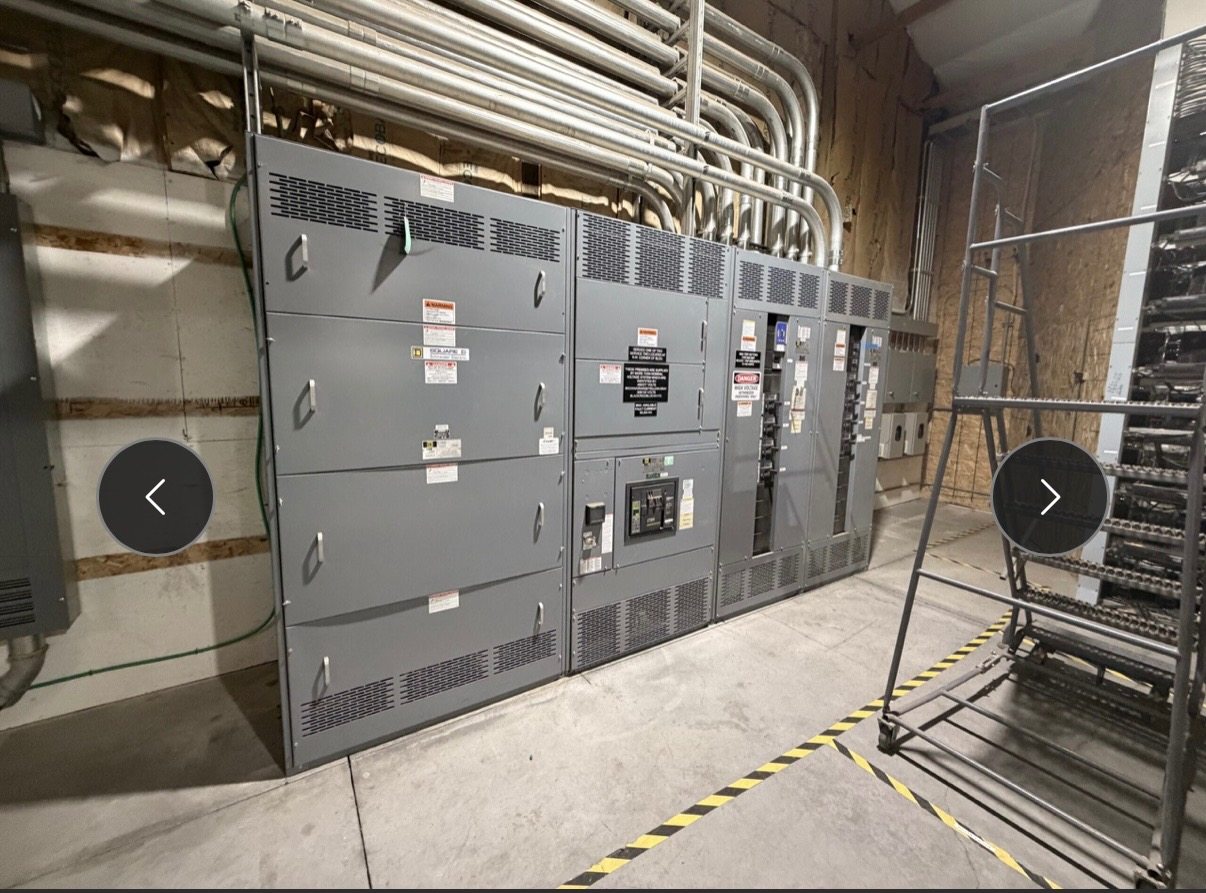
Identify the GE-labeled breaker you have
If you are considering surplus or used GE power breakers in Indiana, begin by describing what is actually present: a loose breaker, or a breaker that remains part of a switchgear lineup. That distinction helps the buyer understand whether the inquiry concerns an individual device or equipment associated with a larger assembly. A GE marking identifies the label visible on the equipment; it does not, by itself, establish the breaker’s complete configuration, condition, or compatibility with a particular lineup.
The business buys surplus, used, and decommissioned electrical equipment; it does not sell breakers or represent itself as affiliated with GE or an authorized GE dealership. An inquiry is a request for consideration, not a promise that the equipment will be purchased.
Record markings only when they are safely visible
For an initial description, share frame or model markings that are already safely accessible on the exterior. Other visible nameplate information, such as a rating or identifying label, can also help distinguish one breaker from another. A photo may be useful if it can be taken from a safe, accessible location without opening a compartment, approaching a hazard, or interfering with equipment.
Do not enter an unsafe area to find a label, and do not open or operate equipment to obtain details. Never touch energized equipment. Sellers must not approach energized equipment or attempt to inspect a breaker that cannot be viewed safely. If a marking is hidden or unavailable, say so; obtaining every detail is not a condition of making an inquiry.
Separate the breaker from the lineup around it
A loose breaker and a breaker installed within switchgear may require different information to assess the scope of a potential purchase. For a loose unit, safely visible frame or model markings and any known condition may be enough to start a conversation. For a breaker still included in a lineup, identify that relationship and, if available, share an existing equipment list or general description of the associated gear.
Do not remove a breaker or ask facility staff to prepare it for removal. The buyer handles disconnects and, for purchased equipment, crane and rigging work, loading, freight, and hauling. The seller should not perform or arrange those operations.
Describe ratings without guessing at live conditions
A breaker’s marked rating is not the same thing as the voltage present in a connected system at a particular moment. When reporting a rating, attribute it to the visible label or an existing record rather than presenting it as a measurement of live voltage. If the system voltage or operating status is unknown, state that it is unknown. Do not energize, test, or operate equipment to resolve uncertainty.
All voltage classes are considered for potential purchase, so an unfamiliar or high-voltage marking is not, by itself, a reason to withhold an inquiry. What matters is sharing accurate information that is already available and making clear which details are verified, which come from records, and which remain uncertain.
Share ownership, location, and known condition
A useful inquiry can include who is authorized to discuss the equipment, its general location, whether it is loose or part of a lineup, and any known condition or decommissioning status. Existing photographs, records, and equipment lists can help explain the situation, but only share information you can access safely and are permitted to provide. You do not need to create a new inspection report or make a condition claim beyond what you know.
Breakers may be considered from facilities including closed data centers and power plants, as well as other settings. The type of facility can provide context, but it does not establish condition or guarantee a purchase. Describe the equipment plainly rather than assuming its age, history, or remaining service life.
Understand the offer and handling arrangement
After reviewing the available information, the business may make a cash offer; a purchase or offer is not guaranteed. If equipment is purchased, payment is made upfront, testing is not required of the seller, and freight is covered. These terms apply to purchased equipment and should not be read as a promise of a specific price, purchase decision, or timeline.
For a purchase, the buyer handles disconnects and the physical handling and transportation arrangements, including crane, rigging, loading, freight, and hauling. The seller does not perform or arrange those tasks. Do not move, lift, disconnect, ship, or haul a breaker in order to pursue an inquiry.
Make a clear inquiry without taking equipment risks
Start with the information already available: whether the breaker is loose or in a lineup, safely visible GE and frame or model markings, general location, ownership or authorization, and known condition. If it remains installed or operating, you may inquire using those existing details; you do not need to make it safe, open it, or change its operating state before asking whether it may be considered.
Clear distinctions between visible facts and unknowns help the buyer evaluate the inquiry without encouraging unsafe inspection. If you cannot safely access a detail, leave it out and explain that it is unavailable. The buyer can consider the information provided and determine whether to make an offer, while all equipment handling for a purchase remains the buyer’s responsibility.