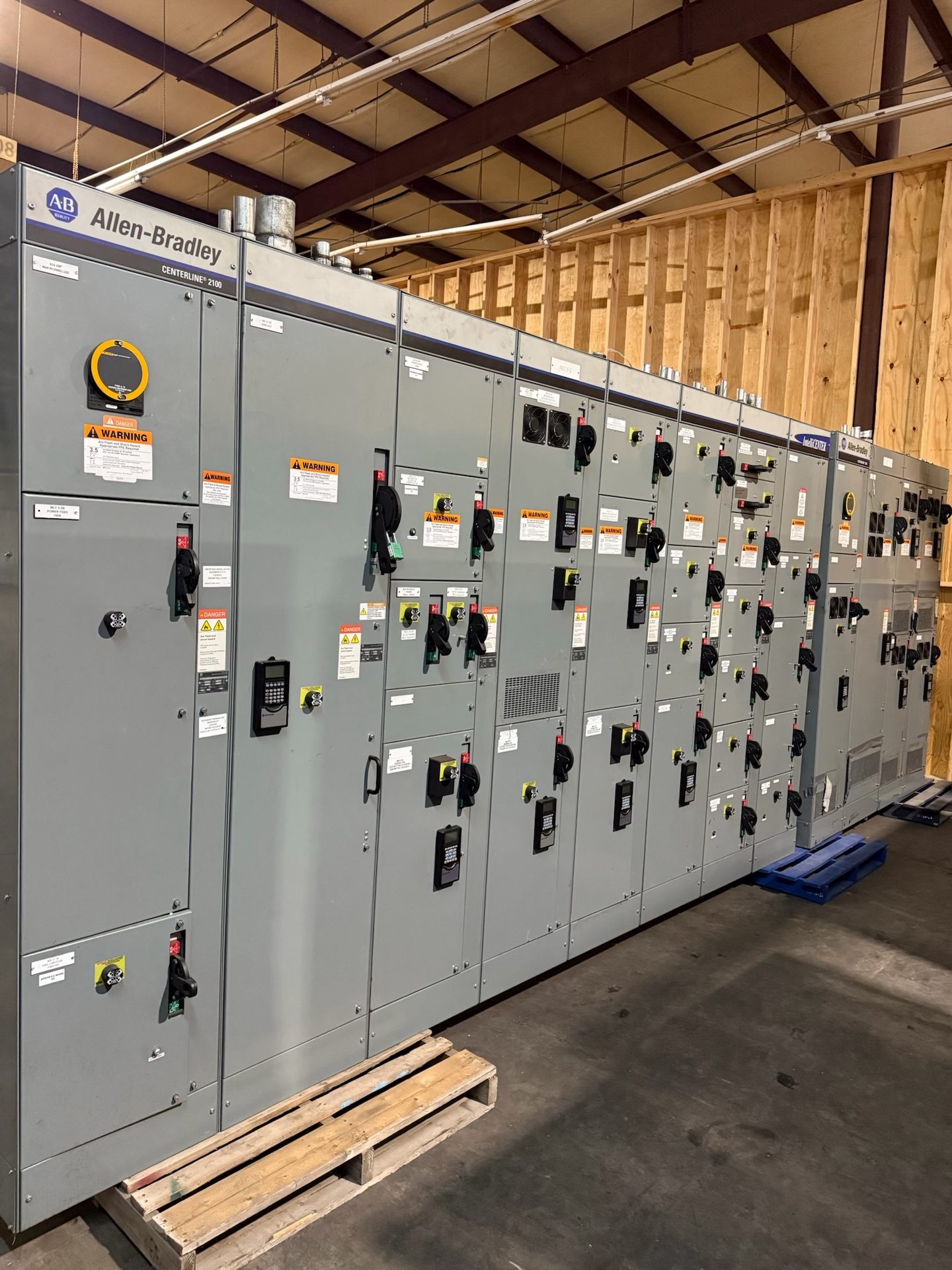
Start With the Lineup, Not Just the Name
If you are responsible for surplus Westinghouse-labeled switchgear in Indiana, begin by identifying the assembly as a whole. A lineup may contain multiple sections, different functions, and breakers or spare parts with their own manufacturer markings. The name on one breaker does not establish who manufactured the complete lineup, and a Westinghouse label on the lineup does not prove that every installed or loose component carries the same label.
This distinction helps an authorized seller describe what is actually available without guessing. Share the lineup’s assembly markings separately from any visible markings on breakers or spares. The buyer purchases equipment; it does not sell switchgear or represent a manufacturer. A manufacturer name is useful identification, not evidence of an affiliation or authorized dealership.
Describe What Is Included
Clarify whether the potential sale concerns a complete lineup, selected sections, installed breakers, loose spares, or some combination. If you already have an equipment list, photographs, or records, those can help explain the scope. Note any known gaps or items that are excluded, such as loose breakers retained for another project. Do not assume that a spare belongs to the lineup simply because it is stored nearby.
Useful descriptions can be straightforward: the number of sections shown in existing records, the lineup’s location, and whether breakers are installed or separately stored. Share details only when they are already available and safely accessible. If a marking cannot be read without approaching or opening equipment, leave it unknown rather than trying to obtain it.
Separate Ratings From Operating Conditions
Existing documentation or safely accessible exterior nameplate information may identify a voltage rating, current rating, or other lineup characteristics. A rating describes the equipment’s stated capability; it is not confirmation of the voltage present at the equipment now. Likewise, an old drawing or inventory entry may help identify a lineup but may not verify its current configuration. Label each detail as documented, observed, or uncertain when that distinction is known.
All voltage classes are considered, but that does not mean a particular lineup will receive an offer. If the equipment remains installed or operating, you may still inquire using information already available. Never touch energized equipment. Sellers must never open or operate it, approach energized equipment, or enter an unsafe area to gather information.
Share Condition Without Testing
Summarize known condition in plain terms: for example, whether records indicate the lineup was decommissioned, whether a section is reported missing, or whether its service history is unknown. Make clear what comes from records and what is uncertain. Avoid presenting an unverified assumption as a confirmed defect or a confirmed operating condition.
The seller does not have to test equipment to request consideration. Do not open, energize, operate, disconnect, or move gear to create new information. Existing photographs, equipment schedules, maintenance records, and exterior markings may be enough to begin a discussion; every field or document is not required.
Clarify the Offer and Payment Terms
Once the buyer has information to review, an authorized seller can ask whether the lineup may be suitable and request a cash offer. An offer or purchase is not guaranteed, and its terms depend on the equipment being considered and the information available. If a purchase is made, payment is upfront. Do not treat an inquiry as a confirmed transaction or assume a specific amount or completion date before terms are agreed.
For a lineup with mixed components, identify any items whose inclusion is unclear before treating the scope as settled. This reduces confusion between the assembly, installed breakers, and loose spares, while keeping the description accurate even when some manufacturer markings differ.
Know Who Handles Removal and Freight
For equipment that is purchased, the buyer handles disconnects, crane and rigging, loading, freight, and hauling, and covers freight. The seller does not perform or arrange those operations. You can provide the location and relevant access information already known, but do not attempt to prepare, disconnect, lift, load, ship, or haul the equipment. The buyer’s handling responsibilities do not make it appropriate for a seller to enter an unsafe area or work around energized gear.
Before proceeding, confirm which equipment is included, what information remains uncertain, and what terms apply to any purchase. A clear description of the Westinghouse-labeled assembly—and separate identification of other manufacturer markings—gives the buyer a more useful basis for review without overstating what is known.