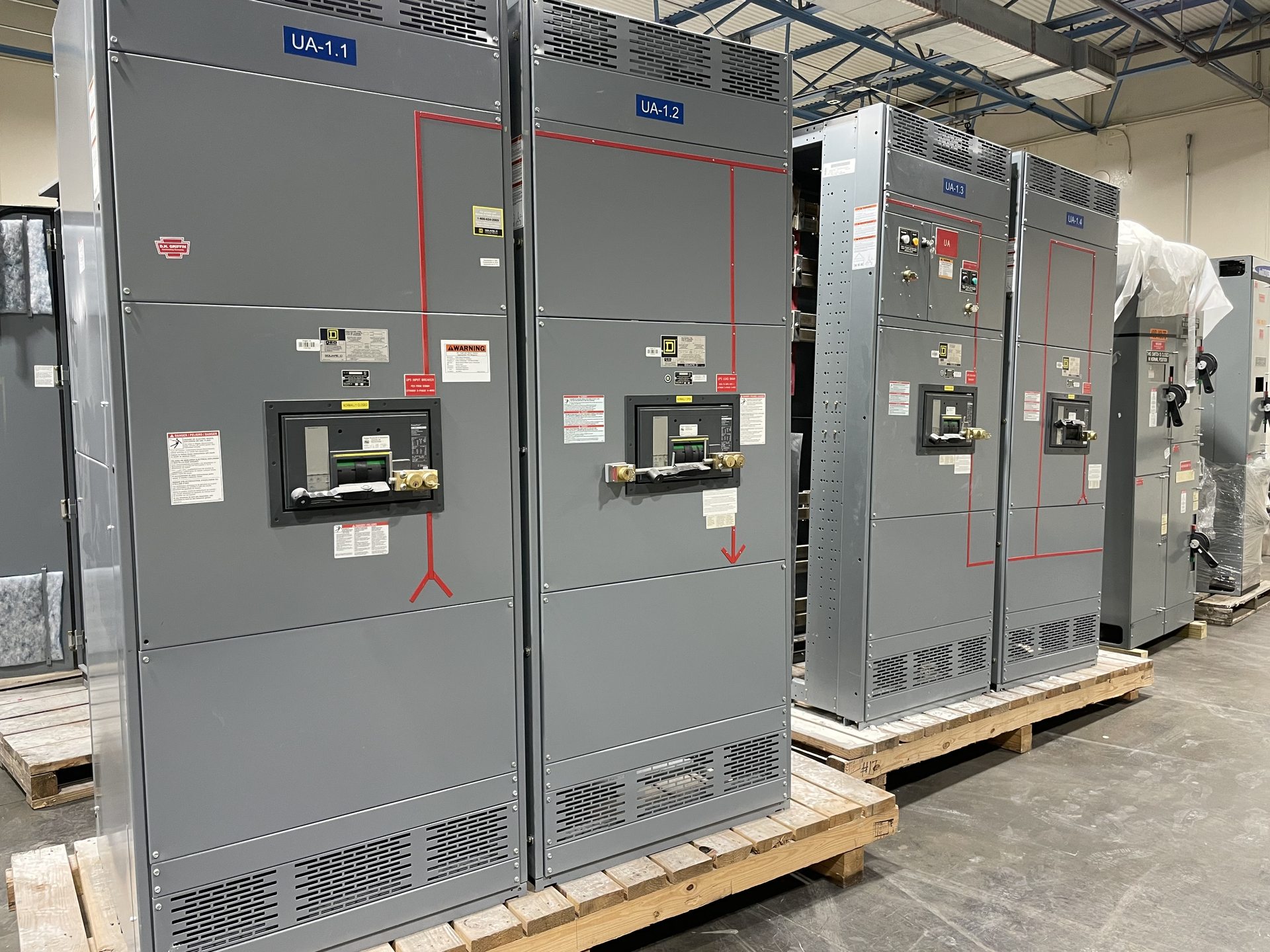
Start by identifying what the warehouse has
A warehouse electrical room may contain mounted panelboards, spare breakers, and other equipment that could be evaluated separately. When discussing a possible sale, describe what is present rather than assuming everything belongs to one category. A panelboard is the assembled panel equipment; breakers stored nearby or removed in the past are loose breakers. Their association with a panelboard, if known, is useful context, but does not make them the same item.
An authorized seller in Hendricks County can begin with information already available: approximate quantities, location, ownership, and whether the equipment is still installed, stored, or decommissioned. You do not need to obtain details that are inaccessible or enter an unsafe area to complete an initial inquiry.
Distinguish a mounted panelboard from loose breakers
For each mounted panelboard, note that it is an assembled unit and, if known, whether it remains in service or has been removed. For loose breakers, describe them as separate items and share any existing information about their quantity, type, or former use. If the relationship between a breaker and a particular panel is uncertain, say so rather than presenting a guess as a verified match.
This distinction helps an evaluator understand what is being considered without suggesting that a seller should handle or inspect the equipment. If warehouse records already identify panels or breaker groups by room, area, or equipment tag, those references may help clarify the inventory.
Share nameplate information only when accessible
If exterior nameplate details are already safely accessible, they can help describe a panelboard. Useful information may include the manufacturer, catalog or type designation, voltage rating, current rating, and other markings that are legible. A photograph of an accessible exterior label can also provide context. These details are helpful, not a requirement; do not approach equipment or enter a restricted or unsafe area to obtain them.
A rating is not necessarily the same as the voltage currently present at the equipment. Treat a nameplate value as a marked rating, and distinguish it from any separately verified information about the site’s electrical service. If a marking is unreadable or a value is unknown, identify that uncertainty plainly instead of estimating.
Describe condition without testing
Share condition information that is already known, such as whether a panelboard is recorded as surplus, decommissioned, or part of an operating facility. Existing maintenance notes or inventory records may be useful, but testing is not required to make an inquiry. Do not open, operate, or test a panelboard or breaker for a sale discussion, and do not approach energized equipment.
Never touch energized equipment. Sellers must not enter unsafe areas or take action to make equipment accessible. It is possible to ask about equipment that remains installed or operating using information already on hand; its present status should simply be described accurately, if known.
Give enough context to assess the proposed equipment
A concise inventory can identify each panelboard separately, distinguish it from loose breakers, and include available quantities, location, ownership, and known condition. If the equipment comes from a warehouse closure, facility change, or surplus disposition, that background may explain why it is being offered. Share only information you are authorized to provide and can access safely.
The buyer considers used, surplus, and decommissioned electrical equipment across voltage classes, including panelboards and breakers. An inquiry is not a promise of purchase, and a cash offer is not guaranteed. Evaluation depends on the actual items and the information available; uncertainty about a rating, condition, or equipment history should be stated rather than filled in with assumptions.
Clarify payment and handling responsibilities
For equipment that is purchased, payment is made upfront, and the buyer covers freight. The seller is not expected to test the equipment. The buyer handles disconnects and the physical arrangements for crane service, rigging, loading, freight, and hauling. Sellers should not disconnect, move, lift, rig, load, ship, or haul equipment, or arrange those operations themselves.
These terms apply to a purchase, not to every inquiry: equipment may be reviewed without a guaranteed offer or sale. When preparing an initial description, focus on the distinction between mounted panelboards and loose breakers, safely available nameplate details, and known site information. That gives an evaluator a practical starting point without asking facility personnel to inspect or handle electrical equipment.