Start with a separate inventory for the upgrade
When a commercial property upgrade replaces electrical distribution equipment, make a simple inventory of the surplus items rather than describing everything as one package. List switchboards, busway, panelboards, motor-control centers, breakers, automatic transfer switches, switchgear, or unit substations as separate equipment types where applicable. Give each line its own quantity and identify whether it is a complete assembly, a section, or a group of components, if that information is already known.
Separating the categories helps a buyer assess what is actually available. A building may have several switchboard sections but only a short run of busway, for example, and those are not interchangeable descriptions. Include equipment removed as part of the upgrade as well as items still installed, if you are authorized to discuss them. An inquiry does not require you to approach or access equipment that is unsafe.
Record known ratings without guessing
Share rating information from records or safely accessible exterior nameplates when available. Depending on the equipment, useful details may include voltage rating, ampere rating, interrupting rating, frequency, and manufacturer or catalog information. The specific label matters: a rating describes equipment capability or classification, not necessarily the voltage present at that moment. Do not present a nameplate rating as a measurement of live conditions.
If a detail is missing, unreadable, or uncertain, say so plainly rather than estimating. You do not need to obtain inaccessible information or open equipment to complete an inventory. Existing equipment schedules, project documents, photographs already on hand, and safely accessible exterior markings can help establish what is known while keeping verified facts distinct from assumptions.
Explain the condition and project context
For each item, describe only the condition you know. It may be surplus from a planned upgrade, decommissioned, stored, or still part of an operating installation. If records indicate whether components are present or whether the equipment was previously removed from service, include that context; do not claim a condition has been verified unless it has. Testing is not required to make an inquiry, and sellers should not test equipment for this purpose.
Project context can help explain why quantities are grouped as they are. A replacement may involve multiple distribution areas, and equipment identified by building, room, lineup, or project phase may be easier to distinguish in an inventory. Use location information already available and avoid entering restricted or unsafe areas to gather it.
Use photos and documents you already have
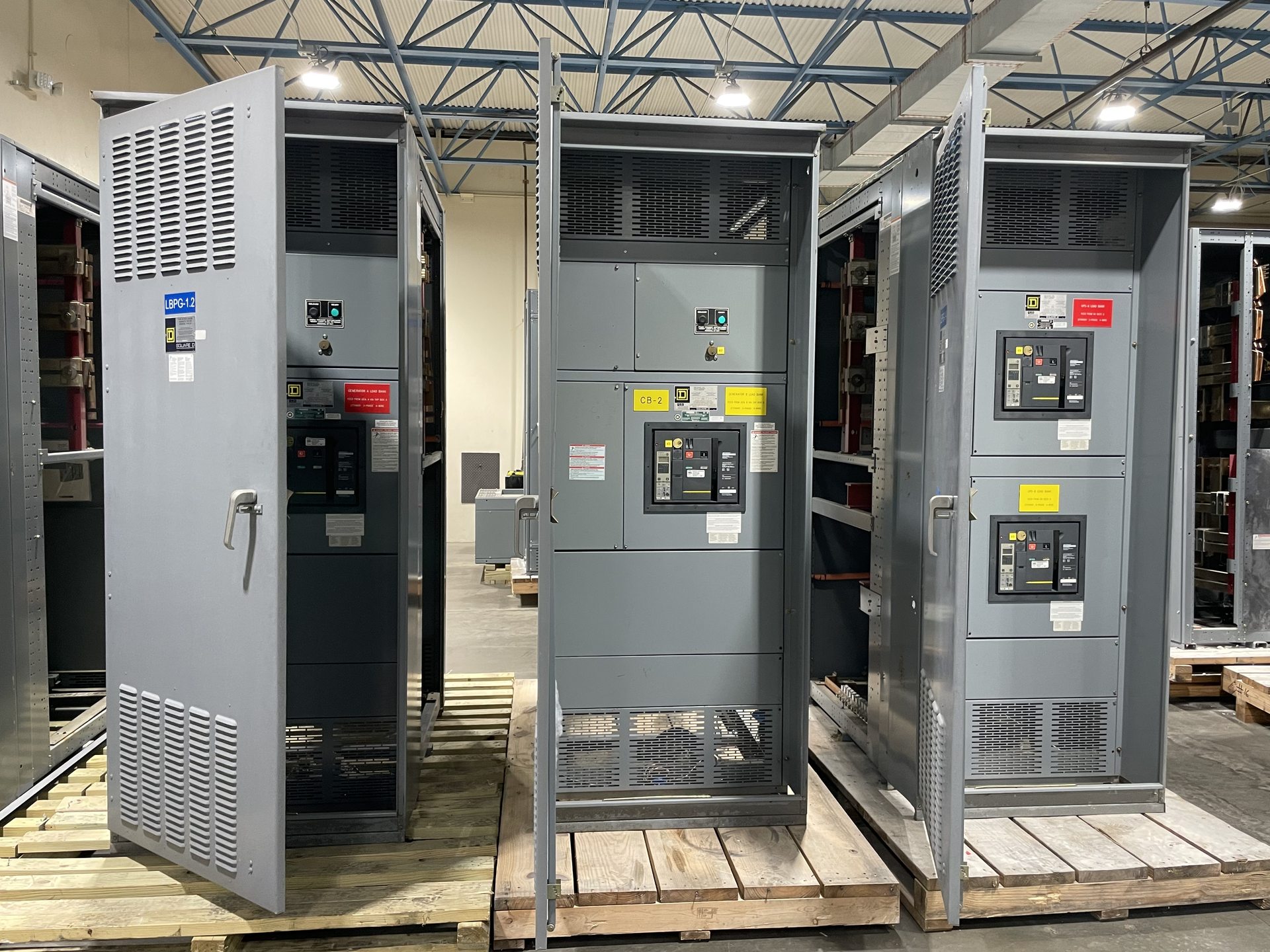
Existing photographs can clarify the equipment’s exterior, arrangement, and visible labels. Pair an image with an inventory description so the buyer can tell which item or group it represents. Equipment lists and other records may also help connect quantities to known ratings. Share only information you are authorized to provide, and do not create new photos by approaching equipment that may be energized or otherwise unsafe.
Never touch energized equipment. Sellers must not open, operate, or approach energized equipment, and must not enter unsafe areas. If equipment remains installed or operating, you may still ask about it using information already available to you. You are not being asked to make it safe, de-energize it, or change its operating state before discussing a possible sale.
Clarify ownership and location
State who owns the equipment or who is authorized to represent the owner, and identify its current location as accurately as you safely can. For a property upgrade, it can be useful to note whether different groups of equipment are in different areas or at different sites. You do not need to move items or inspect locations to provide information that is not already accessible.
Equipment value and possible purchase interest depend on the particular items and the information available, so an inquiry does not guarantee an offer or a purchase. The buyer considers surplus, used, and decommissioned electrical distribution equipment across all voltage classes, including equipment from commercial properties and closed facilities. A cash offer can be considered after the equipment and circumstances are reviewed, but no minimum value or outcome should be assumed.
Understand handling and freight responsibilities
For equipment purchased, the buyer handles disconnects, crane and rigging, loading, freight, and hauling, and covers freight. The seller does not perform or arrange those operations. This distinction is important when planning an upgrade: keep your inventory and project coordination separate from physical handling, and do not move, lift, disconnect, load, ship, or haul equipment to support an inquiry.
If the equipment is still installed, explain that status using information you already have. The buyer can consider that context when discussing a potential purchase. Do not hire someone or ask facility personnel to carry out electrical or handling work for the purpose of obtaining an offer.
Make the inquiry useful for a purchase review
Send the inventory with quantities, known ratings, condition notes, location, ownership or authorization information, and any relevant existing photos or records. It is acceptable to mark details as unknown. This gives the buyer a clearer basis to review a mixed set of switchboards, busway, and other distribution equipment without treating unlike items as one undifferentiated lot.
For purchased equipment, payment is upfront, testing is not required, and freight is covered. These terms do not guarantee that any particular equipment will be purchased or establish a purchase timeline. A concise, accurate account of what the upgrade makes available—and what remains uncertain—helps both sides determine whether further discussion is appropriate.