Start with ownership, not the equipment label
Campus electrical assets can serve several buildings while appearing on a single facilities inventory, or belong to a building even when maintained by a central department. Before asking about a sale, identify who owns the equipment and who is authorized to speak for that owner. Depending on the campus, responsibility may rest with a facilities department, a property owner, a public institution, or another organization. If ownership or authority is shared, clarify that internally before presenting the equipment as available.
Describe the asset’s role in the distribution system and the buildings or rooms it serves. A switchboard in one building may feed other locations, while equipment in a utility or electrical room may support only that building. This context helps distinguish equipment that could be considered for purchase from gear that must remain part of campus operations.
Separate potential surplus from equipment staying in service
Make clear which assets are being considered and which must remain in service. If a campus project affects only part of a distribution system, explain that boundary in terms already known to your team, such as building names, room identifiers, or existing equipment records. Do not imply that connected or nearby equipment is included merely because it appears in the same room or inventory.
Equipment may still be installed or operating when you first inquire. You can share information already available about it without approaching it, opening it, or changing its status. Never touch energized equipment. Sellers must not open, operate, or approach energized equipment, and must not enter areas they consider unsafe. There is no need to make equipment safe or take it out of service just to ask whether it may be considered.
Share records you already have
An initial description can include equipment type, manufacturer and identifying details if they are recorded, the campus location, known ownership, and the reason the asset may be surplus. Existing equipment schedules, project documents, and inventory records can help explain the situation. If a safely accessible exterior nameplate has already been documented, its details may be useful; do not approach equipment or enter a restricted or unsafe area to obtain them.
Keep confirmed information distinct from estimates or unknowns. A label may state a voltage rating, but that rating is not proof of the voltage present at the equipment now. If a record is incomplete, say so rather than guessing. Photos already available to you may provide context, but an inquiry does not depend on having a complete photo set, test report, or equipment history.
Explain the equipment and its condition accurately
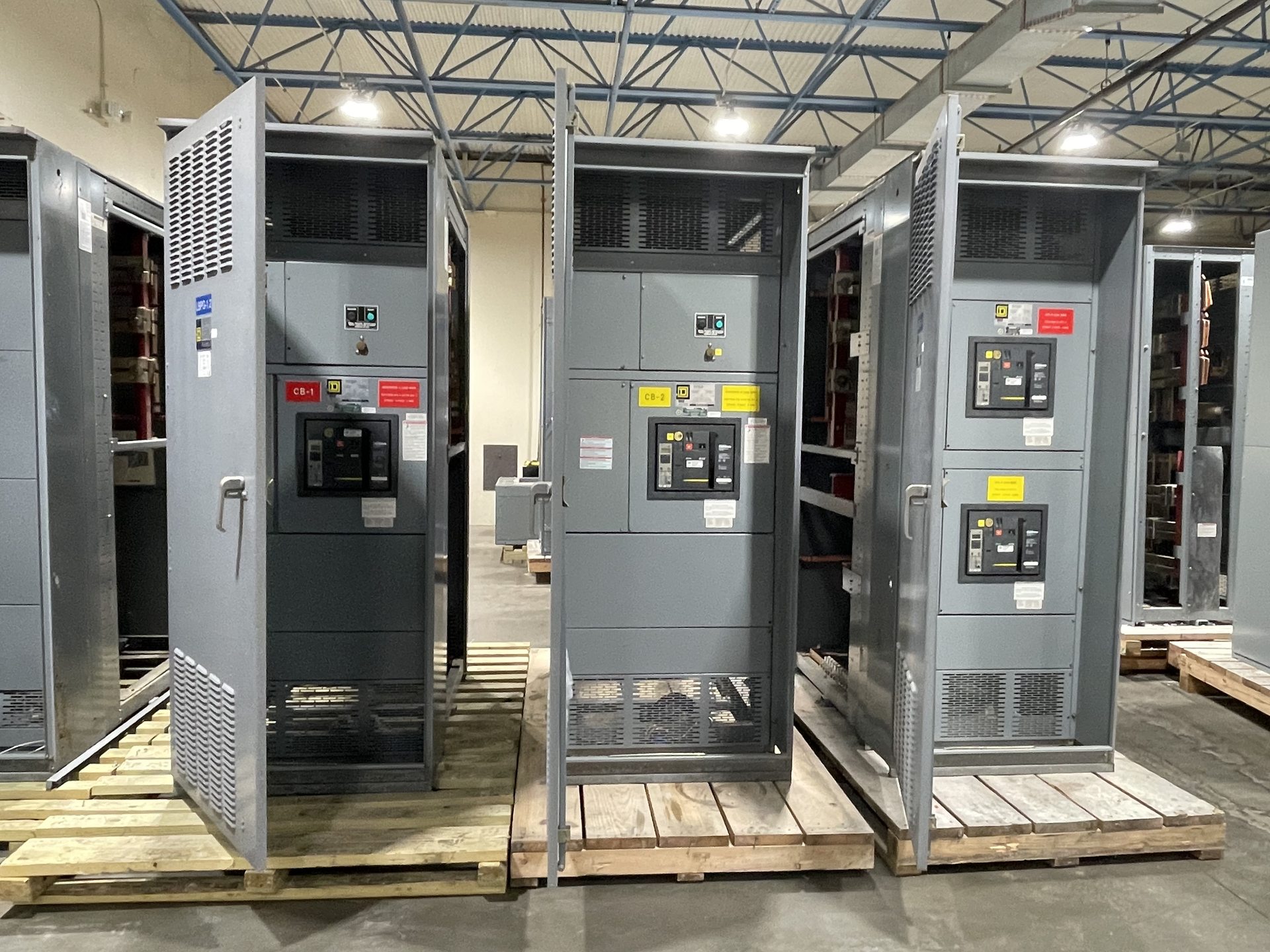
Campus distribution assets may include switchgear, switchboards, motor-control centers, panelboards, busway, automatic transfer switches, breakers, or unit substations. These categories are not interchangeable: describe the actual equipment type as your records identify it, and explain whether the proposed scope covers an entire assembly or particular assets. If you are unsure of a classification, say that it is uncertain.
Provide known condition information, such as whether records describe equipment as surplus, used, decommissioned, incomplete, or in place. Do not present an assumption as a verified condition, and do not arrange or perform testing to support an inquiry. The buyer considers equipment across voltage classes, including assets from closed data centers and power plants, but consideration does not guarantee a purchase or an offer.
Clarify scope before discussing a cash offer
For a campus inquiry, connect each proposed asset to its location and service context. Mention buildings or rooms involved and identify any equipment that is explicitly excluded because it will stay in service. If multiple departments or projects are involved, separating their equipment in the description can reduce confusion about what is being evaluated. You need not resolve technical details that are not already available to you.
The business buys surplus, used, and decommissioned electrical equipment rather than selling equipment to campus buyers. It may make a cash offer after considering the information provided, but an offer or purchase is not guaranteed. For equipment it purchases, payment is upfront, and testing by the seller is not required. These terms do not establish that a particular asset qualifies or determine its value in advance.
Know who handles purchased equipment
If a purchase proceeds, the buyer handles disconnects, crane and rigging work, loading, freight, and hauling, and covers freight for purchased equipment. The seller does not perform or arrange those operations. Do not attempt to move, disconnect, lift, rig, load, ship, or haul equipment as part of making an inquiry. Keep the initial discussion focused on ownership, scope, location, and information already available.
Before sharing a campus asset for consideration, make sure the person communicating is authorized and that the description clearly distinguishes possible surplus from equipment required for ongoing service. That practical boundary, along with honest notes about what is known and unknown, gives the buyer a useful basis to assess whether the equipment may fit a purchase review without asking campus personnel to undertake electrical or handling work.