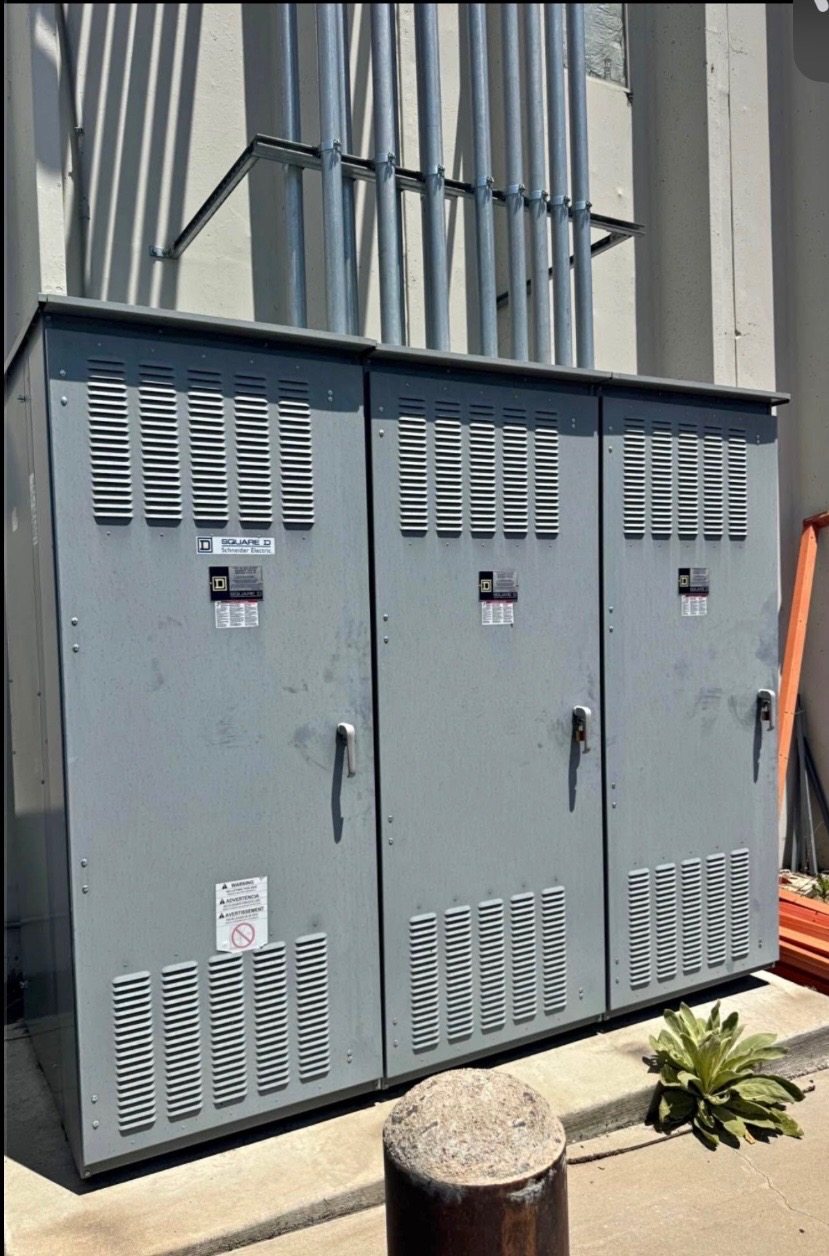
Describe the switchboard as a complete assembly
When discussing a commercial switchboard in Allen County, begin with what the equipment is and how it is arranged, rather than relying on a broad description such as “old electrical gear.” If information is already available, share the manufacturer, identification or catalog details, approximate age, and the service or building area associated with it. A safely accessible exterior nameplate can help clarify the equipment’s identity, but do not approach the switchboard to retrieve information. If a detail cannot be reached safely, say so or leave it unknown.
Section count is especially useful. Describe how many sections make up the switchboard and, if known, which sections belong to the same assembly. Explain what will remain attached or included at turnover, such as metering compartments, distribution sections, or related equipment, and what is not part of the proposed sale. Do not assume that a component is included just because it appears beside the switchboard in a photograph or equipment list. A clear description helps the buyer evaluate the actual scope being offered.
Separate known ratings from assumptions
Share rating information as it appears on available labels or records, including voltage, current, and any other identifying ratings that are documented. A marked voltage rating describes equipment capability; it does not confirm the voltage present at the site now. If the switchboard’s current operating status or condition is unknown, state that plainly rather than presenting an estimate as a verified fact. Existing photos, maintenance records, or an equipment schedule may provide useful context, but no particular document is required to begin a discussion.
The buyer considers equipment across all voltage classes, so an unfamiliar or less common rating is not by itself a reason to withhold an inquiry. Testing is not required for a potential purchase. Sellers should not open, operate, test, or approach energized equipment to answer questions. Never touch energized equipment. You may inquire about a switchboard that remains installed or operating using information already available to you.
Make photographs and records useful
If you already have photographs that can be shared safely, exterior views and existing images of the full lineup can help show section count, general configuration, and visible condition. Do not take a photograph if doing so would require entering an unsafe area or approaching equipment. An existing equipment list, project inventory, or decommissioning record can also help identify what is being considered. These materials are helpful, not prerequisites; explain any gaps instead of trying to obtain information that is inaccessible.
Describe known condition in practical terms: for example, whether records identify the switchboard as operating, removed, stored, or awaiting a site project. Distinguish those records from a present inspection. If there is known damage, missing equipment, or uncertainty about included sections, disclose it as known or uncertain rather than guessing at its effect. This gives the buyer a more accurate basis for reviewing a possible cash offer without asking the seller to test or alter the equipment.
Clarify ownership and site authority
Before discussing a transaction, establish who owns the switchboard and who is authorized to approve its sale. Facility personnel may know the equipment well but may not control the property or have authority to transfer it. If ownership, asset approval, or project responsibility rests with another party, identify that decision-maker and coordinate the inquiry accordingly. This prevents confusion about whether the equipment can be included and who can confirm the proposed scope.
Share the site location at a level that allows the buyer to understand where the equipment is, along with any known access or scheduling constraints that affect a potential turnover. Do not enter restricted or unsafe areas to gather details. A seller can provide information already available and coordinate with whoever controls the site; the seller should not undertake equipment handling or arrange hazardous work as part of making an inquiry.
Define the turnover boundary before scheduling
Agree on what the buyer would be purchasing and what will remain at the site. For a switchboard, that means revisiting the section count and the attached or included components, as well as noting any adjacent equipment that is not part of the offer. If the scope changes, such as a section being retained for another project, communicate that change before finalizing arrangements. Specific boundaries reduce the chance that the parties are discussing different versions of the same assembly.
Coordinate the proposed turnover date with the person or organization that controls the site. Account for the project schedule and any access windows already established by that authority, without assuming that a particular date is available. For equipment purchased by the buyer, the buyer handles disconnects, crane and rigging arrangements, loading, freight, and hauling. The seller does not perform or arrange those operations and should not move or prepare the switchboard for removal.
Review the purchase terms, not just the equipment
The business buys surplus, used, and decommissioned switchboards; it does not sell switchgear. A purchase is not guaranteed, and providing information does not commit either party to a transaction. If the buyer makes an offer, confirm that it reflects the equipment scope and the site turnover being discussed. For equipment purchased, payment is upfront, testing is not required, and freight is covered by the buyer. These terms can help an authorized seller assess the proposal, but they do not establish that an offer will be made or set a particular price or schedule.
Before accepting any proposal, make sure the person with authority understands which sections and attachments are included, who controls the site turnover date, and what responsibilities the buyer will handle for a purchase. Keep statements about condition and ratings tied to information actually available. A careful account of scope, ownership, and timing gives both parties a clearer basis for deciding whether to proceed.