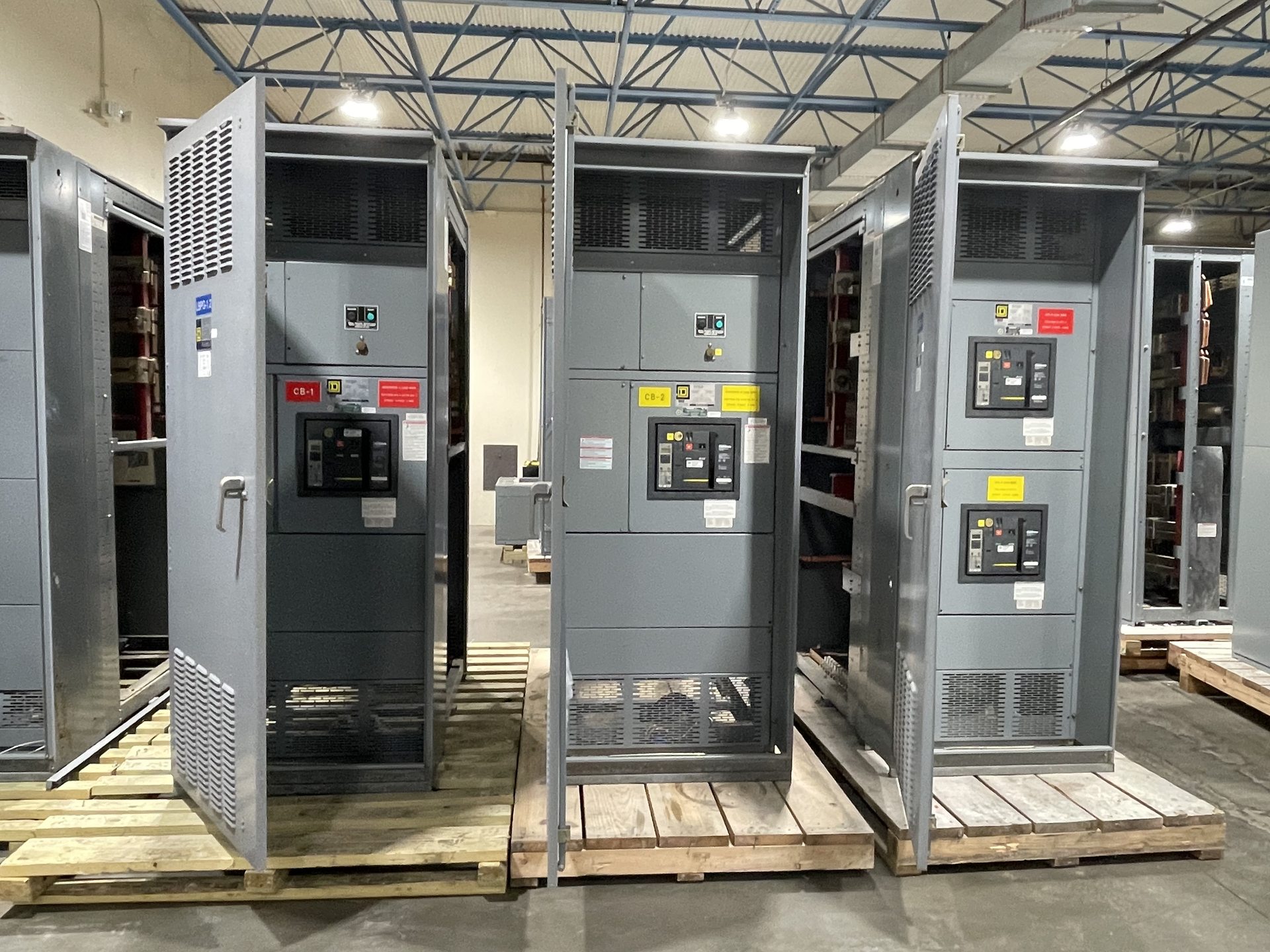
Describe the lineup as it exists, not as a single assumed unit
A switchgear lineup may be presented as one installation even when only some sections are available for sale. A useful first description distinguishes the sections under consideration from the sections that will remain in place. This matters whether the equipment is surplus, decommissioned, or still installed or operating. You may ask about a potential sale using information already available; do not approach or operate equipment to gather details.
When contacting a buyer, identify the equipment as a complete lineup, a group of sections, or one or more individual sections, as best you can tell. If you are unsure whether a section is part of the lineup or a separate assembly, state that uncertainty rather than treating an assumption as confirmed. The company buys used, surplus and decommissioned switchgear; it does not sell replacement sections or provide installation services.
Make the included and excluded sections clear
Describe which sections are included in the potential sale and which are excluded. For example, if an available group sits between sections that will remain, say that it is a partial lineup and identify the adjoining sections as excluded. If the entire lineup is being considered, say so, while noting any uncertainty about components or boundaries. A drawing, equipment list or other record already on hand can help clarify the scope, but you do not need to obtain inaccessible information.
A simple written description can name the sections in order using existing labels or identifiers, if available. Avoid relying only on a total section count when the lineup has gaps, mixed equipment, or sections with different functions. If labels are missing or unclear, explain that instead of guessing. Accurate scope helps the buyer assess what is being offered without assuming that adjacent equipment is included.
Explain where the sections sit in relation to one another
For a partial group, describe its position within the larger lineup as far as existing records or safely accessible exterior information allow. You might say that the available sections are at one end, in the middle, or separated from other sections, and note whether adjacent sections remain in place. If you cannot establish the sequence, say that the arrangement is not confirmed. Do not enter an unsafe area or approach equipment to resolve a question.
Photos may help show the exterior arrangement when they are already available or can be shared safely. A site plan or lineup schedule may also show boundaries and neighboring sections. These materials can provide context, but no single image or record should be treated as proof of details it does not show. Never touch energized equipment.
Share ratings and condition as documented
Provide nameplate information only when it is already available and safely accessible, or share existing records that identify the equipment. Useful details may include the manufacturer, type of equipment, section identifiers and listed ratings. A rating printed on a label is not the same as a measurement of live voltage. Report the label information as a rating, and do not describe it as verified operating voltage unless that fact is independently documented.
Describe known condition carefully. If a record identifies a section as damaged, incomplete, or previously in service, relay that information and its source when known. If the condition has not been assessed, say so. Testing is not required to discuss a sale, and sellers should not open, operate or test equipment to answer questions. The company considers equipment across voltage classes, but an inquiry or cash offer is not guaranteed.
Identify the ownership and sale boundaries
Clarify who owns the sections and who is authorized to discuss their sale. If equipment belongs to a facility, project, or other organization, confirm internally who can represent it before sharing an offer for consideration. Also identify any known limits on the proposed scope, such as sections reserved for continued use or components not included. This keeps the discussion focused on equipment the seller is authorized to offer.
Location information can help distinguish one lineup from another, especially when a site has multiple electrical rooms or records use different names. Share the location already known to you, without entering restricted or unsafe spaces to confirm it. If the equipment remains installed or operating, state that fact if known; it does not prevent an initial inquiry.
Know who handles equipment after a purchase
For equipment purchased by the company, the buyer handles disconnects, crane and rigging arrangements, loading, freight and hauling. The seller is not asked to perform or arrange those operations. Freight is covered for purchased equipment, and payment is upfront, but neither a purchase nor a particular price is guaranteed. The seller does not need to test equipment as a condition of making an inquiry.
These responsibilities are useful to clarify when comparing a partial-section proposal with one for a complete lineup. Keep the scope explicit so the buyer can evaluate precisely what is available and what remains. The company buys switchgear and other electrical equipment rather than selling, installing, or arranging work on equipment it has not purchased.