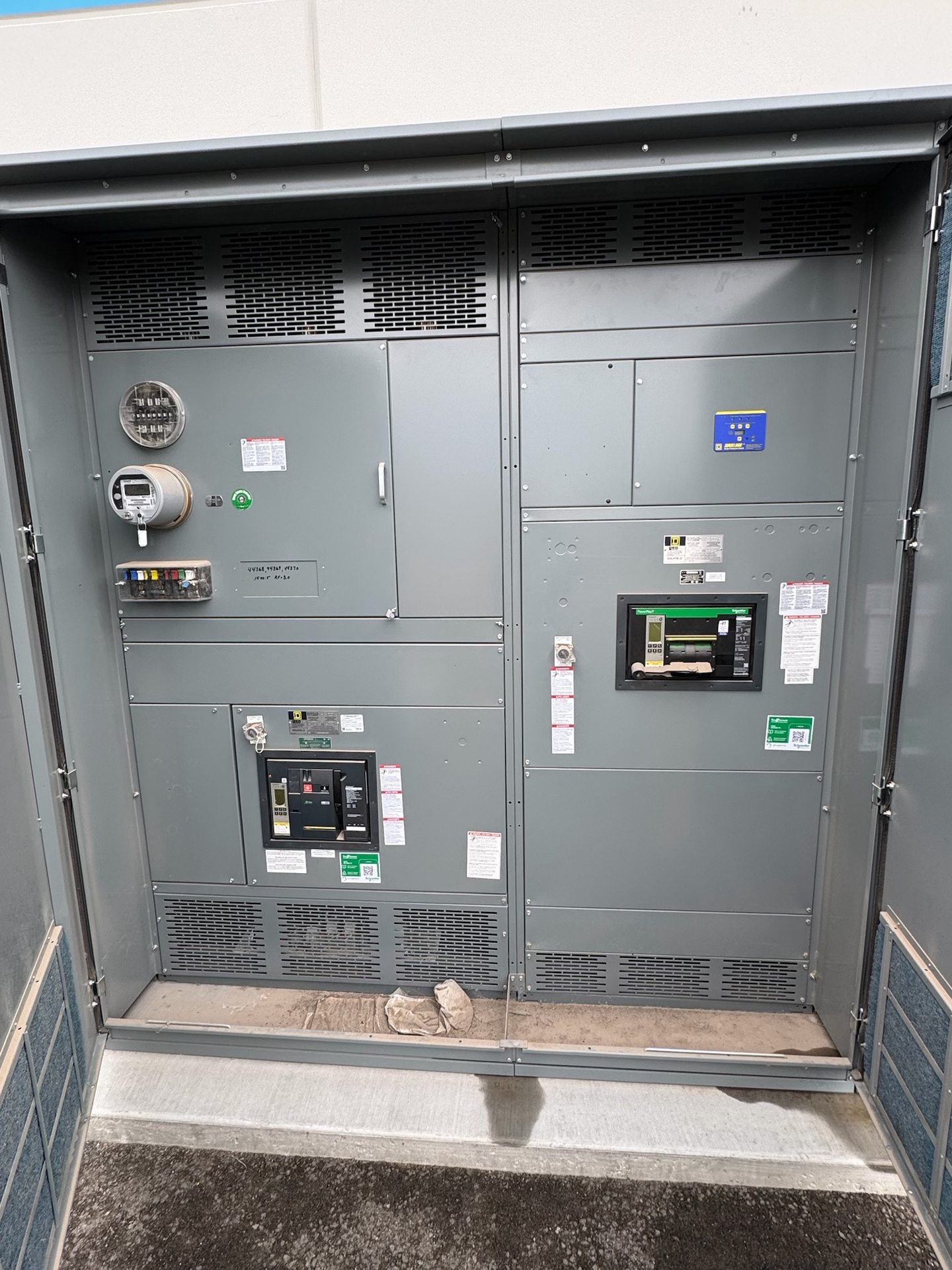
Start with what is already known about the switches
A useful inquiry about surplus fused disconnect switches can begin with basic records: the manufacturer, the number of switches, their location, and whether they are installed, removed, or part of a larger equipment lot. If safely visible without approaching an unsafe area, a nameplate or exterior label may also show voltage and current ratings. Share only information already available; inaccessible details need not delay an initial discussion.
A switch’s marked voltage rating is not proof of the voltage present at its location. Keep label information separate from what is known about current operating conditions, and describe uncertainty as uncertainty. For example, say that a rating is visible on a record or exterior label, while the actual service voltage has not been verified, if that is the situation.
Describe the equipment without opening or testing it
Never touch energized equipment. Sellers must not open or operate switches, approach energized equipment, or enter areas they consider unsafe to gather details. Do not test a switch or its fuses for a sale inquiry. A seller may ask about equipment that remains installed or operating by sharing information already on hand, such as asset records, existing photographs, or a safely accessible exterior label.
Known condition can be reported in plain terms, with its source made clear: for example, whether an existing inventory identifies a unit as surplus, or whether prior records note a known issue. If condition is unknown, say so rather than presenting an assumption as a verified fact. Testing is not required for the buyer to consider equipment.
Clarify what belongs in the lot
Fused disconnect switches may be offered individually or alongside other surplus electrical equipment. Explain how the lot is defined and whether it includes associated enclosures, spare fuses, or other related items. If records distinguish between included items and equipment remaining with the facility, that distinction can help prevent confusion about what is being considered.
There is no need to inspect inaccessible components or retrieve anything to answer these questions. Existing equipment lists, project documents, or photographs may be enough to describe the scope. If the records do not establish whether spare fuses or enclosures are included, identify that as unconfirmed rather than treating the items as part of the lot.
Share the context behind surplus equipment
Useful context can include why the switches are available, whether they came from a facility closure or a larger decommissioning, and whether they are being considered with switchgear, switchboards, motor-control centers, panelboards, busway, breakers, automatic transfer switches, or unit substations. The company buys surplus, used, and decommissioned electrical equipment, including equipment from closed data centers and power plants, and considers all voltage classes.
That broad scope does not mean every item or lot will receive an offer. Information about ownership and authority to represent the equipment is also relevant. An authorized seller can explain who controls the assets and identify any known limits on what is included, without making claims that have not been confirmed.
Understand the purchase and handling arrangement
The company buys equipment; it does not sell fused disconnect switches to the inquiring seller. After reviewing available details, an authorized seller may request a cash offer, but an offer or purchase is not guaranteed. For equipment that is purchased, payment is upfront, testing is not required, and freight is covered. These terms describe the stated arrangement, not a promise that a particular lot will be accepted or that a particular value will be offered.
For purchased equipment, the buyer handles disconnects, crane and rigging work, loading, freight, and hauling. The seller does not perform or arrange those operations. Sellers should not attempt to prepare, move, lift, load, or ship equipment for an inquiry. Any eventual handling arrangements belong to the buyer for equipment it purchases.
Make the inquiry clear and appropriately limited
A concise inquiry can identify the approximate quantity, manufacturer if known, safely visible voltage and current ratings, location, lot contents, and known condition. Attachments are optional ways to share existing information, not a reason to approach equipment or obtain details that are not safely available. State plainly which details are recorded, which are visible, and which remain unknown.
This gives an Indiana equipment owner or authorized representative a practical basis for discussing surplus fused disconnect switches without overstating their condition or assuming a sale. Keep the inquiry within information already available, and leave evaluation and all handling of purchased equipment to the buyer.