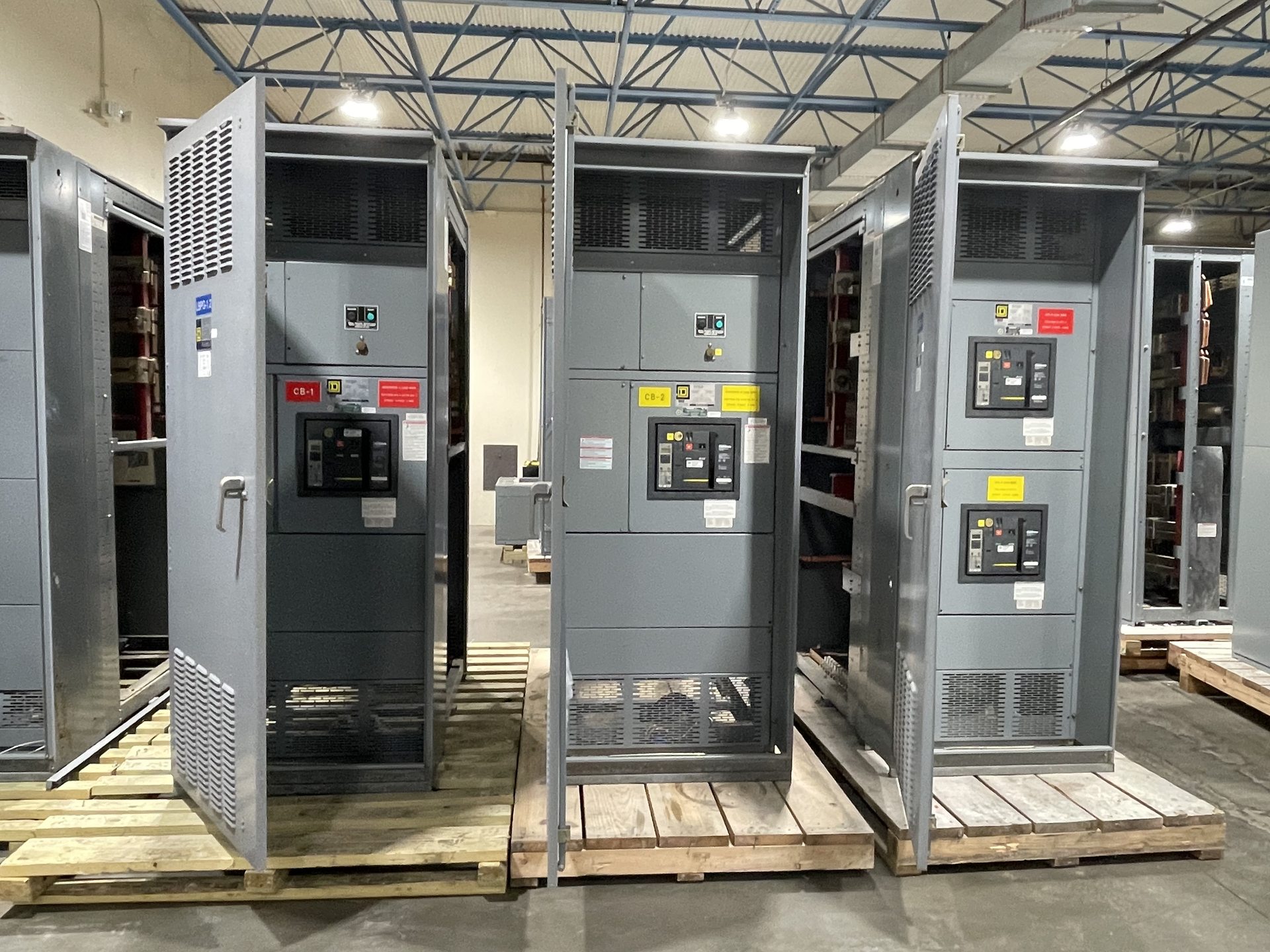
Define the equipment boundary before demolition planning advances
Before a power plant demolition schedule is treated as a removal plan, identify which electrical assets may be considered for sale and where each asset begins and ends. A useful inventory distinguishes a complete switchboard, motor-control center, panelboard, busway section, automatic transfer switch, breaker, switchgear lineup, or unit substation from adjacent equipment that is staying or belongs to another party. Include the equipment’s room, building, area, or other location reference, and note connected sections or accessories only when that information is already available.
Clear boundaries help prevent confusion about what an offer would cover. If a lineup includes sections with different ownership or disposition plans, describe that distinction rather than grouping everything under one general label. The inventory is for evaluating a possible equipment purchase; it does not ask the buyer to take on demolition, remediation, or the disposition of unrelated materials.
Record ownership and authority to discuss a sale
Confirm who owns each listed asset and who is authorized to discuss its sale. Power plants may have equipment controlled by different property owners, operators, project entities, or other parties. If authority is not yet clear, mark it as pending and identify the appropriate contact when known. Do not represent another party’s equipment as available for sale without authorization.
Ownership information can be as practical as an asset register entry, project record, or confirmation from the responsible owner. It is not necessary to create documentation that is unavailable simply to start an inquiry. A prospective seller can share what is known and explain any unresolved ownership or approval questions so that the scope can be reviewed accurately.
Capture identifying details without making access a condition
For each asset, share available identifying information: equipment type, manufacturer if known, approximate quantity, location, and safely accessible exterior nameplate details or photographs. Existing equipment lists and records can also help. Do not enter restricted or unsafe areas, remove covers, or approach equipment to obtain missing information. If a nameplate or photo is not safely accessible, say so; an incomplete inventory can still support an initial discussion.
Distinguish a rating shown on a label from live voltage. A nameplate may identify a rated voltage or other equipment characteristics, but that alone does not verify the present electrical condition or prove what voltage is currently present. Report label information as label information, and describe unknowns as unknown rather than presenting an estimate as a confirmed fact.
Separate known condition from assumptions
Describe condition only to the extent it is already known from records or safe observations. For example, note whether an asset is recorded as installed, removed from service, or operating, while making clear when that status has not been verified. Sellers do not need to test equipment for an inquiry. Equipment does not have to be de-energized or non-operating before its owner can ask whether it may be considered.
Never touch energized equipment. Sellers must not open or operate equipment, approach energized equipment, or enter unsafe areas to gather details. If condition, access, or status is uncertain, preserve that uncertainty in the inventory instead of trying to resolve it through an inspection or equipment handling.
Put readiness dates in context
Record the dates that matter to the project: when the inventory was prepared, when ownership or sale authority may be confirmed, and the expected date by which equipment could be available if a purchase proceeds. Identify whether a date is firm, estimated, or subject to demolition planning. A readiness date is useful scheduling context, not a guarantee that equipment will be purchased or that a demolition milestone will be met.
Keep the possible equipment sale distinct from the demolition contract and schedule. A buyer evaluating electrical equipment is not thereby agreeing to perform demolition, remediation, or project management. Describe any separate project responsibilities plainly, and do not assume that a purchase will include work outside the identified equipment.
Request an evaluation with a clear scope
An authorized seller can provide the inventory, available records or photos, ownership information, location, known condition, and readiness dates to request a cash offer. The business considers surplus, used, and decommissioned electrical equipment across all voltage classes, including equipment from power plants. Testing is not required, but an offer or purchase is not guaranteed; the details available and the equipment proposed for sale inform whether it can be considered.
For equipment that is purchased, payment is upfront and freight is covered. The buyer handles disconnects, crane, rigging, loading, freight, and hauling for the purchased equipment; the seller does not perform or arrange those operations. Clarify which assets are included and the expected availability before treating a possible purchase as part of the demolition plan. That separation leaves ownership, project timing, and equipment disposition explicit without confusing an equipment transaction with a promise to carry out site work.