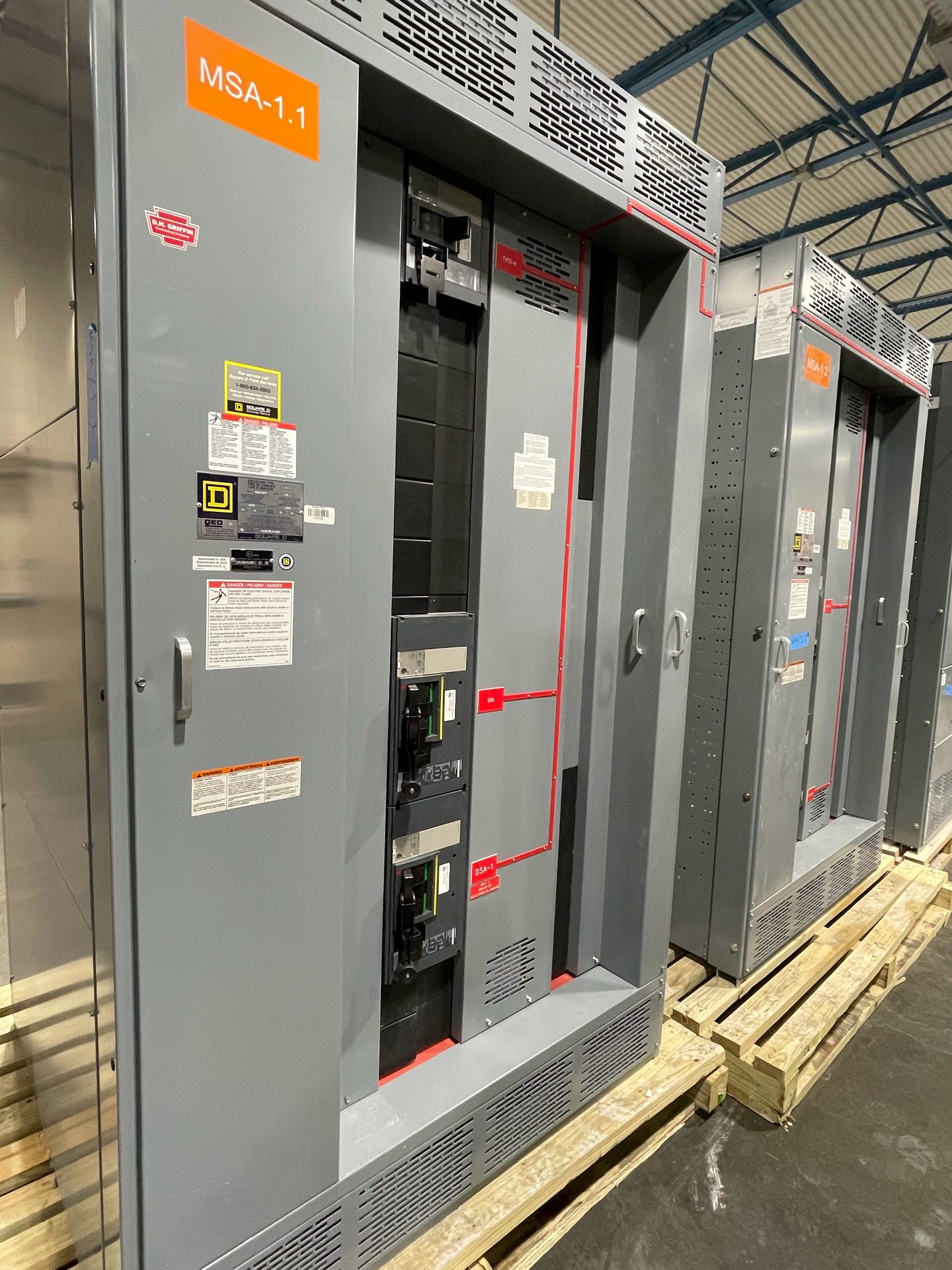
Start with what you already know about the switchgear
If you are an Indiana owner or authorized representative considering surplus medium-voltage switchgear, begin with information already available to you. A prior equipment list, project record, safely accessible exterior nameplate, or existing photograph may help describe what is on site. You do not need to obtain details that are inaccessible, and an initial inquiry does not require a complete inventory.
Be clear about the source and certainty of each detail. For example, distinguish a rating shown on a nameplate from an estimate or a value recalled from older records. If a voltage figure is unconfirmed, describe it as unknown or unverified rather than presenting it as a measured operating condition. The buyer considers all voltage classes, so uncertainty about a rating does not by itself prevent you from asking about the equipment.
Describe voltage ratings without guessing at live conditions
Where available, share the voltage rating as it appears in existing documentation or on an exterior nameplate that is safely accessible. A marked rating describes equipment specifications; it does not establish the voltage currently present in an installation. Avoid treating an old record, a site assumption, or a rating label as confirmation of present operating conditions.
Never touch energized equipment. Do not open or operate the gear, approach energized equipment, or enter an unsafe area to find information. You may inquire about switchgear that remains installed or operating using facts already available to you. If the live condition or exact rating is not known, say so plainly; there is no need to investigate it for an inquiry.
Give a useful section count and equipment description
If an existing drawing, asset register, or safely obtained exterior view identifies the lineup’s number of sections, include that count. Say whether the figure describes the complete lineup or only the portion being considered, if that distinction is known. A count gives the buyer a clearer picture of the lot, but an approximate or partial count should be labeled accordingly rather than presented as a verified total.
Include any known identification of the lineup and its general configuration from records or visible exterior information. Do not remove covers or rely on internal inspection to fill gaps. The objective is to communicate what is known, not to create a new condition report or certify that every component is present.
List breakers and included components carefully
Share any existing schedule or inventory that identifies breakers included with the switchgear. If records show quantities, ratings, or descriptions, report those as recorded and note when the information has not been confirmed against the equipment. If the breaker inventory is incomplete, make that clear. A statement such as “breaker details are not available” is more useful than a guess that could misstate what is included.
Also identify, when known, whether the offer concerns the switchgear alone or a broader group of associated equipment. Do not imply that a component is included merely because it appears in an old document or is nearby. The buyer can evaluate the available description and clarify what equipment is being considered without requiring you to inspect the interior.
Explain availability and ownership status
State whether the gear is surplus, decommissioned, planned for replacement, or still in service, but only as far as you know. If it remains installed or operating, you can say that and share the information already available. Do not approach or operate equipment to confirm status. If the anticipated availability depends on a project or decision that is not final, describe that uncertainty rather than promising a date.
For an inquiry, include the site location at a level you can share, who owns the equipment, and whether you are authorized to discuss its sale. Existing photos may help if they can be shared without entering an unsafe area or getting close to energized equipment. Missing photographs or records need not stop an initial conversation.
Understand the purchase and handling arrangement
The company buys surplus, used, and decommissioned electrical equipment; it does not sell switchgear. You may request a cash offer based on the information available, but neither an offer nor a purchase is guaranteed. Testing is not required from the seller, and the buyer considers equipment across all voltage classes. If equipment is purchased, payment is upfront; the specific offer and purchase remain subject to the buyer’s review.
For purchased equipment, the buyer handles disconnects, crane and rigging, loading, freight, and hauling, and covers freight. The seller does not perform or arrange those operations. Do not attempt to move, disconnect, test, or prepare equipment to support an inquiry. Sharing accurate known facts—including what is uncertain—lets the buyer assess whether to proceed while keeping your role focused on ownership, records, and availability.