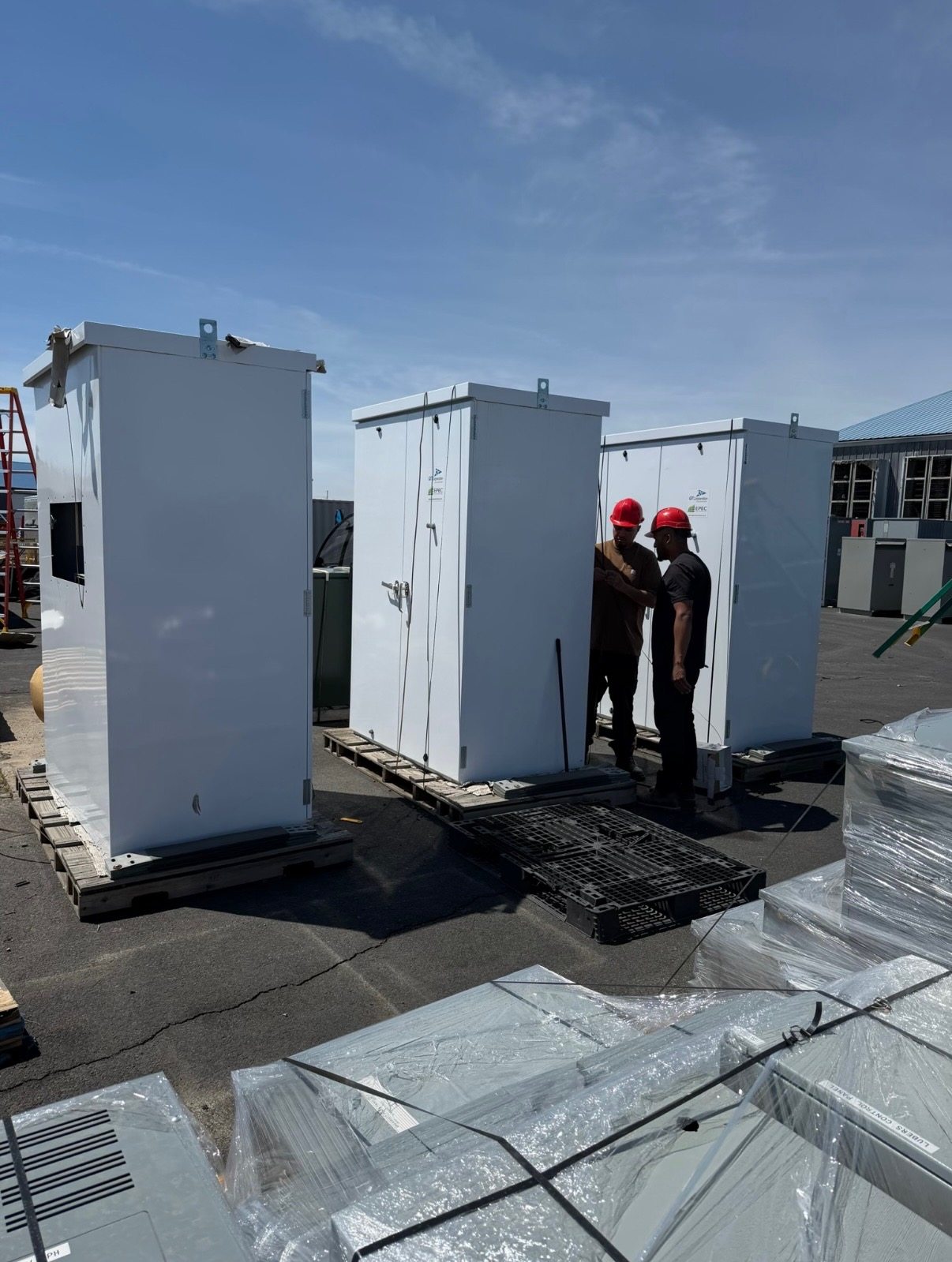
Start with the unit’s identity, not assumptions about its gas
Gas-insulated switchgear can be difficult to describe from memory, especially when it has been in service for years or is part of a larger installation. To discuss a possible sale, share information already available: the manufacturer and identification details shown on an accessible exterior nameplate, an equipment list, existing photographs, or facility records. A complete technical package is not required to make an inquiry. If a detail is missing or uncertain, identify it as unknown rather than guessing.
Gas type is an important point to document when records provide it. Share the recorded gas name and any existing service or maintenance information that identifies the equipment’s gas system. Do not infer gas type from the equipment’s age, appearance, rating, or another unit at the site. A rating on a nameplate is not a measurement of live voltage, and neither a rating nor a photograph establishes the equipment’s present operating condition.
Use existing gas records and disclose what is not verified
Useful records may include equipment schedules, manuals, prior service documents, or decommissioning records already held by the owner. These can help identify the gas type and configuration without requiring a seller to gather inaccessible information. If records conflict, are incomplete, or refer to a different section of a lineup, explain that plainly. Distinguishing documented facts from open questions gives the buyer a sound basis for reviewing the opportunity.
Do not open equipment, operate it, or enter an unsafe area to obtain details. Never touch energized equipment. Sellers must not approach energized equipment or try to confirm gas information through direct access. An owner or authorized representative can inquire about equipment that remains installed or operating by using information already available; it does not have to be made safe or removed before the inquiry.
Describe site restrictions before planning a transaction
Along with equipment details, share known site restrictions that could affect a future removal or pickup. Relevant information might include access limitations, building rules, scheduled shutdown constraints, or requirements imposed by the facility owner. Report only what is known and authorized to disclose. A preliminary review is more useful when it accounts for practical boundaries instead of treating the switchgear as a stand-alone item.
Gas handling, environmental evaluation, and removal belong with qualified parties, not the seller’s sales inquiry. Existing site rules or records may identify conditions that need review, but the seller should not assess or manage gas contents. Do not undertake equipment work to prepare it for a possible purchase. If the site has restrictions or unresolved questions, state them so they can be considered by the appropriate parties.
Explain the equipment’s location and ownership clearly
Provide the facility location and clarify whether the switchgear is owned by the person or organization making the inquiry, or whether that party is authorized to represent the owner. If the lineup includes multiple sections or associated equipment, an existing inventory can help distinguish what is being discussed. Photographs are helpful when they are already safely accessible, but they are not a reason to enter restricted areas or approach equipment.
Known condition can be described in straightforward terms, such as whether records identify the gear as surplus, used, decommissioned, or still in service. Avoid presenting an assumption as an inspection finding. The buyer considers used and surplus equipment, including gas-insulated switchgear from facilities such as closed data centers and power plants. All voltage classes are considered, but consideration does not mean a purchase or offer is guaranteed.
Understand what the buyer handles if equipment is purchased
The business buys equipment; it does not sell switchgear to the inquiring owner. A cash offer may be made after review, but neither an offer nor a purchase is guaranteed. Testing is not required from the seller. For equipment that is purchased, payment is upfront, and freight is covered. The buyer handles disconnects, crane and rigging, loading, freight, and hauling for the purchased equipment.
Those responsibilities do not make it appropriate for the seller to prepare or move the gear. Do not disconnect, lift, load, ship, or haul equipment for an inquiry, and do not arrange those operations on the buyer’s behalf. Any questions about removal conditions should be addressed between the responsible parties for the site and the qualified parties handling the work.
Make the first inquiry useful without overreaching
A concise inquiry can identify the equipment, give its location, establish ownership or authority, and summarize available gas documentation and known restrictions. Add accessible nameplate details or existing records where available, and label uncertain information clearly. It is fine to say that gas type, condition, or a site requirement has not been verified. That candor helps prevent a preliminary description from being mistaken for a confirmed technical assessment.
For Indiana owners and authorized sellers, the practical goal is to make the equipment identifiable and the site context understandable while leaving technical and removal work to the appropriate parties. Share what records and safe access already permit; do not create new information by approaching, opening, testing, or operating the switchgear. A buyer can then review the available details and determine whether further discussion is appropriate.