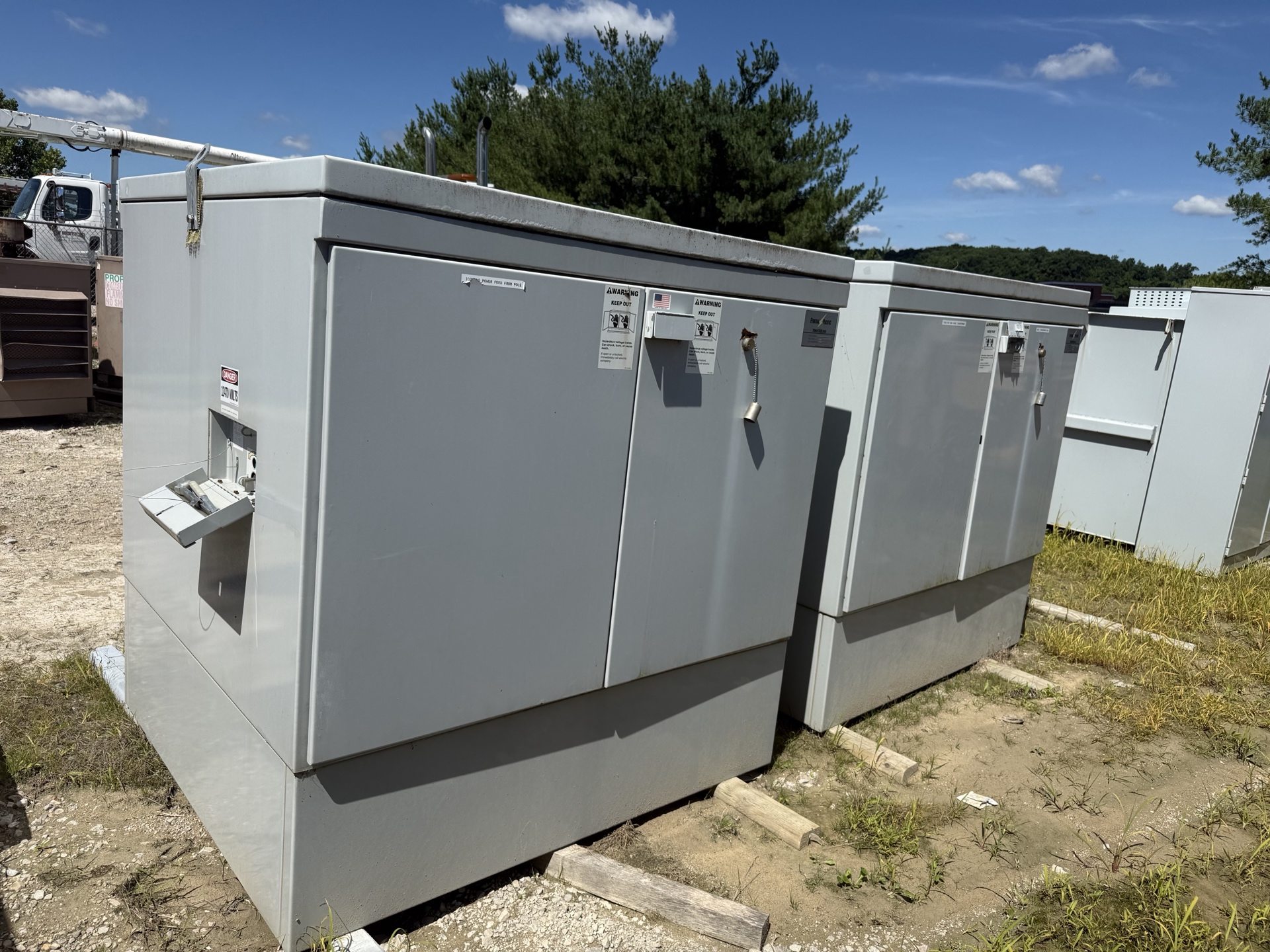
Start with the equipment’s existing identification
If you are responsible for surplus or decommissioned arc-resistant switchgear in Indiana, begin an inquiry with information already available to you. An equipment list, records, safely accessible exterior nameplate details, or existing photographs may help identify the lineup and its configuration. You do not need to obtain information that is inaccessible or enter a restricted area to answer questions. If the gear is still installed or operating, you may inquire using records and details you can access safely; its current status does not prevent an initial discussion.
Never touch energized equipment. Sellers must never open, operate or approach energized equipment or enter unsafe areas. Do not attempt to create access, verify a label, or prepare equipment for a potential sale. The buyer handles disconnects and physical handling for equipment it purchases.
Document the arc-resistant claim without guessing
Share any existing arc-resistant markings or documentation, such as records that identify the equipment or describe its tested configuration. A marking visible in a safely accessible photograph may be useful, and prior project or maintenance records may add context. If documentation is missing, state that rather than trying to establish a rating from appearance. An enclosure’s shape, doors, seams, or other visible features do not by themselves verify arc-resistant performance.
Keep confirmed information separate from uncertainty. For example, distinguish a rating stated on an existing label from an assumption based on how the lineup looks. If records refer to a particular configuration, preserve that qualification when describing the equipment; do not imply that a document applies to every section or later modification unless the records establish that. You can report that the information is unknown when it cannot be confirmed safely.
Keep voltage and arc information distinct
Voltage identification and an arc-resistant designation describe different aspects of equipment. A voltage rating is a stated equipment rating, not proof of the voltage present at a particular moment. Likewise, an arc-resistant marking or document is not a substitute for confirming the equipment’s identity, configuration, and documented scope. Share labels and records as written, without converting a stated rating into a claim about live conditions or making conclusions beyond the available evidence.
The business considers equipment across all voltage classes, including switchgear from closed data centers and power plants. If the voltage class is unclear, an inquiry can still begin with the information available. Do not estimate a value or rating from memory when records are uncertain; explain what is known and what remains unverified.
Describe condition and ownership plainly
Useful context may include the equipment’s location, whether it is surplus or decommissioned, its general known condition, and whether you are authorized to represent its owner. Existing photographs or equipment schedules can help convey what is present, but they are not a reason to approach, open, test, or operate the gear. Mention known modifications or missing documentation if that information is already available, and identify uncertainties plainly rather than presenting them as established facts.
You do not have to test equipment to make an inquiry. The business buys used, surplus, and decommissioned electrical equipment; it does not sell switchgear to the person making the inquiry. A review of the information provided may lead to a cash offer, but an offer or purchase is not guaranteed. Do not assume that an arc-resistant designation alone establishes a particular value.
Clarify what happens if equipment is purchased
For equipment it purchases, the buyer handles disconnects, crane and rigging arrangements, loading, freight, and hauling. Freight is covered for purchased equipment, and payment is upfront. The seller does not perform or arrange those operations. These terms apply if a purchase is agreed; they are not a promise that every inquiry will result in a purchase, a particular price, or a specific schedule.
In an initial conversation, you can ask how the buyer will coordinate the handling responsibilities if an offer is accepted. You should not disconnect, move, lift, rig, load, ship, or haul the equipment, or arrange for someone else to do so. No seller preparation or equipment testing is required to start discussing a potential sale.
Make the first inquiry useful and accurate
Bring together whatever is readily available: the equipment’s general identification, location, ownership or seller authority, known condition, and any existing arc-resistant markings or records. A concise account of what is documented—and what is not—helps avoid confusion about the claimed rating. If information is incomplete, say so; a missing label or unverified detail is preferable to an unsupported conclusion.
Keep the process focused on records and safely accessible information. The purpose is to determine whether the equipment may be suitable for a purchase discussion, not to ask you to inspect it or establish a technical rating. A clear, cautious description gives an authorized seller a practical starting point while leaving any handling of purchased equipment to the buyer.