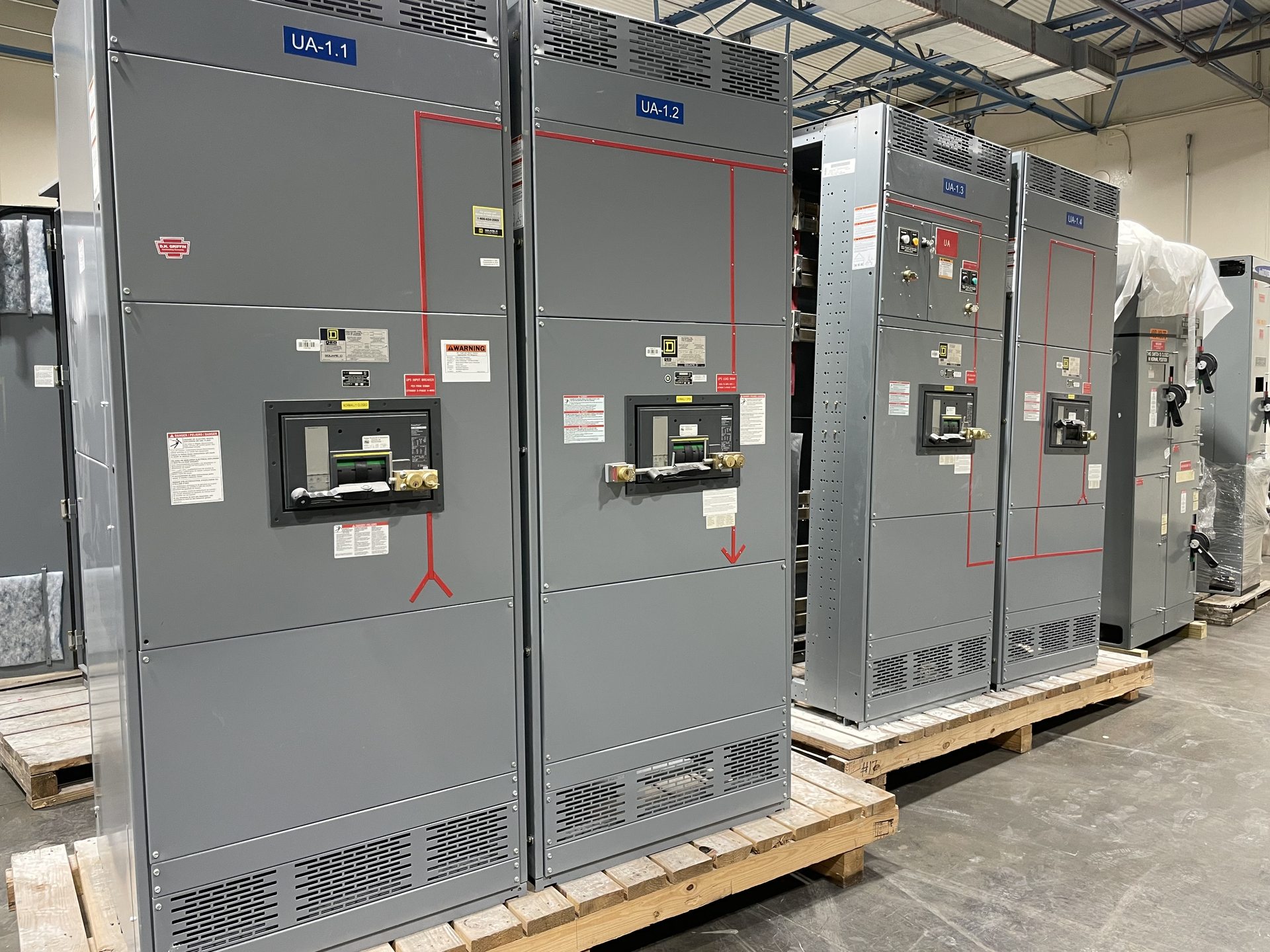
Identify the equipment by its existing labels and records
Main-tie-main switchgear generally describes an arrangement with two main sections and a tie section, but the name alone does not establish the exact configuration, condition, or connections of a particular lineup. When describing equipment for a possible sale, start with information already available: facility asset records, prior project documents, equipment schedules, photographs taken from a safe and accessible location, or exterior nameplate details. Use the labels shown on the equipment rather than assuming that a section serves a particular load.
Sections may have designations such as Main 1, Main 2, Tie, or other facility-specific names. Share those designations as written, and distinguish clearly between a label you can see and an interpretation based on memory. If a tag is missing, unreadable, or inconsistent with a record, say so. A seller does not need to resolve discrepancies to begin an inquiry.
Use a single-line drawing as a document, not a field task
An existing single-line drawing can help describe how a switchgear lineup was intended to be arranged. If a drawing is already on hand, it may show section names, equipment symbols, nominal ratings, and the documented relationship among components. The drawing is useful context, not proof that the present installation matches it or that every connection remains as depicted.
Share an available drawing or relevant excerpt only if you are authorized to provide it. Do not trace circuits, inspect internal compartments, or approach energized equipment to confirm a drawing. Never touch energized equipment. Sellers must not open or operate equipment, enter unsafe areas, or approach energized gear to gather information. If the drawing is unavailable, that does not prevent an initial conversation.
Separate ratings, operating conditions, and verified facts
Nameplate ratings and live electrical conditions are different kinds of information. A voltage rating printed on a label describes the equipment’s stated rating; it does not establish the voltage present at a particular moment. Report the label wording as written when it is safely accessible, and do not infer live voltage from a rating, an old drawing, or a section name.
It is also useful to distinguish what is documented from what is known about current condition. For example, an equipment list may identify a lineup as installed, while a record may not confirm whether it is currently operating. State uncertainty plainly rather than guessing. The buyer considers used, surplus, and decommissioned switchgear across all voltage classes, including equipment associated with closed data centers and power plants.
Describe the scope without taking equipment apart
A concise description can identify the lineup, the sections being offered, and whether the offer concerns the entire assembly or only specified portions. Existing inventory records may show the number of sections, manufacturer information, ratings, or associated equipment. Provide only what is already available and safely accessible; no one needs to open gear or obtain information from an unsafe area to make an inquiry.
Photographs can help clarify exterior labels, overall arrangement, and visible condition, provided they can be taken without approaching energized equipment or entering an unsafe area. Mention known damage, missing documentation, or uncertainty directly. Do not present an assumed connection or operating status as verified simply because the lineup has a main-tie-main designation.
Ask what information would help evaluate the opportunity
An authorized Indiana seller can share the facility location, ownership or authority to sell, equipment description, available records, and known condition. The buyer may need clarification about which sections are included or whether an existing drawing corresponds to the listed equipment. Questions can be answered from records and information already available; the seller should not be asked to trace circuits or inspect equipment to fill gaps.
The business buys switchgear rather than selling it. It may make a cash offer after considering the information provided, but an offer or purchase is not guaranteed. Testing is not required from the seller. If the equipment is still installed or operating, the seller may still inquire using information already available, without opening, operating, approaching, or making the equipment safe.
Know how payment and removal responsibilities are divided
For equipment that is purchased, payment is made upfront, and freight is covered. The buyer handles disconnects, crane and rigging work, loading, freight, and hauling. The seller does not perform or arrange those operations. Do not move, lift, disconnect, load, ship, or haul equipment as part of preparing an inquiry; simply describe what is being offered and the information on hand.
Before sharing facility records or drawings, confirm that you are authorized to provide them. A clear account of the sections, labels, available documentation, and what remains uncertain gives the buyer a practical basis for review without asking anyone to investigate energized circuits. That distinction keeps the conversation focused on identifying the offered equipment, not on verifying its electrical connections in the field.