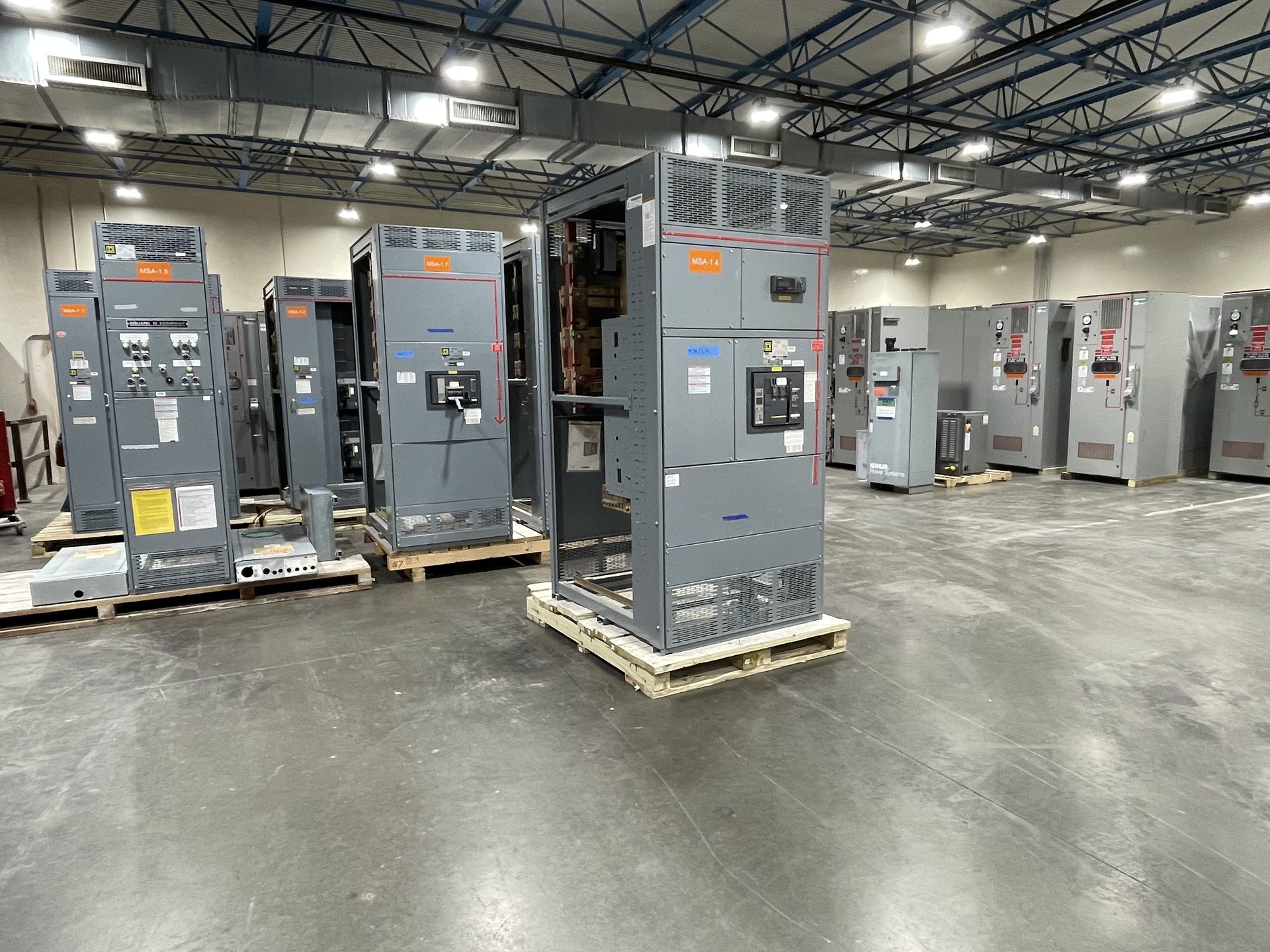
Identify the lineup separately from its breakers
When describing low-voltage power switchgear for a possible sale, keep the assembly’s ratings distinct from the ratings of its individual breakers. A breaker marked 800 amperes, for example, does not by itself establish that the complete lineup is rated 800 amperes. The lineup may have its own nameplate information, while each breaker has separate markings describing that device. Share each figure with what it identifies, rather than combining them into a single rating.
This distinction helps an authorized buyer understand what equipment may be available without treating one component as a description of the whole assembly. If a lineup nameplate or breaker label is not visible from a safe, accessible position, do not try to reach it or uncover it. You can say that the information is unavailable and provide other details already at hand.
Report what the label says, not what the equipment is doing
A nameplate rating is not a measurement of live voltage or proof of the equipment’s present operating condition. When sharing a voltage figure, identify it as a label rating if that is where it came from. If its source is unclear, describe it as unverified rather than presenting an assumption as fact. The same care applies to amperage, interrupting ratings, and other markings: preserve the wording and identify the component or assembly the marking belongs to.
Never touch energized equipment. Sellers must not open or operate equipment, approach energized equipment, or enter an unsafe area to gather details. An owner or facility representative may inquire about gear that remains installed or operating using information already available, such as existing records or safely accessible exterior nameplate details. Do not put yourself at risk to complete a description.
Build a useful description from available records
Start with information you already have: the equipment type, manufacturer if known, general configuration, location, ownership, and known condition. Existing equipment schedules, prior inventories, or photographs may help distinguish a switchgear lineup from a switchboard, panelboard, or another assembly. If a detail is uncertain, label it as uncertain. A partial, accurate description is more useful than a complete-looking description based on guesses.
Photographs can provide context when they are already available and were taken safely. Exterior views may show lineup arrangement, visible nameplates, or breaker fronts, but do not take new photographs if doing so would require approaching energized gear, opening a door, or entering an unsafe area. You do not need to supply every possible detail before making an inquiry.
Explain the equipment’s status and ownership
Say whether the switchgear is surplus, used, decommissioned, or still installed, if you know. If it is part of a larger facility closure or equipment change, explain the relationship in practical terms: whether the offer concerns a lineup, identified sections, or associated breakers. Clear scope helps prevent a buyer from mistaking a few devices for a complete assembly or assuming that related equipment is included when it is not.
Confirm that you are the owner or authorized to represent the owner. If multiple parties have an interest in the equipment, clarify who can discuss a sale. The company buys surplus, used, and decommissioned electrical equipment; it does not sell switchgear. An inquiry is a request for consideration, not a commitment or guarantee that the equipment will be purchased.
Understand the purchase and logistics arrangement
For equipment it purchases, the buyer pays upfront and covers freight; the seller is not required to test the equipment. A cash offer may be considered after the available information is reviewed, but neither an offer nor a purchase is guaranteed. Share what is known about condition without conducting tests or making changes to the equipment.
For purchased equipment, the buyer handles disconnects, crane and rigging work, loading, freight, and hauling. The seller does not perform or arrange those operations. Do not disconnect, move, lift, prepare, or ship equipment as part of an inquiry. If the gear is still installed, say so and rely on information already available; the buyer’s handling responsibilities do not make it appropriate for a seller to intervene.
Keep the inquiry accurate and appropriately scoped
Although this article focuses on low-voltage power switchgear, the buyer considers equipment across all voltage classes, including equipment from closed data centers and power plants. If the voltage class is uncertain, describe the visible label or existing record without converting it into a claim about present conditions. Switchgear is considered alongside other surplus equipment such as switchboards, motor-control centers, busway, automatic transfer switches, breakers, panelboards, and unit substations, but each item should be identified separately when its scope is known.
A concise inquiry can state what is available, where it is located, who is authorized to discuss it, and which assembly and breaker ratings are already documented. Mark unknowns plainly, and do not seek information in a way that risks exposure or requires handling equipment. That gives an authorized buyer a grounded starting point for deciding whether to review the equipment further.