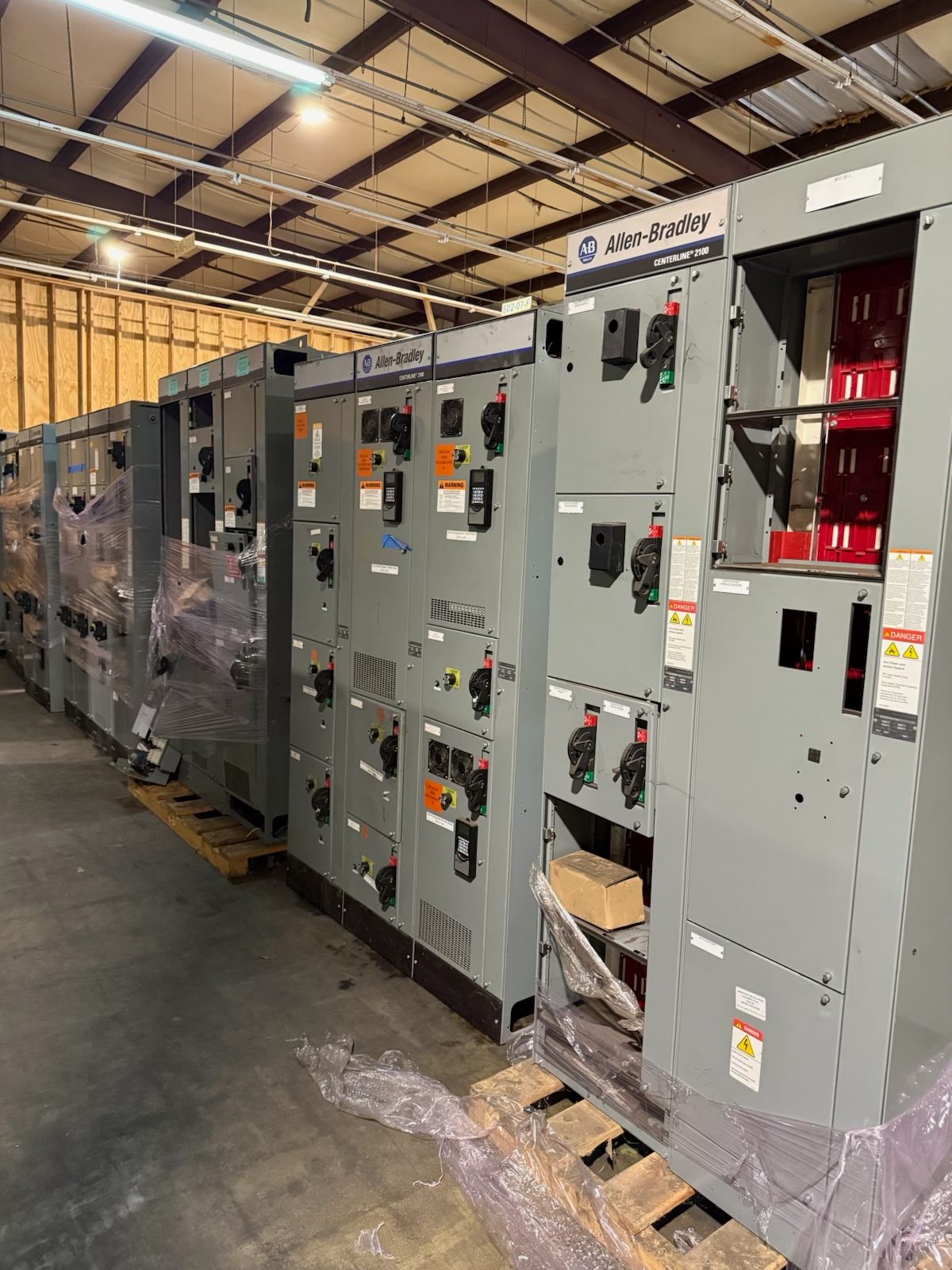
Start with the assembly’s documented identity
When considering surplus load-interrupter switchgear, begin with information already available in equipment records, prior project files, asset lists or safely accessible exterior nameplates. The buyer can use these details to understand what the assembly is and whether it may fit its purchasing needs. Useful information may include the manufacturer and type designation, approximate age, catalog or serial numbers, and any description of the assembly’s intended application. You do not need to locate every detail before making an inquiry.
Describe the equipment as it is documented, rather than guessing from appearance. A lineup may include load-interrupter switches along with other sections or components, and records may identify them collectively as switchgear. If the exact configuration is unclear, say so. A photograph of an exterior label or a copy of an existing equipment schedule may help clarify the description, provided it can be shared without entering an unsafe area or approaching energized equipment.
Report voltage ratings without confusing them with live voltage
Share the voltage rating shown in records or on a safely accessible nameplate, and identify it as a rating. It is not necessarily a measurement of the voltage present at the equipment now. A rating may describe the equipment’s design class or another specified electrical value; the exact label and documentation matter. If records use different terms or disagree, provide the wording and note the discrepancy instead of choosing a value yourself.
All voltage classes are considered, so an unfamiliar rating or an assembly outside a familiar range is not a reason to assume it cannot be discussed. If a rating is unavailable, unreadable or inaccessible, say that it has not been verified. Do not open a compartment, operate a device or approach equipment to obtain a label. Never touch energized equipment.
Explain which sections are present, if known
A useful description separates the overall lineup from the sections that records identify. For example, existing drawings may show a main section, one or more switch sections, or spaces reserved for future equipment. Other documents may identify connected equipment or accessories. These descriptions can help the buyer understand the assembly, but do not infer that a section contains a particular component merely because of its position or appearance. Refer to the documents, and mark uncertain details as uncertain.
If the lineup has been divided, altered or partly removed, report what records show and what is known to be present now. An old one-line drawing, equipment schedule or decommissioning inventory can be useful even if it does not answer every question. The buyer can review the available information; a seller is not expected to verify internal components or perform testing.
Describe condition using facts already available
Share known history that could affect evaluation, such as whether the equipment is surplus, decommissioned or still installed, and whether existing records note damage, missing sections or prior changes. Separate direct observations from assumptions. “The inventory lists three sections” is different from “all three sections are present,” and a dated photograph does not establish current condition. Explain the source and date of information where practical.
The equipment does not have to be tested by the seller. Do not operate switching devices, open equipment, or enter an unsafe area to confirm condition or configuration. If the assembly is still installed or operating, an inquiry can still be made using information already available. Do not attempt to make it safe, disconnect it or move it for a possible sale.
Make an inquiry with the information at hand
An authorized seller or facility representative can provide ownership or sale authority, the equipment’s location, available descriptions, safely accessible exterior nameplate details, existing photographs and relevant equipment lists. Include what is known about access or site constraints only if that information is already available to you. The purpose is to give the buyer a sound basis to review the opportunity, not to create a complete technical inspection package.
The business buys used, surplus and decommissioned electrical equipment, including load-interrupter switchgear, and does not sell equipment. It may review assemblies from a range of settings, including closed data centers and power plants. An inquiry does not guarantee a purchase or a cash offer; the buyer must evaluate the information and equipment before deciding whether to proceed.
Clarify payment and handling responsibilities
For equipment that is purchased, payment is made upfront, and testing by the seller is not required. Freight is covered for purchased equipment. The buyer handles disconnects, crane and rigging arrangements, loading, freight and hauling. The seller does not perform or arrange those operations. These arrangements apply to a completed purchase, not automatically to every inquiry or to equipment the buyer does not purchase.
Keep the discussion within your role as owner or authorized representative: share records and known facts, and ask what information the buyer needs next. Do not open, operate or approach energized equipment, and do not undertake or arrange disconnecting, lifting, loading or transportation. This lets the buyer assess a potential purchase without asking the seller to verify equipment through unsafe access or handling.