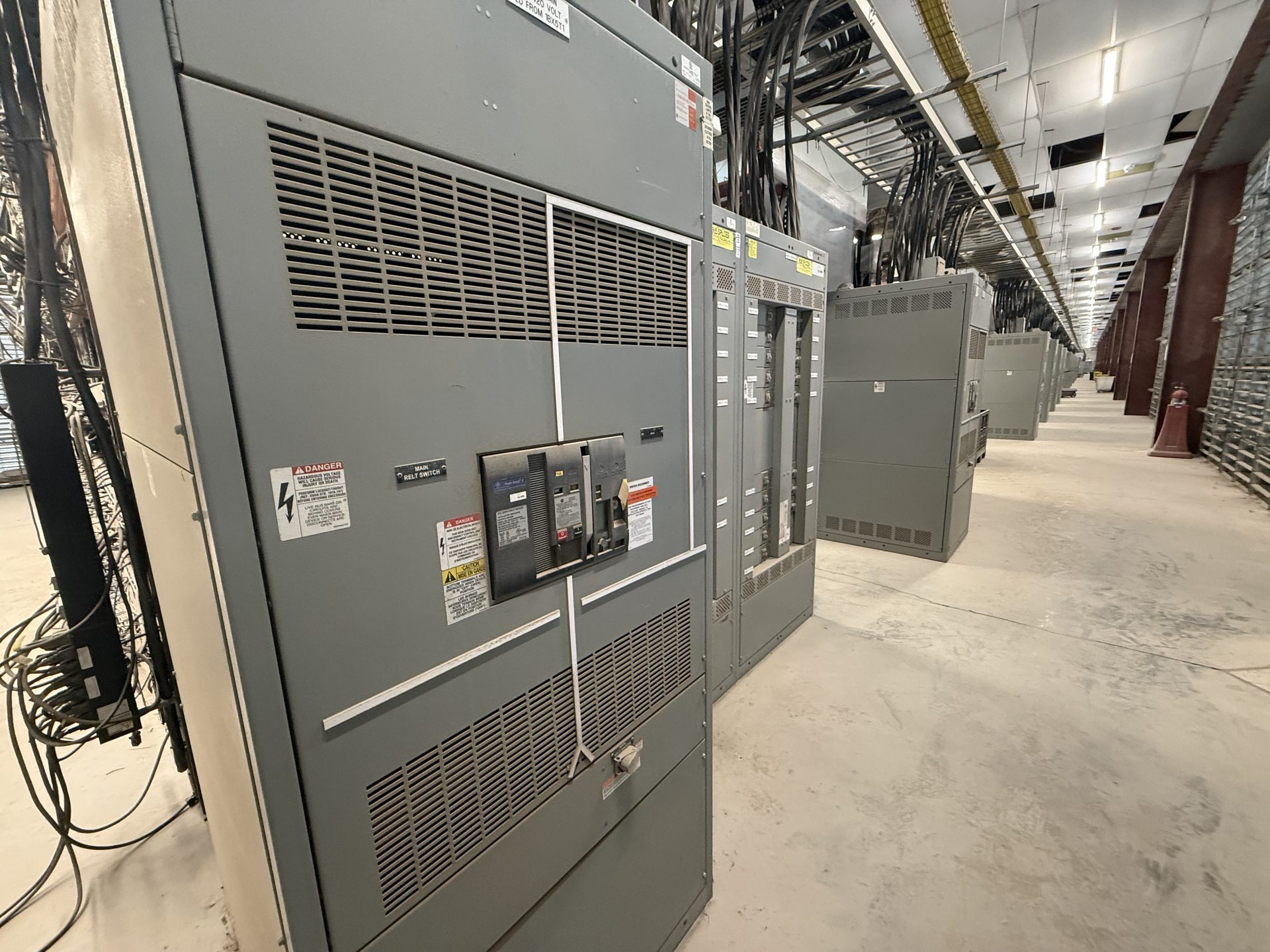
Separate the switchgear lineup from loose spare breakers
When describing drawout switchgear for a possible sale, distinguish the assembled lineup from breakers kept as spares. A lineup may include multiple sections, while spare removable breakers may be stored separately and may or may not match the installed equipment. Reporting these as separate groups helps the buyer understand what is being offered without assuming that every breaker belongs with the lineup.
Share quantities you can confirm from existing records or from equipment that is safely accessible. For example, you might describe a lineup by its number of sections and identify a separate quantity of spare breakers. Do not remove a breaker, open equipment, or enter an unsafe area to improve an inventory. If a count is incomplete, say so; an estimate or unknown quantity is different from a verified count.
Use visible model labels as clues, not as a reason to handle equipment
If model labels are already visible and safely accessible, provide their wording or a clear photo. Labels on the switchgear and labels on individual spare breakers may be different, so identify which equipment each label describes. A list of visible model designations can help distinguish items that otherwise look similar, but a label alone does not establish the condition, completeness, compatibility, or value of the equipment.
Do not remove a device to find a label, and do not approach or open energized equipment. Never touch energized equipment. If the gear is installed or operating, you may still inquire using information already available to you, such as existing records, an equipment list, or safely accessible exterior details. It is acceptable to note that a label cannot be read or is unavailable.
Describe the equipment’s status and what is known
Explain whether the equipment is installed, stored, surplus, or associated with a closed facility, when that information is known. Describe visible or documented condition without presenting an assumption as a confirmed inspection. If a breaker’s history or the lineup’s completeness is unknown, identify that uncertainty plainly. No testing is required to make an inquiry, and sellers should not test or operate equipment for this purpose.
A nameplate rating is not the same thing as the voltage present at a particular moment. Share the rating shown on an existing label when available, and distinguish it from any separately verified information about operating conditions. If you do not know the live voltage or current status, do not guess. All voltage classes are considered, but the actual equipment details still matter when reviewing a potential purchase.
Make the inquiry useful without gathering inaccessible details
Along with quantities and visible model labels, useful information may include the equipment’s location, ownership, and any existing records or photos. Include only details you can provide safely and are authorized to share. You do not need to obtain information that is hidden, inaccessible, or uncertain, and you should not enter restricted or unsafe areas to take photographs or check inventory.
Clarify whether your inquiry covers the assembled sections, spare removable breakers, or both. If you are authorized to act for an owner, make that role clear. A buyer can review the available description and ask about gaps; providing a complete technical inventory is not a condition for starting a conversation.
Understand the purchase and handling arrangement
The company buys used, surplus, and decommissioned electrical equipment; it does not sell drawout switchgear or spare breakers. For equipment it purchases, payment is made upfront, testing is not required, and freight is covered. These terms do not guarantee that an offer will be made or that every item described will be purchased. A cash offer depends on review of the equipment and the information available.
For purchased equipment, the buyer handles disconnects and the associated crane, rigging, loading, freight, and hauling. The seller does not perform or arrange those operations. Do not disconnect, move, lift, load, or ship equipment in preparation for an inquiry. A potential purchase and its logistics should be discussed without asking facility personnel to undertake equipment handling.
Set expectations when records are incomplete
Older or surplus equipment may have incomplete records, mixed quantities, or labels that are no longer readable. State what is known and separate it from what needs confirmation. For example, you can report a confirmed count of assembled sections while describing the number of loose breakers as unknown. That is more useful than implying that a count or match has been verified when it has not.
Keep the inquiry focused on ownership, safely available descriptions, visible labels, and approximate quantities. There is no need to approach operating equipment or disturb stored devices to make the initial request. The buyer can consider equipment from Indiana facilities across voltage classes, while any purchase remains subject to review rather than an assumed outcome.