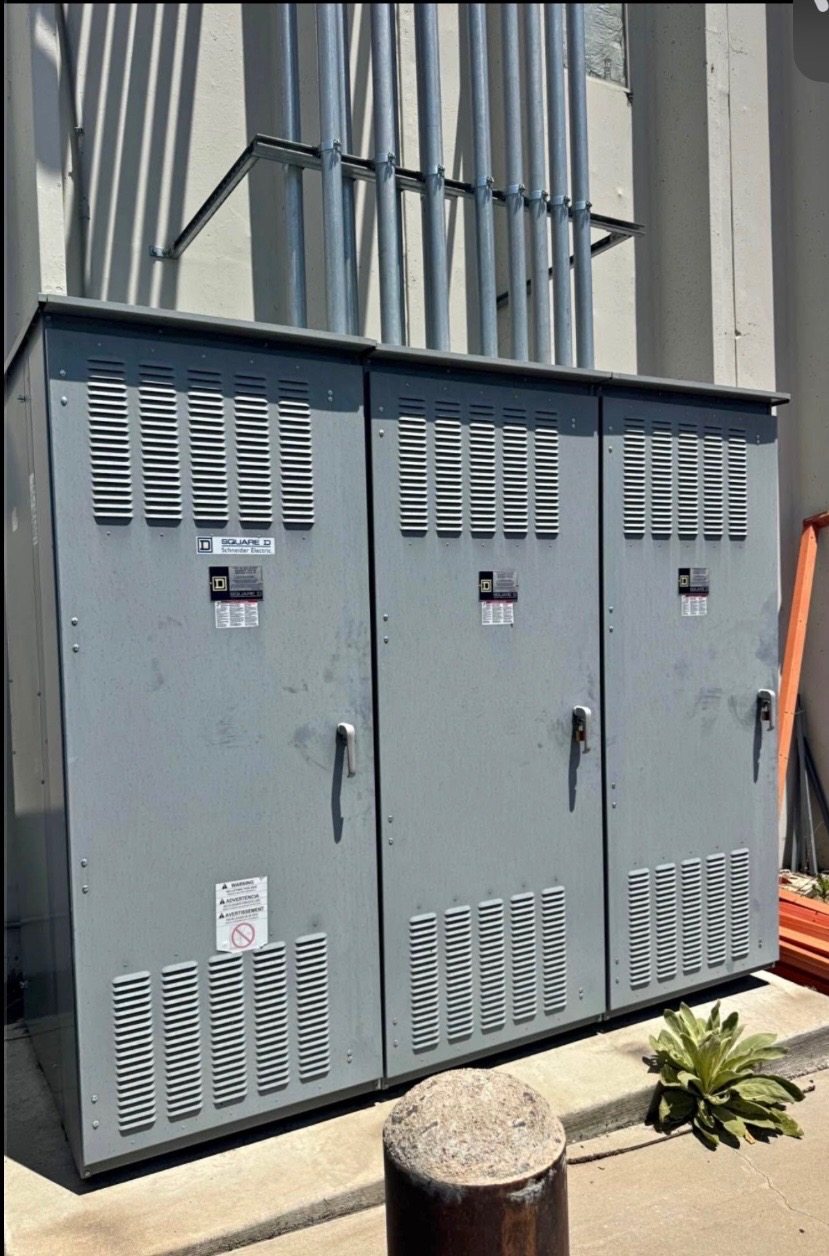
Start with the Complete Switchboard Rating
An “800-amp switchboard” description is a useful starting point, but it does not identify the full assembly or establish its condition. For an initial review, share the overall nameplate information if it is already safely accessible, along with the number of sections and any available equipment list. The nameplate can help distinguish the switchboard’s stated rating from other details, such as voltage, interrupting ratings, or the ratings of individual devices.
A stated rating is not proof of the voltage present at the equipment now. If the switchboard remains installed or in operation, you may inquire using information already available; do not approach it to obtain details. Never touch energized equipment. Do not open, operate, test, or enter an unsafe area to gather information.
Describe Sections and What the Offered Lot Includes
Section count helps clarify the scale of the assembly being considered. Explain how many sections are included in the potential sale, and note whether the offered lot is the complete switchboard or only specified portions. If equipment records already identify the lineup, a list or description can help communicate its scope without requiring you to access equipment or verify inaccessible details.
Also clarify whether feeder devices are part of the offered lot. A switchboard description may refer to the assembly while the proposed sale includes, or excludes, associated feeder devices. If you know which breakers or other devices are included, say so; if the information is uncertain, identify it as uncertain rather than presenting it as verified. The distinction can affect how the lot is evaluated.
Share Available Information Without Creating a Safety Task
Useful details may include safely accessible exterior nameplate information, existing photographs, equipment schedules, location, ownership, and known condition. Share only what is available to you through normal, safe access. You do not need to obtain every detail before making an inquiry, and missing information can be identified as unknown rather than guessed.
Do not open covers, operate equipment, or make a special visit to an unsafe area for photographs or readings. If the switchboard is still installed or operating, information already on hand can still support an initial discussion. Do not disconnect, move, lift, rig, load, ship, or haul equipment yourself as part of asking whether it may be purchased.
Set Clear Expectations About an Offer
The company buys surplus, used, and decommissioned electrical equipment; it does not sell switchboards. It considers equipment across voltage classes, including equipment from closed data centers and power plants. An 800-amp description alone does not determine whether a purchase is possible or what the equipment may be worth. The available details, lot boundaries, and known condition all matter, and neither an offer nor a purchase is guaranteed.
When the information supports review, you can request a cash offer. Testing is not required from the seller. This means you should not attempt to test the switchboard to improve the inquiry or establish its condition. Describe known issues and uncertainties plainly, and let the available records and information guide the discussion.
Know Who Handles Purchased-Equipment Logistics
For equipment that is purchased, the buyer handles disconnects, crane and rigging work, loading, freight, and hauling. Freight is covered for purchased equipment. The seller does not perform or arrange those operations. These responsibilities are relevant when considering a sale of an installed or substantial assembly: do not try to prepare the switchboard for removal or arrange equipment handling on the buyer’s behalf.
Whether the switchboard is installed, stored, or part of a larger facility inventory, provide its location and explain what is known about access or its status using information already available. You do not need to enter a restricted or unsafe area to report details. The buyer’s responsibility for handling applies to purchased equipment; it does not mean a purchase has been promised before review.
Confirm Ownership and the Exact Sale Scope
Before an inquiry proceeds, be prepared to identify who owns the switchboard and whether you are authorized to discuss its sale. For a facility with multiple electrical assets, separate the 800-amp switchboard from other equipment in the description, or state clearly if the potential lot includes additional sections or devices. Clear boundaries help avoid confusion about what is being evaluated.
A concise account of the overall nameplate, section count, feeder-device inclusion, location, and known condition gives an authorized Indiana seller a practical basis for an inquiry without treating assumptions as facts. Include only information you can share safely and accurately. If key details are unavailable, say so; no test, opening, or hands-on inspection by the seller is required.