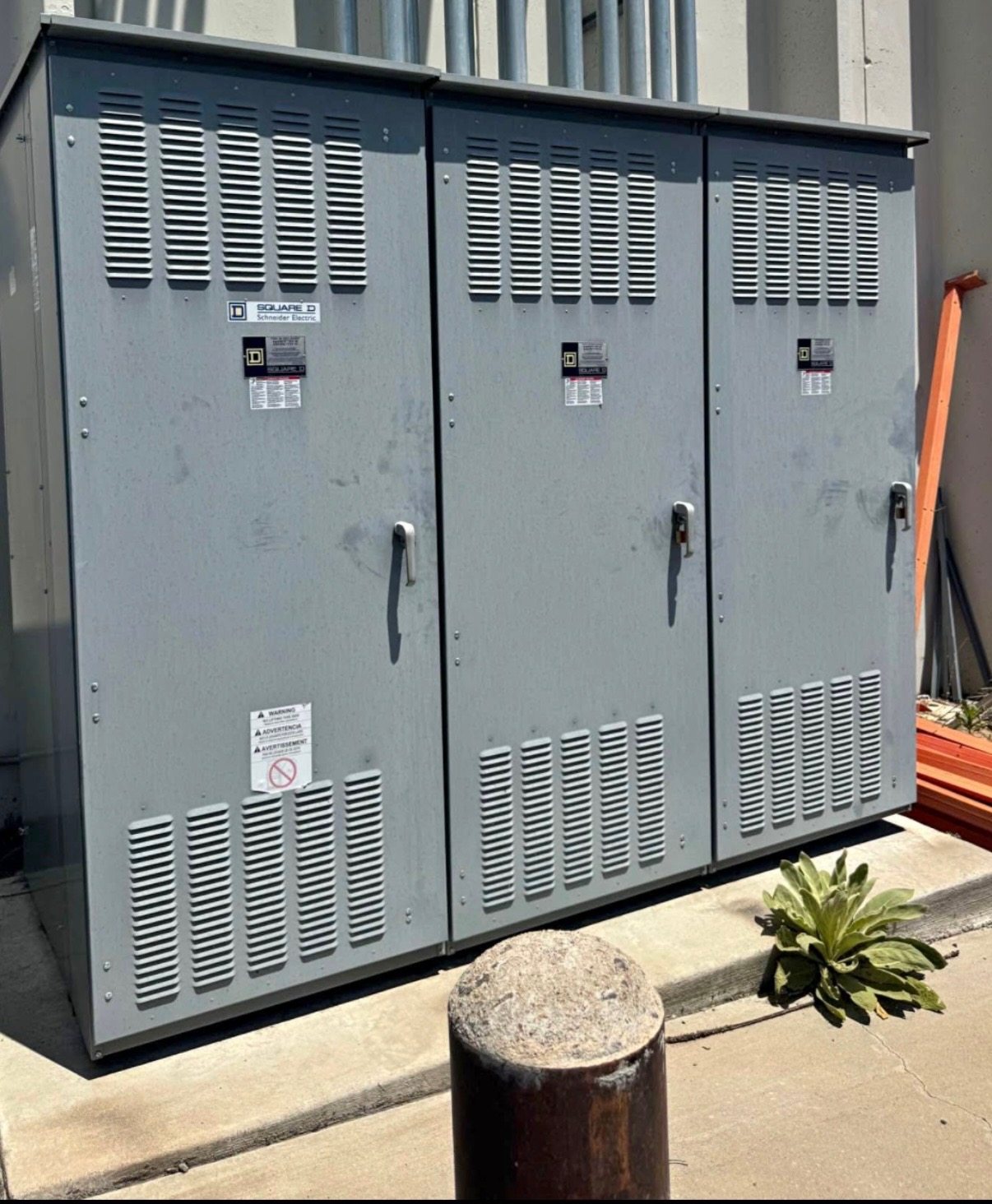
Start with the Main Rating, Not the Breaker Schedule
A switchboard described as 6,000 amp should be assessed from its own identification and configuration, rather than from the largest number on an individual breaker. If the main rating is safely visible on an exterior nameplate or existing equipment record, share that information and clarify whether 6,000 amps is the board’s stated rating or simply a figure associated with one component. A breaker’s rating identifies that breaker; it does not by itself establish the rating of the complete switchboard.
Do not open equipment or approach it to find a label. Never touch energized equipment. You may ask about a board that remains installed or operating by sharing information already available, but do not enter an unsafe area or operate equipment to gather details. If the main rating cannot be confirmed from information safely at hand, say that it is unverified rather than presenting an estimate as fact.
Describe Sections and Configuration Separately
The section count helps distinguish a large switchboard from a simple description based on amperage alone. Share the number of sections if it is documented or readily apparent from a safe vantage point. Existing photos, drawings, equipment schedules, or inventory records can help explain how the assembly is arranged. There is no need to obtain information that is inaccessible or to approach the board for a better view.
Breaker ratings may also be useful, but keep them separate from the main rating and the section count. If available records identify individual breakers, describe those as component details. Avoid adding their ratings together or implying that a particular breaker value represents the board’s capacity. Clear distinctions help an evaluator understand what is known and what still needs confirmation.
Give Timing and Location Context
Planned release timing is useful when discussing a possible sale. Share the expected timing from project plans or other information already available, and note whether that timing is tentative. A planned shutdown, renovation, or decommissioning can provide context without requiring you to change the equipment’s status or take action. If the schedule is uncertain, describe it as an estimate rather than a confirmed date.
Also provide the equipment’s location and identify the facility or project context as appropriate. For example, equipment from a closed data center or power plant may be considered, along with other surplus, used, or decommissioned switchgear. Ownership information matters as well: an inquiry should come from the owner or someone authorized to discuss the equipment. A location description does not mean the seller should arrange access or handling.
Share What Is Known About Condition
Useful condition details can include whether the switchboard is installed, removed, stored, or associated with a facility that has closed, if that information is already known. Existing exterior photos and records may help convey visible condition, but do not open, operate, test, energize, disconnect, or move equipment to produce new information. Testing is not required for the buyer to consider equipment.
Separate documented facts from assumptions. If records identify a rating, say where that information comes from when practical; if a value has not been verified, label it accordingly. A nameplate rating is not a measurement of live voltage, and a voltage class should not be inferred from the amperage designation. The business considers all voltage classes, but accurate descriptions still matter when the actual voltage information is available.
Understand the Purchase and Handling Arrangement
The business buys used, surplus, and decommissioned electrical equipment; it does not sell switchboards. You can request a cash offer for a 6,000-amp board, but an offer or purchase is not guaranteed. Any assessment depends on the information available and the equipment under consideration. There is no need to arrange testing as a condition of making an inquiry.
For equipment that is purchased, payment is upfront, and freight is covered. The buyer handles disconnects, crane and rigging, loading, freight, and hauling. The seller does not perform or arrange those operations. Do not disconnect, lift, load, ship, or haul the switchboard yourself for the purpose of a sale; leave handling arrangements to the buyer if a purchase proceeds.
Prepare a Clear, Safe Description
A concise description can state that the equipment is a switchboard identified as 6,000 amps, then give the safely available main rating, section count, known individual breaker ratings, location, ownership status, known condition, and planned release timing. Mark any unknown or unconfirmed details plainly. You do not need every item to begin a discussion, and missing information should not be filled in with guesses.
Keeping the discussion to records and safely accessible exterior information protects people and improves clarity. Do not enter unsafe areas, approach energized equipment, or try to make the board ready for inspection or removal. Share what is already known and let the buyer determine whether the equipment is appropriate to consider and what handling would be required if it is purchased.