Start with the Nameplate, Not an Assumption
If you are considering a surplus or used 240-volt switchboard in Indiana, begin with information already available to you. A safely accessible exterior nameplate may identify the voltage rating and current rating. Share those details as printed, along with any known equipment description, rather than trying to confirm them by opening or operating the board.
A 240-volt rating alone does not establish the switchboard’s phase or configuration. Do not infer either from the voltage figure; report phase or configuration only if it is identified in information you already have. Keep the distinction clear between the marked rating and the voltage currently present at the equipment. If you do not know whether it is operating or what voltage is present, say that it is unknown rather than presenting a rating as a live reading.
Describe What Is Known—and What Is Not
Useful details can include the nameplate information, photos taken from a safe and accessible location, an equipment list, the switchboard’s location, ownership, and known condition. You do not need to obtain a missing detail or enter an area to answer a question. If a label is obscured, a photo is unavailable, or the condition has not been assessed, explain that plainly. An incomplete but accurate description is more useful than a guess.
For a board that remains installed or operating, an authorized seller may ask about it using information already available. Never touch energized equipment. Do not open, operate, or approach energized equipment, and do not enter an unsafe area to gather information. You are not being asked to make equipment safe, de-energize it, or arrange work before discussing whether it may be of interest.
Give the Board Context
A switchboard’s setting and history can help distinguish it from other equipment being considered. If known, describe whether it came from a facility closure, a project change, or another surplus situation, and whether it is still installed or has already been removed. An equipment schedule or existing inventory may clarify what is included without requiring you to inspect the board. Mention any known missing sections, alterations, or condition concerns, but separate documented facts from recollection or uncertainty.
Also identify who is authorized to discuss the equipment and confirm its ownership. This can help avoid confusion when a facility representative, asset owner, or other seller is sharing information on someone else’s behalf. You need not make claims about condition or configuration that you cannot verify from records or information safely at hand.
Understand the Buyer’s Role
The company buys surplus, used, and decommissioned electrical equipment; it does not sell switchboards. It considers equipment across all voltage classes, including 240-volt switchboards, and equipment from closed data centers and power plants. The voltage class is a starting point for review, not a promise that a particular board will be purchased. A cash offer may be considered after the available details are reviewed, but neither an offer nor a purchase is guaranteed.
You are not required to test the switchboard for the company’s consideration. If purchased, payment is made upfront. For equipment that is purchased, the buyer handles disconnects and the physical handling and transportation arrangements, including crane, rigging, loading, freight, and hauling; freight is covered. The seller does not perform or arrange those operations. Discussing the equipment does not commit either party to a sale, and the purchase depends on the buyer’s review and decision.
Make the Initial Inquiry Useful
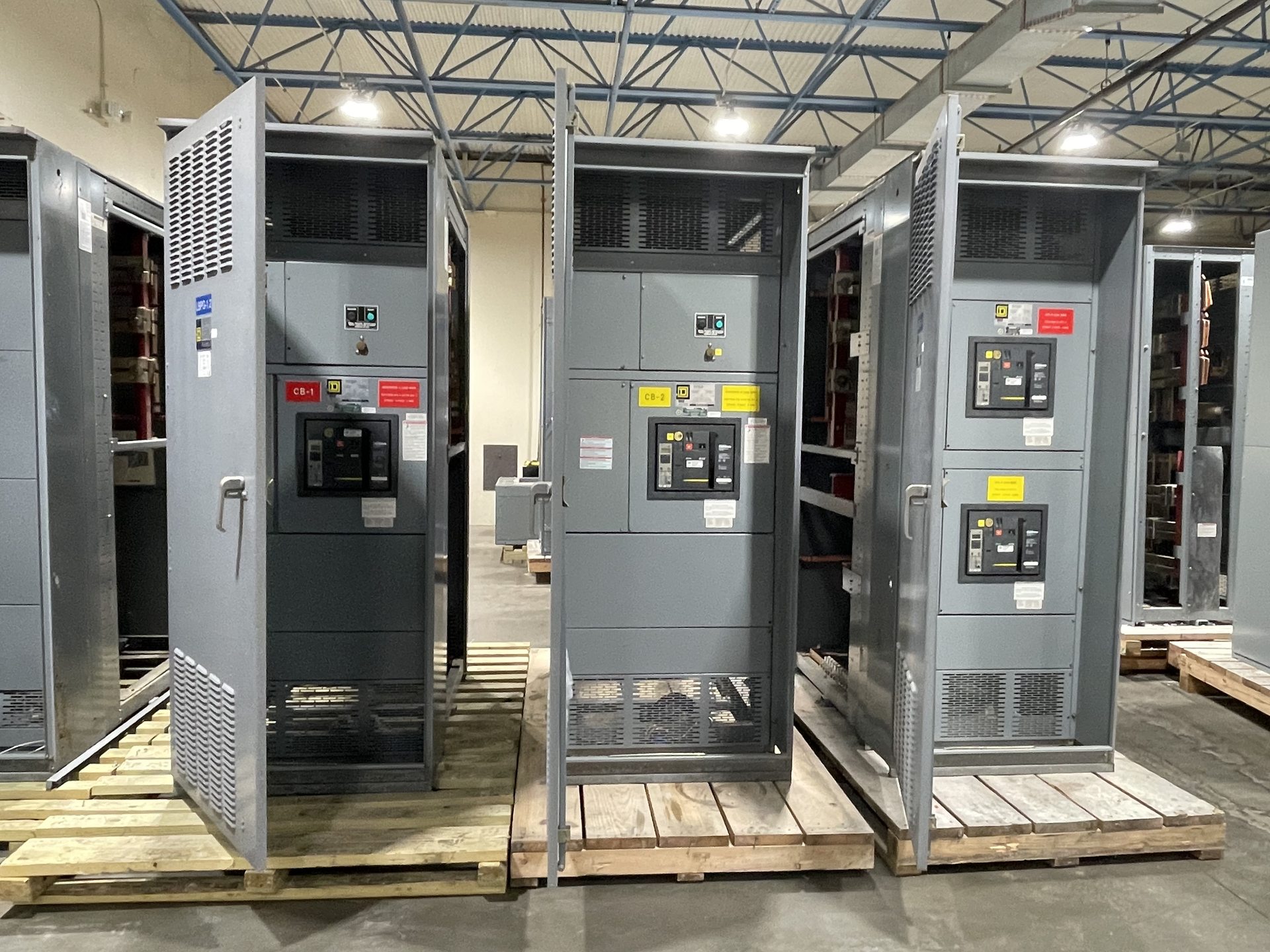
When requesting consideration, provide the location and the identifying information you already have, especially the nameplate voltage and current if visible. Add the make or other identification only when it is available in existing records or safely accessible information. A few clear exterior photos may help explain the board’s general appearance, but do not approach equipment or take a photo from an unsafe position. If you cannot provide an item, simply say so.
It can also help to state whether the board is installed, whether its operating status is known, and what you understand about its condition. Label each point accurately: “nameplate states” is different from “currently measures,” and “not known” is different from “verified.” This gives the buyer a sound basis for follow-up questions without asking you to inspect, test, move, disconnect, lift, load, ship, or haul the equipment.
Keep the Process Within Safe Limits
Use existing records and information you can access safely, and leave all electrical and material-handling work to the buyer if the equipment is purchased. Do not open or operate the switchboard, approach energized equipment, or enter a restricted or unsafe area to improve an inquiry. The fact that a sale is being discussed does not change those boundaries. If a detail cannot be confirmed safely, mark it as unknown; the buyer can decide whether the available information is sufficient to evaluate the equipment.