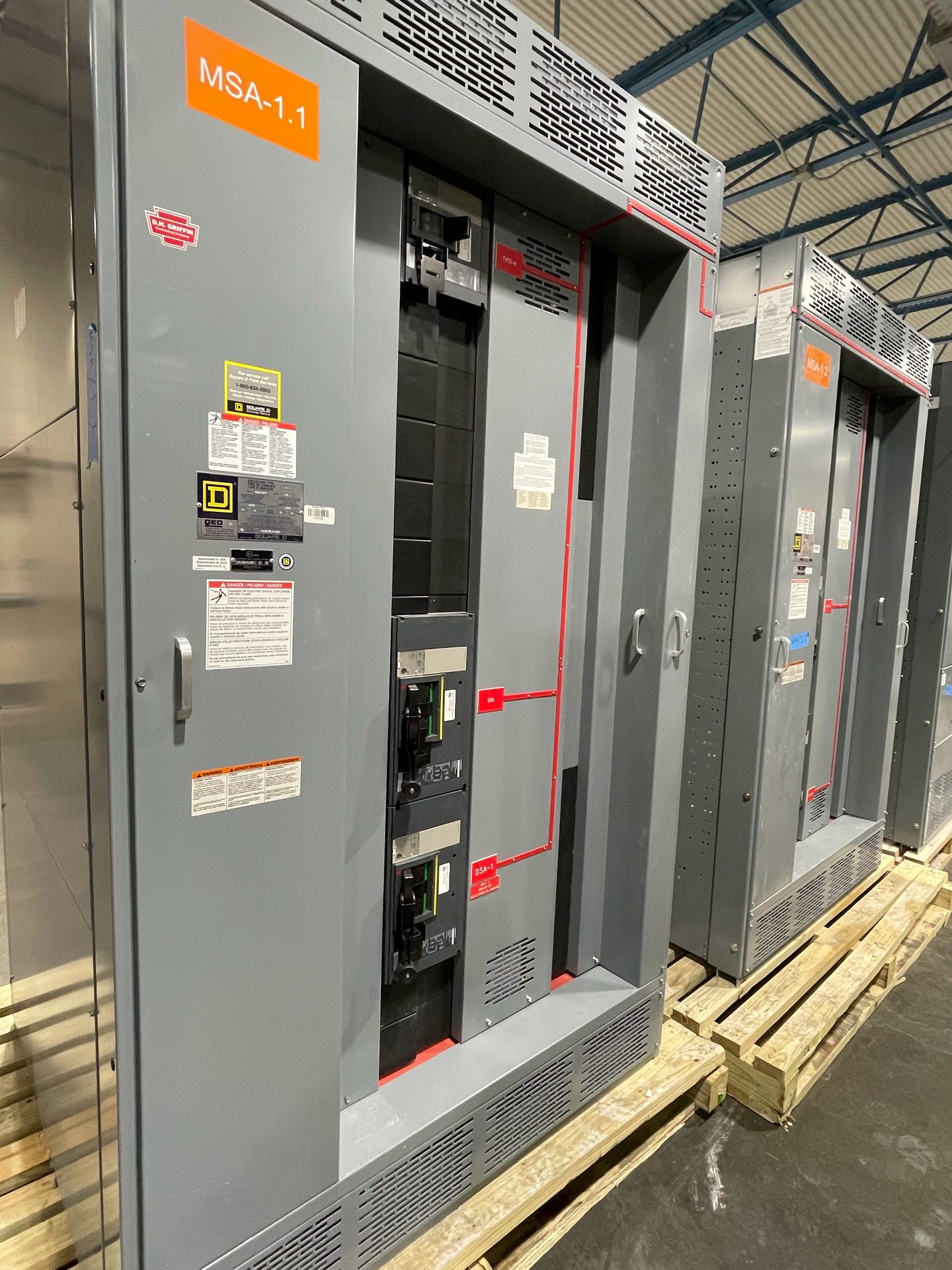
Start With the Rating You Can Verify
If you are evaluating surplus 4,160-volt switchgear at an Indiana facility, begin with the assembly rating shown in information already available to you. A nameplate, existing equipment schedule, project record, or prior inventory may identify the rating. Do not assume the switchgear’s class from a voltage figure alone, and distinguish a marked equipment rating from the voltage currently present in an operating system. If records conflict or the rating is uncertain, describe that uncertainty rather than presenting an estimate as confirmed.
You can inquire about equipment that remains installed or in operation using information you already have. Never touch energized equipment. Do not open or operate gear, approach energized equipment, enter an unsafe area, or seek inaccessible details to prepare an inquiry. If a rating cannot be safely observed, say that it is not verified; an initial discussion does not require you to obtain it.
Describe the Lineup as a Whole
Along with the known assembly rating, share the lineup size and what you understand it to include. The number of sections or cabinets, broad equipment arrangement, and any known associated breakers or controls can help distinguish one assembly from another. Existing documents or safely accessible exterior details may be useful, but you do not need to create an inventory from equipment you cannot safely inspect.
Be precise about what “lineup size” means in your records. It may refer to section count, physical dimensions, or another inventory convention, so explain the basis if it is known. If dimensions or counts are unavailable, identify them as unknown rather than guessing. Clear descriptions give a buyer context without treating incomplete records as a defect or a verified specification.
Give a Realistic Release Window
State when the equipment might become available for removal, even if the timing is provisional. A release window may depend on a project schedule, replacement plans, a facility change, or an operational decision. Explain whether the date is firm, estimated, or still subject to approval. A practical window is more useful than an unsupported promise because it lets the buyer consider the equipment alongside the site’s actual plans.
If the switchgear is still serving a facility, you may say so and share the schedule information already available. You are not being asked to make it safe, disconnect it, or change its operating status to discuss a possible sale. The buyer can consider the information provided and determine whether to make an offer; neither an inquiry nor a stated release window guarantees a purchase.
Share Useful Context Without Testing
Existing photographs, equipment lists, ownership information, location, and known condition can help explain what is being considered. Exterior nameplate details are useful only when safely accessible. You may also note whether records identify changes, missing components, or a history of storage, but separate firsthand knowledge from assumptions. If a detail is unavailable, say so instead of trying to obtain it through inspection or testing.
Testing is not required for the company to consider surplus, used, or decommissioned switchgear. A lack of test results is different from a confirmed performance issue, so describe the records you have without implying that untested equipment has passed or failed. The company considers all voltage classes, including equipment from closed data centers and power plants, but that broad scope does not guarantee an offer for any particular lineup.
Understand Removal and Freight Responsibilities
For equipment it purchases, the buyer handles disconnects and the physical removal and transportation work, including crane, rigging, loading, freight, and hauling. Freight is covered for purchased equipment. The seller does not perform or arrange those operations. This distinction matters when planning a facility transition: an inquiry can establish whether the equipment merits consideration without making you responsible for preparing or moving it.
Share any known site or access constraints from information already available, such as the equipment’s general location within the facility or a scheduling restriction. Do not attempt to move, lift, disconnect, load, ship, or haul the switchgear. The buyer’s handling responsibilities apply if a purchase is made; they should not be mistaken for a promise that the equipment will be purchased or that a particular release date can be met.
Evaluate an Offer Against Your Records
If the equipment is of interest, the company may make a cash offer based on the information and circumstances it can evaluate. For purchased equipment, payment is upfront, and the seller is not required to test the switchgear. An offer or purchase is not guaranteed, so keep the assembly rating, lineup size, ownership details, and release timing clearly identified as confirmed, estimated, or unknown.
For an Indiana owner or authorized seller, a concise, accurate account is a useful starting point: what rating is documented, how large the lineup is according to available records, and when release may be possible. Add relevant condition information only if it is already known. This lets the buyer assess the opportunity without asking you to handle electrical equipment or fill gaps through unsafe access.