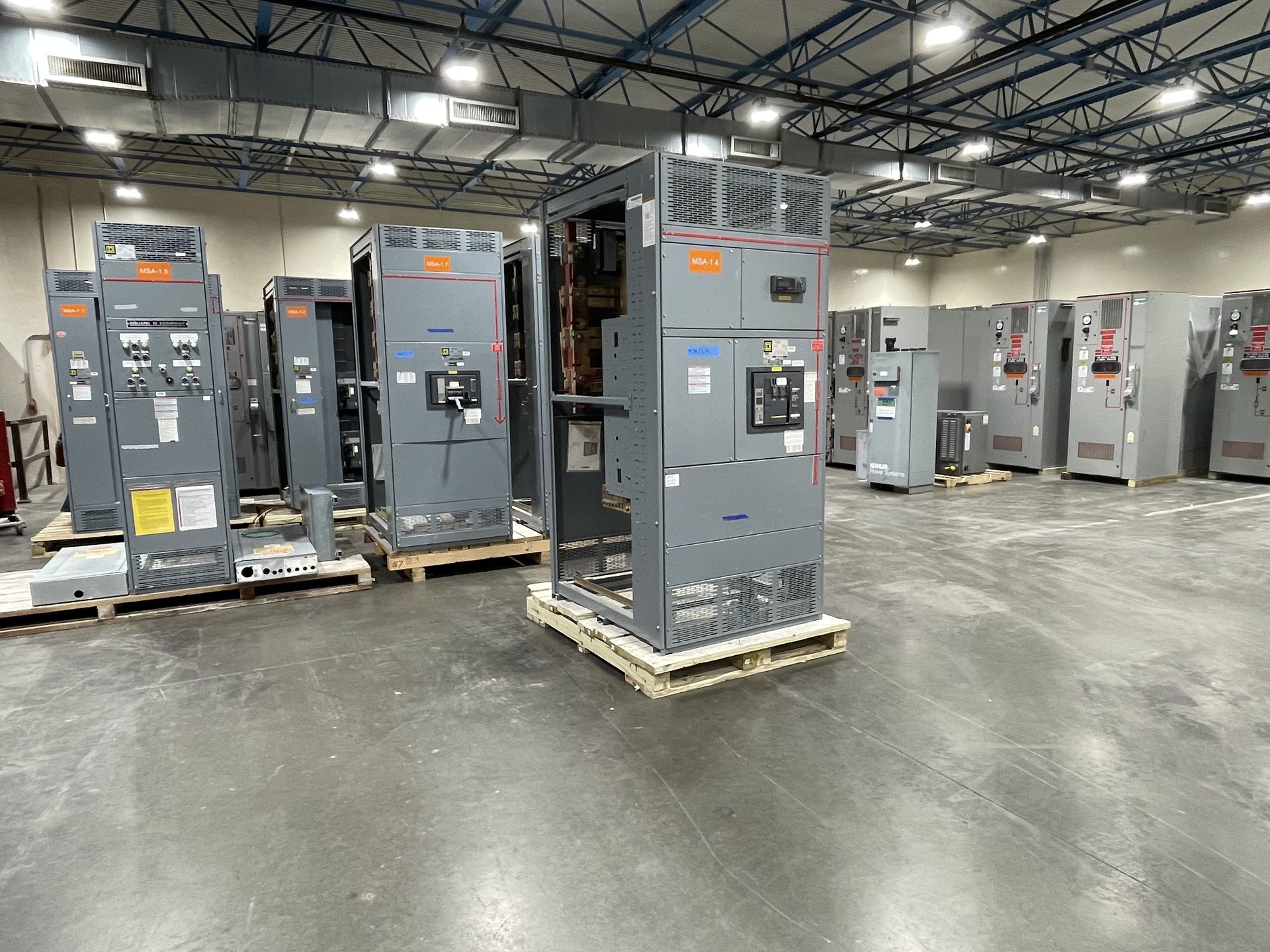
Start with the documented 2,400-Volt Rating
When considering surplus or used 2,400-volt switchgear in Indiana, begin with the equipment’s records and information already available to your facility. A nameplate may state a voltage rating, but that rating is not confirmation of the voltage present at the equipment now. Keep those facts distinct when describing the gear: report the documented rating as shown, and identify current operating status only if it is known from existing information.
If the rating is uncertain, say so rather than estimating or treating a partial record as verified. A safely accessible exterior nameplate, an existing equipment schedule, or project documentation may help describe the assembly. Do not approach equipment to obtain information, and do not try to resolve a question by opening or operating it.
Describe the Switchgear as Sections
A useful inquiry identifies the switchgear sections and explains how they are associated, rather than referring only to “a 2,400-volt lineup.” Existing drawings, equipment lists, or records may show section designations, lineup arrangement, and which breakers belong with particular sections. Share the identifiers as documented, including any gaps or inconsistencies that you already know about.
This level of detail helps distinguish a complete group of related sections from individual sections being considered separately. If the records do not establish how a breaker is associated with a section, do not infer the relationship. State what is documented and what remains unclear; a complete inventory is helpful, but you need not obtain inaccessible information to make an inquiry.
Account for Associated Breakers
List breakers separately or describe them in relation to the sections they serve, using only information already available. Existing schedules or labels may identify breaker numbers, ratings, or positions. When sharing such details, distinguish the wording on a record or label from a condition you have personally verified. Avoid presenting an assumed match, quantity, or rating as certain.
Whether breakers are included can affect how the equipment is evaluated, so note known exclusions, missing items, or uncertainty. You do not need to test breakers or inspect internal parts. Never touch energized equipment. Sellers must not open, operate, or approach energized equipment, or enter unsafe areas to gather details.
Share What Is Safely Available
An initial description can include the site location, ownership or authority to discuss the equipment, known condition, and whether the switchgear is installed, stored, surplus, or decommissioned. You may share photos already available or images of safely accessible exterior nameplate information. Do not enter an unsafe area or move closer to equipment to take a picture.
Equipment that remains installed or operating can still be discussed using information you already have. Do not make it safe, de-energize it, disconnect it, or arrange for someone else to perform those tasks as a condition of asking about a sale. If a detail cannot be safely confirmed, identify it as unknown. That is more useful than guessing about condition, completeness, or present voltage.
Understand the Buyer’s Role
The business buys surplus, used, and decommissioned electrical equipment; it does not sell switchgear. It considers equipment across voltage classes, including gear from closed data centers and power plants. A buyer can review the information provided and determine whether to make a cash offer, but an offer or purchase is not guaranteed. The equipment’s documented rating alone does not establish its value or assure that it will be purchased.
Testing is not required from the seller. For equipment that is purchased, payment is upfront, and freight is covered. These terms do not mean that every inquiry will result in a purchase, or that a particular price, payment method, or timing is assured. Clarify the proposed transaction terms before treating an inquiry as a completed sale.
Clarify Handling Before Committing
For purchased equipment, the buyer handles disconnects and the physical handling arrangements, including crane, rigging, loading, freight, and hauling. The seller does not perform or arrange those operations. Do not disconnect, move, lift, load, ship, or haul the switchgear yourself, and do not hire someone to do those tasks for the purpose of preparing it for sale.
When discussing a potential purchase, describe where the equipment is located and whether it remains installed if that information is known. The buyer can consider that context when reviewing the opportunity. A possible purchase does not authorize work at the site or establish that equipment will be removed; wait for clear agreement on whether the buyer is proceeding and the applicable arrangements.
Make the Inquiry Accurate, Not Overstated
A concise inquiry can bring together the documented 2,400-volt rating, section identifiers, associated breakers, location, ownership, and known condition. Include existing records or safely available exterior photos if useful, while noting missing details. This gives the buyer a practical basis for review without asking facility personnel to access energized or unsafe equipment.
Be clear about the difference between a documented rating and a verified present condition, and between what is known and what is uncertain. That approach supports a more informed discussion while keeping the seller’s role limited to sharing available information. Any decision to make an offer remains subject to the buyer’s review and agreement.