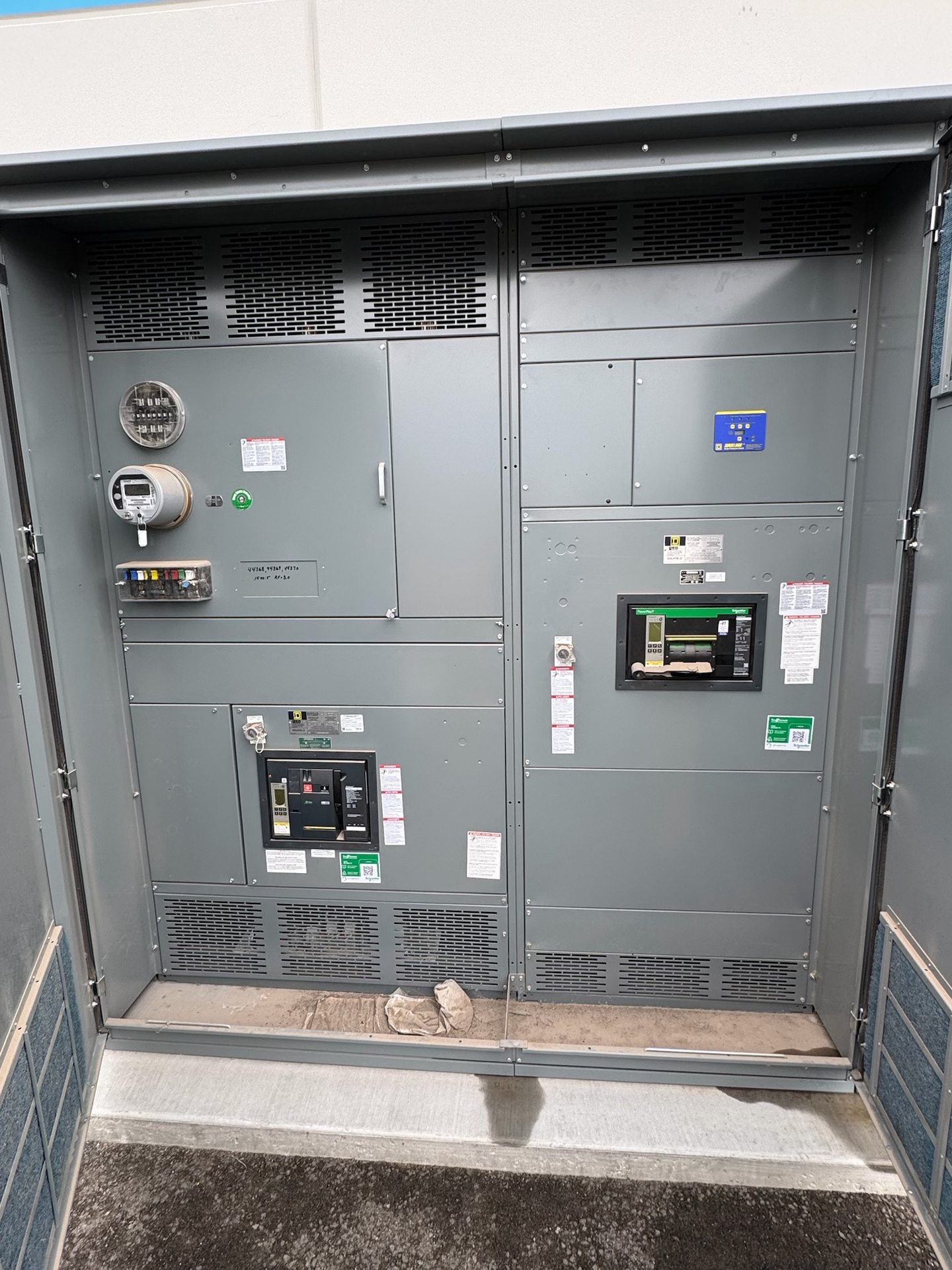
Read the lineup rating separately from breaker details
A 600-volt marking can be a useful starting point when describing surplus switchgear, but it does not tell the whole story of a lineup. The lineup’s voltage rating and the information shown on an individual breaker are separate details. Existing labels or equipment documents may identify each in different ways, so report what each source actually says rather than treating one marking as proof of the other.
A rating describes a stated equipment capability; it is not confirmation of the voltage present at the equipment now. If a label, drawing, or record identifies the lineup as 600 volts, describe that as the listed rating. If the breaker information is unknown, say it is unknown. Do not infer a breaker’s rating from the lineup label, or report a rating as verified when you have not seen it in available records.
Use information already available
For an initial review, useful details may include safely accessible exterior nameplate information, photographs already taken from a safe location, equipment lists, drawings, location, ownership, and known condition. You do not need to obtain every possible detail before asking whether the equipment may be of interest. If a particular label or document is unavailable, make that clear instead of entering an estimate as fact.
When sharing photos or records, distinguish between information that is legible and information that is incomplete or uncertain. A photo of a lineup label may help identify its stated rating, while an existing breaker schedule may provide separate breaker details. If the records conflict, note the discrepancy. That gives the buyer a clearer basis for review than attempting to reconcile it through assumptions.
Installed or operating gear can still be discussed
You may inquire about switchgear that remains installed or operating by sharing information already available to you. Never touch energized equipment. Sellers must not open, operate, or approach energized equipment, and must not enter an unsafe area to retrieve a label, photograph, or document. There is no need to make equipment safe or take it out of service simply to begin an inquiry.
If you cannot safely access a particular detail, say so. A description can identify the equipment as installed, note that its current condition is not fully known, and provide the records on hand. Do not treat a nameplate rating as a measurement of live voltage, or imply that a remote review confirms operating condition. Those are different questions, and available information may not answer all of them.
Describe the equipment and its context
Beyond voltage information, explain what is known about the lineup: whether it is surplus, used, or decommissioned; whether it is part of a larger electrical system; and whether related breakers or other equipment are included in the inquiry. Identify the facility type, such as a data center or power plant, when that context is known. Do not claim components are included if ownership or scope is uncertain.
Clear context can help distinguish a complete lineup from individual equipment being considered separately. If an equipment list exists, share it as-is and flag missing or uncertain entries. You are not expected to test equipment, and testing is not required for the company to consider surplus switchgear. Any known condition information should be described accurately rather than presented as a guarantee about performance.
Understand the review and purchase arrangement
The company buys surplus, used, and decommissioned electrical equipment; it does not sell switchgear to the person making an inquiry. It considers equipment across voltage classes, so a 600-volt designation is not a reason to assume an inquiry cannot be reviewed. A cash offer may be made after consideration, but neither an offer nor a purchase is guaranteed.
For equipment that is purchased, payment is made upfront, and the seller is not required to test it. The buyer covers freight and handles the crane, rigging, disconnects, loading, freight, and hauling for purchased equipment. The seller does not perform or arrange those operations. These arrangements apply to a completed purchase; they should not be mistaken for a promise that every inquiry will result in a transaction.
Prepare a clear, bounded inquiry
Before submitting information, confirm that you are authorized to represent the equipment owner or otherwise have authority to discuss its potential sale. Provide the location and ownership information you can share, identify the lineup’s stated voltage rating if available, and separate breaker details from lineup details. Add relevant records or safely obtained exterior photos only when they are already available. State plainly what is unknown, inaccessible, or not confirmed.
This approach lets an Indiana owner or authorized representative begin a practical review without taking on electrical or handling work. Keep the inquiry limited to records and observations already available to you, and leave any site work or equipment handling out of your responsibilities. The buyer can assess the information provided and determine whether to make an offer.