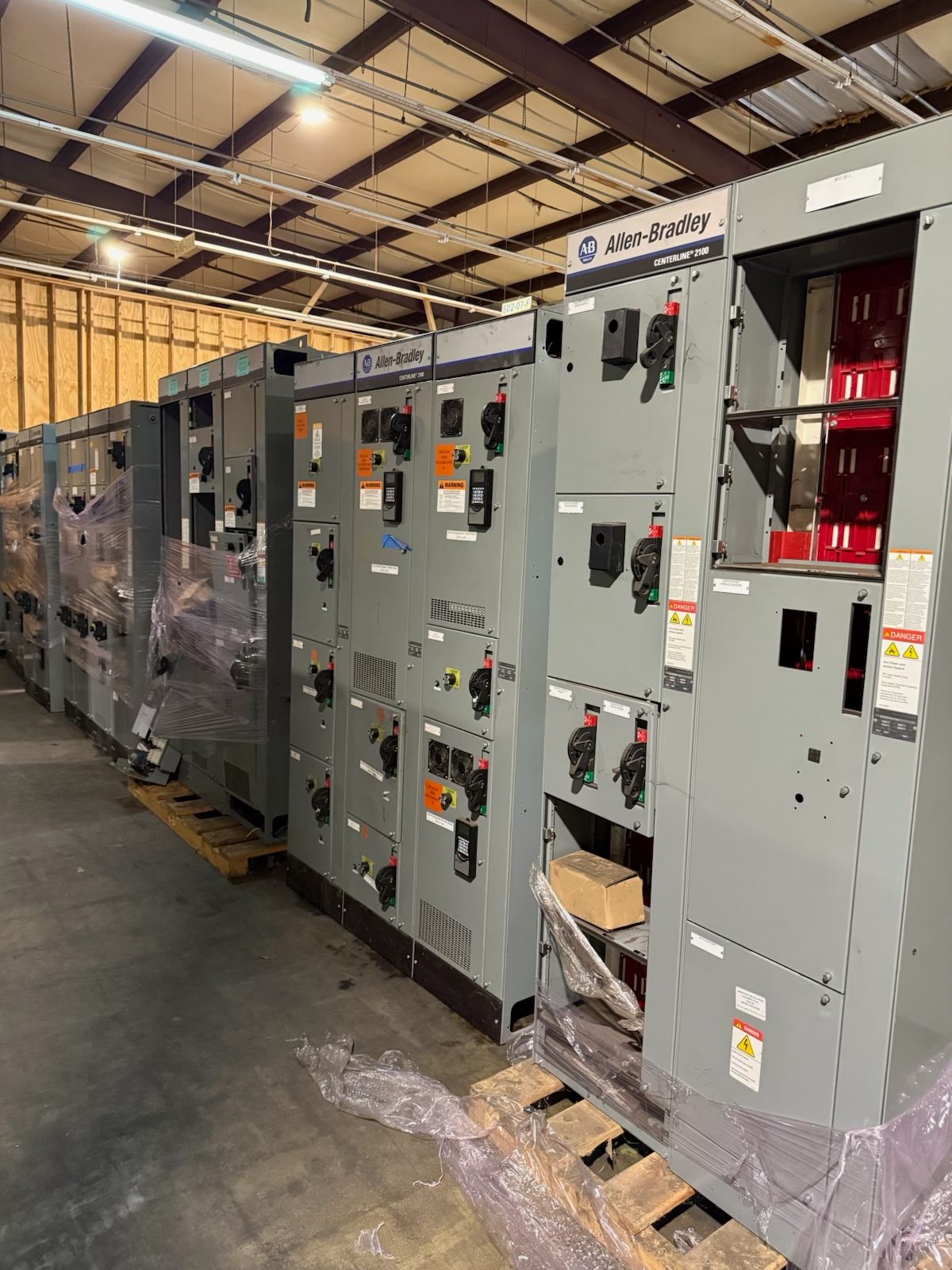
Separate the switchgear from the motor-control centers
A manufacturing upgrade can leave several kinds of electrical equipment in the same building or project lot. If you are considering the switchgear for a sale, describe it as its own group rather than combining it with motor-control centers (MCCs). They may be located side by side or have served the same production area, but they are distinct equipment categories. A clear separation helps a buyer assess what is being offered and avoids suggesting that every item in a mixed lot is switchgear.
For example, identify the switchgear lineup or sections as one proposed group, then describe the MCC lineup separately. If the equipment has not been fully inventoried, say which items are positively identified and which remain uncertain. You do not need to settle every classification before making an inquiry; the important point is to distinguish known switchgear from equipment that may be an MCC or another asset.
Describe each group using information already available
For the switchgear, share details you already have, such as the manufacturer, lineup designation, voltage rating, section count, general configuration, and any safely accessible exterior nameplate information. For the MCCs, provide comparable details separately when available, such as lineup identification, sections, or known bucket information. Existing equipment lists, project records, and photographs can help clarify what belongs to each group, but you do not need to obtain information that is inaccessible or uncertain.
Keep observations distinct from verified facts. A label may identify a rating; that rating is not necessarily the voltage present at the equipment now. If you do not know whether a lineup is complete, whether components are missing, or what its present condition is, describe that as unknown rather than making an assumption. Never touch energized equipment. Sellers must not open or operate equipment, approach energized equipment, or enter unsafe areas to gather sale information.
Make the proposed lot boundaries clear
Explain whether the switchgear and MCCs are being offered as separate groups, or whether you are open to a buyer considering both. If only the switchgear is part of the inquiry, state that the MCCs are excluded. If the scope is not yet decided, identify the two groups and note that the lot boundary remains to be discussed. This is especially useful after a phased upgrade, when equipment from different production areas or project stages may be stored or recorded together.
Where possible, use existing labels, location descriptions, or inventory references to show which equipment is in each group. Do not rely on a broad phrase such as “electrical gear” if it could include switchgear, MCCs, panelboards, or other equipment. Clear distinctions support a more relevant review without requiring you to dismantle, move, or inspect anything.
Include location, ownership, and known status
Provide the equipment’s site location and confirm that you are the owner or are authorized to discuss its disposition. If the gear remains installed or operating, you may still inquire using information already available; it does not have to be taken out of service before a conversation about a possible sale. You can explain its current status as you understand it, while noting any uncertainty. Do not enter a restricted or unsafe area to verify details.
Photographs can be useful when they are already available or can be taken from a safe, permitted location without approaching hazardous equipment. A photograph of an exterior label or a wider view of a lineup may help distinguish switchgear from a nearby MCC, but photos are optional. Do not open doors or covers, operate equipment, or take risks to produce images.
Understand what happens if equipment is purchased
The buyer considers surplus, used, and decommissioned switchgear and MCCs, including equipment associated with manufacturing upgrades. All voltage classes are considered, but that does not mean every item will receive an offer or be purchased. A cash offer depends on the equipment and the details available for review; a purchase is not guaranteed. Testing is not required from the seller to make an inquiry.
For equipment that is purchased, the buyer handles disconnects and the physical handling arrangements, including crane, rigging, loading, freight, and hauling. Freight is covered for purchased equipment. The seller does not perform or arrange those operations. Do not disconnect, move, lift, load, ship, or haul equipment as part of preparing it for a possible sale.
Prepare a focused inquiry for a manufacturing upgrade
A concise inquiry can identify the proposed switchgear group, list the MCCs separately, give the site location, and summarize known ratings and condition. Mention whether records or exterior photos are available and whether the equipment is still installed, without implying that you have verified details you cannot safely access. For a purchased lot, payment is made upfront; neither an offer nor a purchase is guaranteed. Keeping the equipment categories and proposed lot boundaries explicit gives the buyer a clearer basis to review the opportunity.