Confirm who can authorize a sale
In a shared building, the person who knows the switchgear best may not be the person allowed to sell it. When discussing an offer, share the known equipment owner and who may have authority to represent that owner; uncertainty can be clarified before a transaction. The equipment might belong to a property owner, a tenant, a utility, or another organization, while facility staff manage access on someone else’s behalf. Clarifying those roles early helps prevent a conversation about one party’s equipment from being mistaken for approval by another.
If you are a facility employee or contractor, establish whether you may share information and coordinate a review, or whether an owner representative must handle the transaction. A property manager or building contact can help identify the correct decision-maker, but should not be treated as the equipment owner unless authorized to act for that owner. You can ask who approves a sale, who can confirm ownership, and who should receive any proposed terms.
Separate sale authority from site access
Authorization to sell and permission to coordinate access are different responsibilities. A building owner may approve a sale while a facilities contact, tenant representative, or site manager controls scheduling and entry. Identify both roles, along with any additional person who must approve work in a shared electrical room or common area. This matters when several organizations occupy the property or when equipment serves more than one tenant.
Make clear that access coordination does not authorize anyone to handle equipment. Sellers must never open, operate, or approach energized equipment or enter unsafe areas. Never touch energized equipment. If equipment is still installed or operating, you may inquire using information already available, such as existing records or safely accessible exterior details. There is no need to make equipment safe or obtain information from an inaccessible location to begin a discussion.
Define which equipment is included
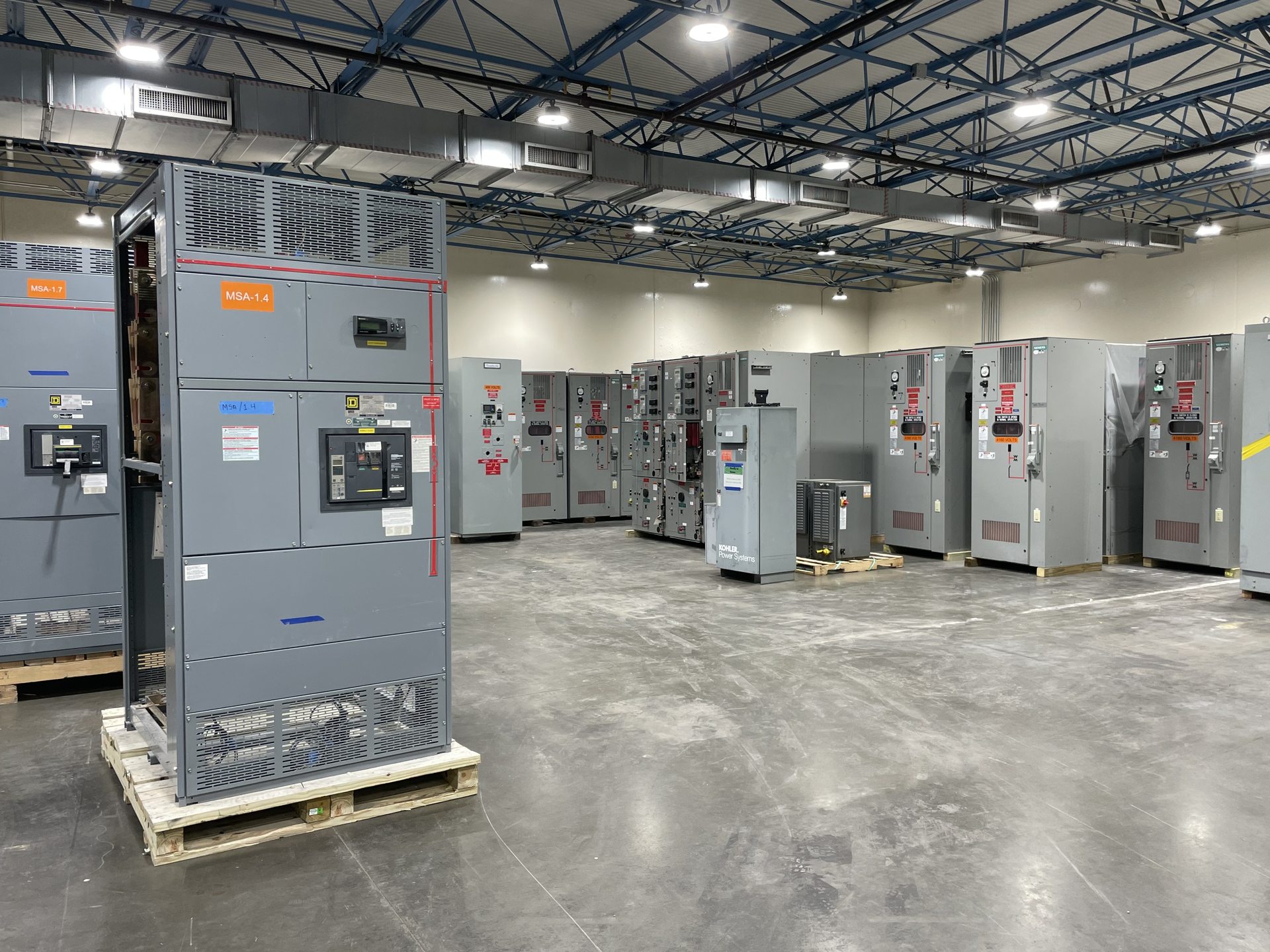
Describe the equipment you want considered without assuming that every item in a room belongs to the same owner or is part of one sale. A surplus list might identify switchgear, switchboards, motor-control centers, panelboards, busway, automatic transfer switches, breakers, or unit substations. Note which items are believed to be included, which are excluded, and where ownership or scope remains uncertain. That distinction can be especially important in shared electrical spaces.
Existing equipment lists, records, photographs, location information, and safely accessible exterior nameplate details can help identify items. Share what is already available; do not enter a restricted or unsafe area to collect more. If a record is incomplete, label the detail as unknown rather than presenting an assumption as verified. A clear boundary around the proposed equipment helps the authorized seller and buyer discuss the same assets.
Use ratings carefully
Nameplate information can help describe equipment, but a voltage rating is not proof of the voltage present now. Keep recorded ratings separate from any claim about live conditions, and distinguish a verified nameplate detail from a value taken from an old list or supplied from memory. If the rating cannot be read safely or is not in existing records, say that it is unavailable. Do not open equipment or attempt a test to fill a gap.
The buyer considers equipment across all voltage classes, including equipment from closed data centers and power plants. That broad scope means an owner need not assume an item is out of consideration solely because of its voltage class. It does not establish that every item will be purchased. Equipment type, available information, ownership, condition as known, and the proposed scope can all inform whether the buyer makes an offer.
Discuss condition without arranging tests
Share known condition plainly, including whether the equipment is described in existing records as used, surplus, decommissioned, or still installed. Separate documented facts from uncertain descriptions, and mention if a listing may not reflect current conditions. Testing is not required for the seller to inquire. Do not open, operate, energize, or test equipment as part of preparing information for a sale discussion.
A buyer’s review of the information is not a promise to purchase. The business buys equipment rather than selling it, and a cash offer is not guaranteed. If the buyer makes an offer and the parties agree to a purchase, payment is upfront. Ask the authorized buyer to clarify the proposed items and terms before treating an initial discussion as a completed transaction.
Clarify handling and freight responsibilities
For equipment that is purchased, the buyer handles disconnects, crane and rigging arrangements, loading, freight, and hauling, and covers freight. The seller does not perform or arrange those operations. This division can help a shared-building owner distinguish transaction coordination from physical handling: the seller identifies the authorized contact and proposed equipment, while the buyer takes responsibility for handling arrangements for purchased items.
Before proceeding, confirm who can approve the sale, who coordinates site access, and exactly which equipment is under discussion. Keep ownership questions and exclusions visible rather than relying on assumptions about shared infrastructure. Do not attempt to prepare, move, disconnect, or ship equipment. When the owner, access coordinator, and equipment scope are clearly identified, the buyer can assess the information provided and determine whether to make an offer.