Confirm Who Is Authorized to Represent the Owner
A contractor handling surplus equipment for a property owner can begin by clarifying who owns the gear and who has authority to discuss its sale. If you are acting for the owner, identify that relationship and be ready to provide confirmation or the owner’s contact when available. Authority matters because a project role, access to a site, or responsibility for removing equipment does not necessarily mean you can approve a sale or commit the owner to one.
An initial evaluation can start with available information; identify who can answer questions or approve a transaction when known. If authority is limited, explain the limits rather than implying that you can make decisions reserved for the owner. This helps keep the equipment description and any potential offer connected to the person or organization entitled to act.
Describe the Equipment and Its Present Location
Share information already available about the equipment: its location, known ownership, general condition, and any existing equipment lists or photographs. Safely accessible exterior nameplate details can help identify a unit, but do not enter an unsafe area or approach equipment to obtain them. If a detail cannot be accessed safely, say that it is unknown rather than trying to retrieve it.
For a Scottsburg, Indiana, project, give a practical location description that helps distinguish the equipment from other gear at the property. Clarify whether it is inside a building, in a designated electrical area, or at another known site location, using only information you can safely provide. You do not need to create a new inventory or obtain every possible detail before making an inquiry.
Separate Loose Surplus from Gear Attached to the Building
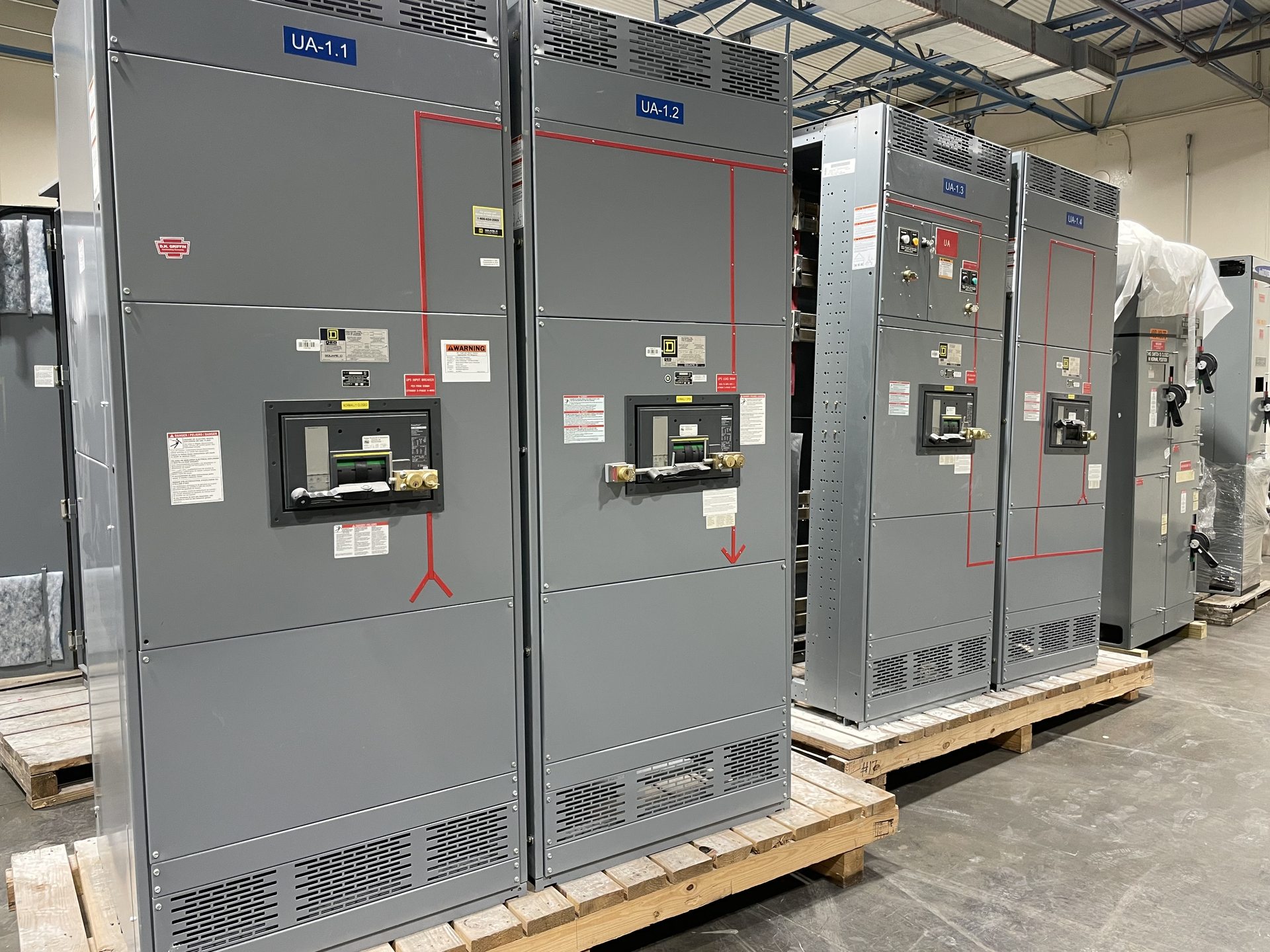
State clearly whether each item is already separate from the building or remains installed, connected, or otherwise attached. Switchgear, switchboards, motor-control centers, panelboards, busway, automatic transfer switches, breakers, and unit substations can have different relationships to the facility. A list that simply says “surplus electrical equipment” may not show which items are standalone inventory and which are part of the building’s existing electrical system.
If equipment remains installed or operating, you may still ask about it using information already available. Identify it as installed or operating if that is known, and distinguish that status from any assumption about whether it can be sold. Never touch energized equipment. Sellers must not open or operate it, approach energized equipment, or enter unsafe areas to gather information.
Make Clear What Is Known—and What Is Not
Equipment labels can help identify ratings, but a rating is not a measurement of the equipment’s live voltage. Report the wording visible on an accessible nameplate as a label detail, and avoid presenting it as confirmation of operating conditions. If a rating, condition, or operating status has not been verified, describe it as unverified or unknown rather than guessing.
Photographs, existing records, and equipment schedules may help a buyer assess what is being offered. Share only material that is available to you and safe to provide. Testing is not required for the buyer to consider surplus equipment, so do not test, energize, open, or otherwise manipulate gear to support an inquiry.
Understand the Buyer’s Role in Handling Purchased Gear
The company buys surplus, used, and decommissioned electrical equipment; it does not sell equipment to the contractor or owner. It considers equipment across all voltage classes, including gear from closed data centers and power plants. Whether a particular item can be purchased depends on its details and the buyer’s evaluation, so an inquiry should not be treated as a guaranteed offer or sale.
For equipment that is purchased, the buyer handles crane work, rigging, disconnects, loading, freight, and hauling, and covers freight. The seller does not perform or arrange those operations. Do not disconnect, move, lift, load, ship, or haul equipment as part of preparing it for review; provide the available information and let the buyer address handling if a purchase is agreed.
Ask About the Commercial Terms Without Assuming an Outcome
When presenting the opportunity, ask whether the buyer can evaluate the described equipment and what additional information, if any, is useful. A cash offer may be made after review, but neither an offer nor a purchase is guaranteed. If equipment belongs to a client, share the terms with the authorized decision-maker before representing that the owner has accepted them.
For purchased equipment, payment is made upfront, and the seller is not required to test the gear. These terms can simplify the contractor’s role: document authority, accurately identify what is being offered, and clarify what remains attached to the facility. They do not remove the need for the owner or authorized representative to approve a transaction.
Keep the Inquiry Accurate and Safe
A useful initial inquiry can be concise: identify the owner or your role, give the location, name the equipment as specifically as available records allow, and state whether it remains installed or attached. Include safely accessible photos or records if you already have them. Flag uncertainties plainly and avoid implying that unknown details have been checked.
Do not enter restricted or unsafe areas or take steps to make equipment accessible for a sale discussion. An owner or contractor can raise the opportunity while gear is still installed, then leave any handling decisions to the buyer if the equipment is purchased. Accurate boundaries around authority, attachment, and known condition help the buyer assess the opportunity without asking sellers to take on electrical or material-handling work.