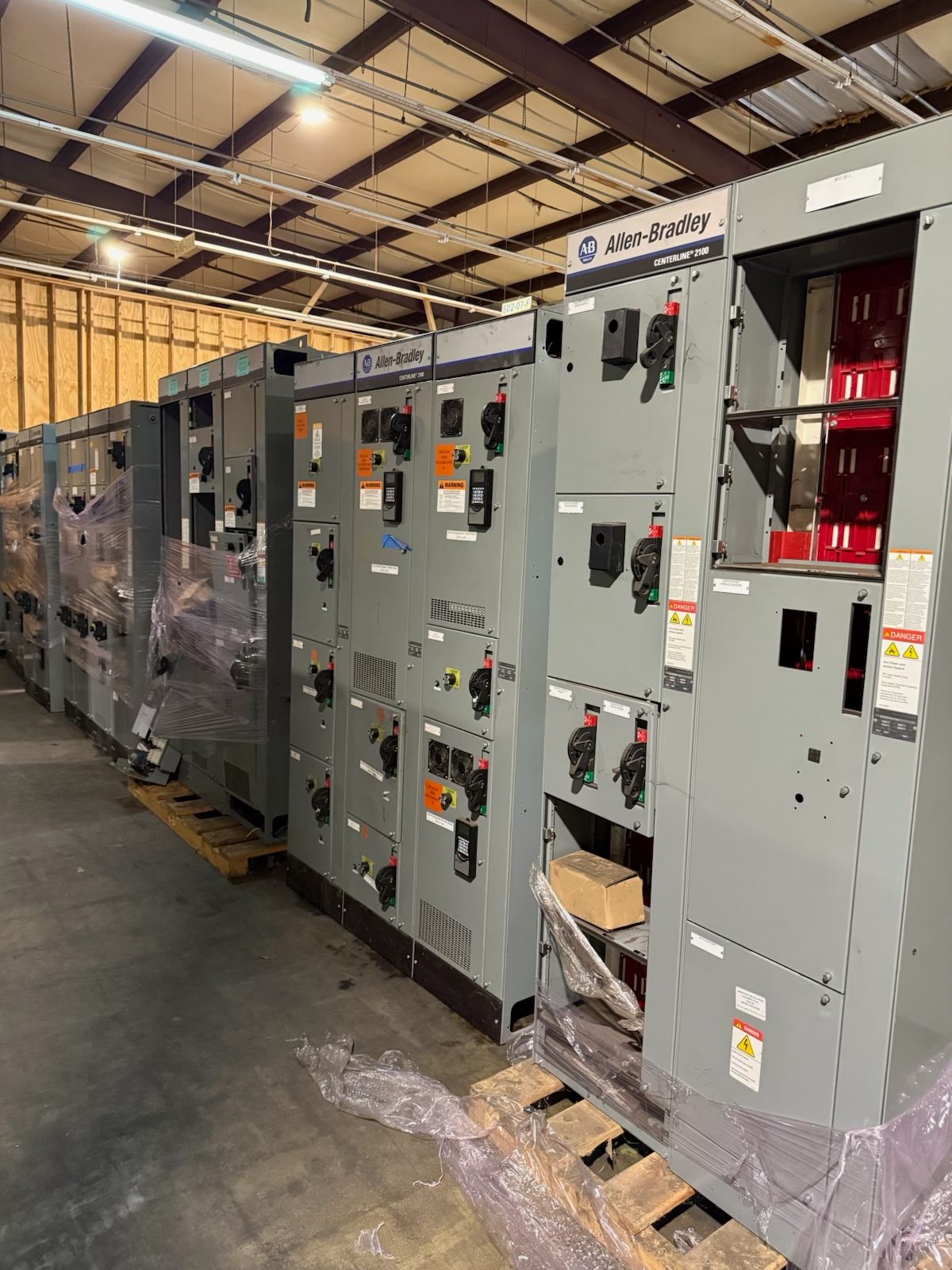
Separate the MCC lot by what is actually being released
An upgrade can leave a motor-control center in several different states: complete cabinets may be designated for removal, while loose buckets are set aside, retained, or released later. Describe those groups separately before requesting an offer. A clear account helps a buyer assess the equipment being considered, rather than treating every cabinet and component in the project as one undifferentiated lot.
For each group, explain whether it is a complete cabinet, a cabinet with some buckets removed, or loose buckets that are no longer installed. If a cabinet is incomplete, note which parts are known to be absent, if that information is already available. Do not assume that a loose bucket has the same value or application as a complete section; its usefulness depends on its identity, condition, and compatibility information.
Describe the release phases explicitly
When equipment will be released in stages, state which cabinets or loose buckets are included in each phase and when each group is expected to become available, if known. For example, distinguish the cabinets included in the first release from buckets or additional sections that may be released after a later upgrade stage. If the schedule is tentative, call it tentative instead of presenting it as settled.
This separation matters because a buyer evaluating a phased lot needs to understand what is being offered now and what may be offered later. Identify whether each phase is a separate potential sale or part of a proposed lot, and flag any equipment that is not being released. An inquiry does not commit either party to a purchase; a cash offer or purchase is not guaranteed.
Share the identifying information already available
Useful information may include the manufacturer and type shown on safely accessible exterior labels, section or bucket identifiers, the number of cabinets and loose buckets, and any equipment list already maintained for the upgrade. Photos of safely accessible exterior surfaces can help show layout and visible condition. You do not need to obtain details that are inaccessible or enter an unsafe area to answer questions.
Keep rated voltage distinct from live voltage. A nameplate rating describes equipment characteristics; it does not establish the voltage present at the equipment now. If the live condition is unknown, say so rather than guessing. You may inquire about MCCs that remain installed or operating using information already available, without opening, operating, or approaching the equipment.
Explain condition without conducting a test
Share known facts such as whether the MCC was removed from service, whether components are visibly missing from information you can safely access, and whether records identify prior issues. Separate firsthand knowledge from assumptions or old documentation. A buyer may consider used, surplus, and decommissioned motor-control centers, including equipment from closed data centers and power plants, across all voltage classes; that does not make every lot suitable for purchase.
Testing is not required from the seller. Do not open or operate equipment to confirm a detail, and do not approach energized equipment or enter an unsafe area. Never touch energized equipment. If a condition cannot be verified safely from existing information, identify it as unknown. This is more useful than implying that an unverified rating, operating status, or component count is certain.
Clarify ownership and the scope of the transaction
Confirm that you are the owner or authorized to discuss the equipment, and identify any restrictions on which cabinets or buckets can be released. If the MCC belongs to a larger facility project, specify what is included in the proposed sale and what remains with the facility. A simple equipment schedule, when one already exists, can keep the phases and ownership boundaries clear without requiring a seller to create inaccessible technical details.
The business is a buyer, not a seller of MCCs. If equipment is purchased, payment is upfront, and freight is covered. These terms do not guarantee that a particular lot will receive an offer or be purchased; the assessment depends on the information and equipment under consideration.
Leave handling arrangements to the buyer for purchased equipment
For equipment it purchases, the buyer handles disconnects, crane and rigging, loading, freight, and hauling. The seller does not perform or arrange those operations. Do not disconnect, move, lift, load, ship, or haul equipment to prepare it for review or sale, and do not enter an unsafe area to assist. Provide available location and access context from what you already know; the buyer’s responsibility for handling purchased equipment does not make it appropriate for a seller to undertake hazardous work.
Before discussing an upgrade-related lot, a concise account of its complete cabinets, loose buckets, release phases, known condition, and ownership can make the inquiry more useful. State uncertainties plainly and keep the conversation limited to information you can share safely. That gives the buyer a clearer basis to consider the equipment without asking facility personnel to test it or handle it.