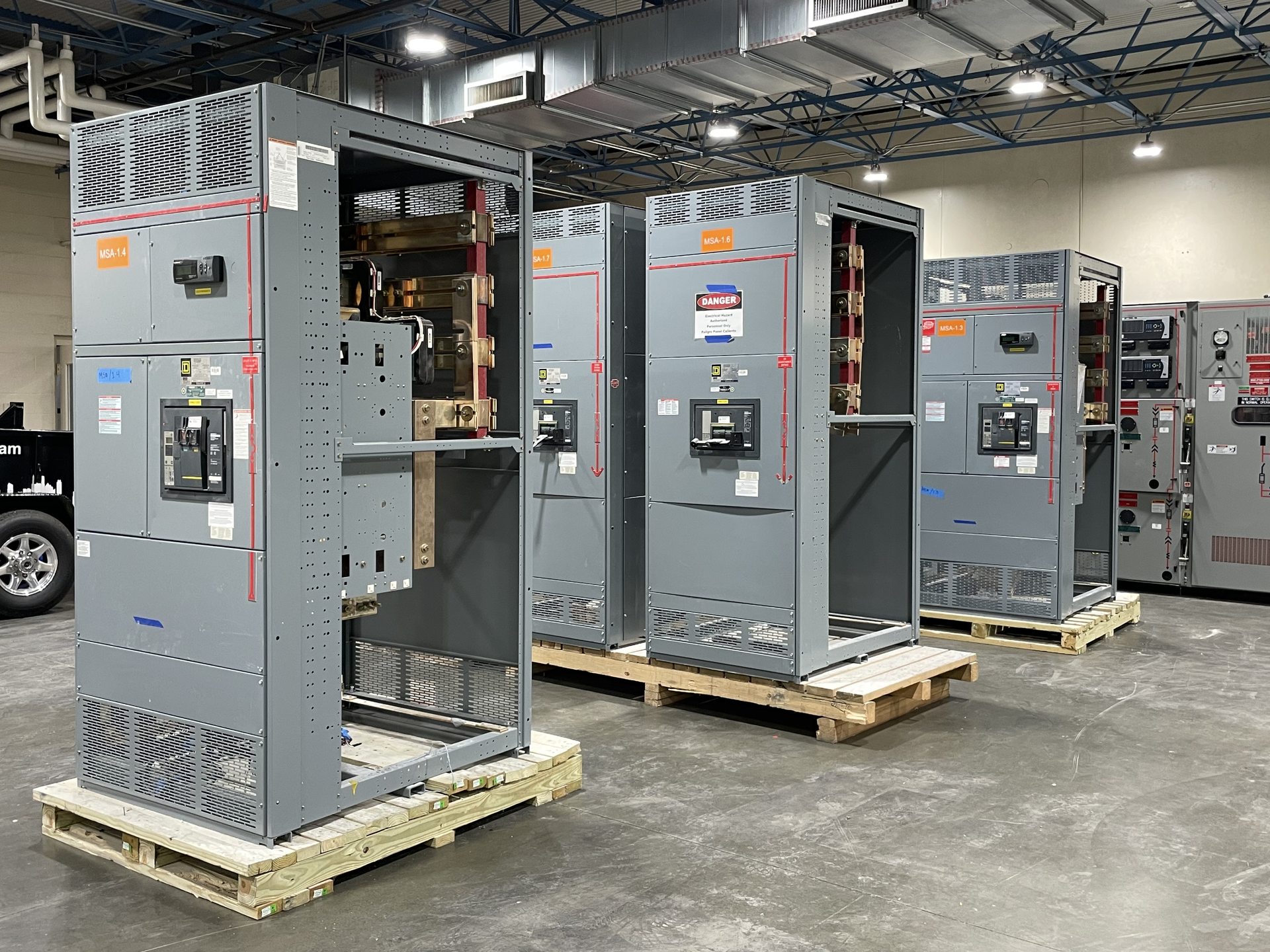
Define the switchboard scope before discussing a sale
A factory closure can leave several switchboard sections serving different production lines, buildings, or stages of an electrical system. When requesting an offer, describe which sections may be for sale and which, if any, are excluded; uncertain details can be clarified later. A clear scope helps prevent confusion when equipment is distributed across rooms or when a project plan refers to an entire lineup while the owner intends to sell only part of it.
Use records already available, such as an equipment schedule, closure inventory, floor plan, or project document, to describe the intended group. Note known boundaries between sections if the records show them. If ownership is divided among a facility owner, tenant, project partner, or another party, clarify who is authorized to discuss each section. You do not need to resolve uncertain technical details by inspecting equipment.
Describe sections without confusing them with a complete lineup
A switchboard may include multiple sections, and the proposed sale may cover all of them or only a defined portion. Share any existing description of section designations, equipment tags, or location identifiers. If a record is incomplete, say so; an uncertain identification should not be presented as verified. The buyer can consider the information available when evaluating the proposed scope.
Also distinguish the switchboard from adjacent equipment that is not included, such as other distribution equipment or separate control assemblies. If the closure inventory groups several items together, explain which items are part of the switchboard sale and which are not. A concise written scope can help both parties discuss the same equipment without requiring a seller to access restricted or unsafe areas.
Account for operating areas and access windows
Some sections may be in areas that remain active during a phased closure, or where access is limited by production schedules, facility rules, or other work. If you already know that an area has an access window, restricted hours, or a planned shutdown date, share that information early. It can help establish whether a possible purchase can be coordinated with the facility’s schedule.
Do not enter an unsafe area or approach, open, or operate equipment to confirm its status or location. Never touch energized equipment. You may inquire about switchboards that are still installed or operating using information already available to you; they do not have to be removed from service before a sale can be discussed. The buyer handles disconnects for equipment that is purchased, along with crane, rigging, loading, freight, and hauling. The seller does not perform or arrange those operations.
Share useful records while noting what is unknown
Helpful information may include the facility location in Bartholomew County, ownership, available equipment lists, photographs, known condition, and safely accessible exterior nameplate details. Share only what you can access safely and lawfully. You are not expected to obtain details that are hidden, inaccessible, or unavailable in existing records, and testing is not required to request consideration.
A nameplate rating is not the same thing as the voltage currently present in equipment. If you share a rating, identify it as label information rather than a measurement of live conditions. If the rating, operating status, or condition is unknown, state that plainly instead of guessing. The buyer considers equipment across all voltage classes, but an offer or purchase is not guaranteed.
Understand what the buyer’s handling and freight terms mean
For equipment it purchases, the buyer covers freight and handles the crane, rigging, disconnects, loading, and hauling. These responsibilities do not mean that a purchase is certain, or that every proposed section will be included in an offer. They also do not require the seller to carry out or coordinate those tasks. Discuss the proposed scope and any known access limits before treating a closure schedule as settled.
If the buyer makes a cash offer and the parties proceed with a purchase, payment is upfront. No test is required from the seller. These terms can make an inquiry practical even when the facility is closing in stages, but they do not guarantee a price, payment method, timeline, or completed transaction. The offer, if any, depends on the equipment and information under consideration.
Make the inquiry specific enough to review
When you contact the buyer, summarize which sections may be included, where they are located, whether ownership is clear, and what access windows are already known. Attach existing records or safely obtained exterior photographs if available, and identify gaps or uncertain details. If only part of a lineup is under consideration, say so at the outset rather than assuming the entire board is included.
This approach gives an authorized Indiana seller a way to discuss surplus or decommissioned factory switchboards without conducting tests or taking on equipment-handling work. It also keeps operational restrictions visible while the scope is being reviewed. A buyer may consider the information and make an offer, but neither an offer nor a purchase is assured.