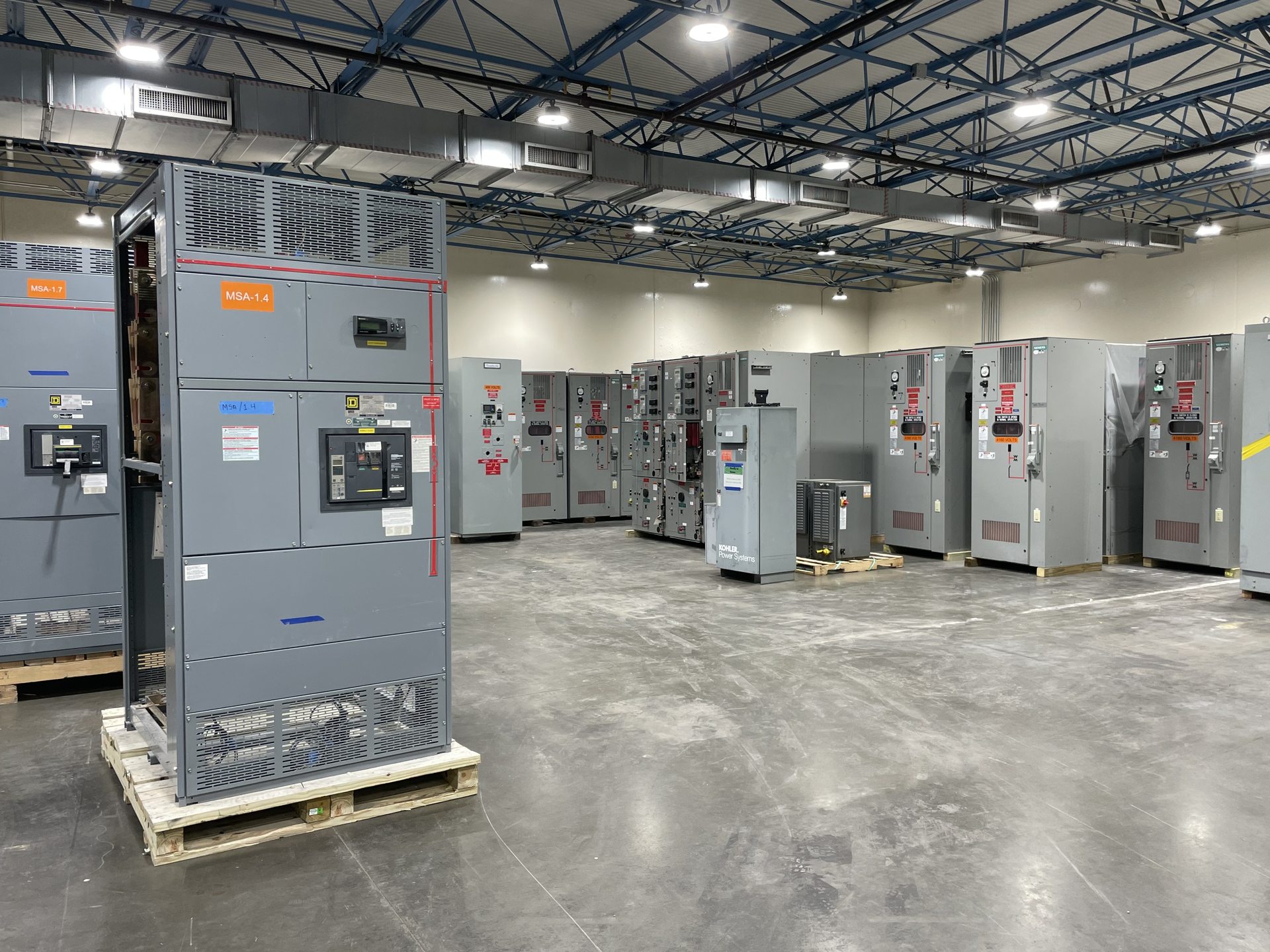
Define the auxiliary MCC package before discussing value
An auxiliary motor-control center may be a complete lineup, several intact sections, or a group of buckets removed from a larger assembly. Those are different sale scopes, so begin by clarifying what the facility is considering. An Indiana power plant might have an MCC dedicated to pumps, fans, lubrication systems, or other auxiliary loads, with only some sections scheduled for removal or replacement. Describe the equipment as it exists rather than treating every related item in the room as part of the same package.
A useful first distinction is between complete sections and loose buckets. A section may include its enclosure and installed compartments; loose buckets may be separate units with no section included. If the scope includes both, say so. If the seller is unsure whether a bucket belongs to a particular lineup, mark that as uncertain rather than presenting the relationship as verified. Clear scope helps an authorized buyer assess what is being offered without requiring the seller to resolve details that are not safely available.
Describe included devices and exclusions precisely
State which devices are included in the proposed sale, such as installed starters, disconnects, or other components identified in existing records or by safely accessible exterior information. Also identify known exclusions: for example, a lineup may be offered without certain buckets, or the proposed sale may cover the MCC sections but not adjacent equipment. Avoid assuming that a device is included simply because it appears in the same room or is associated with the same motor system.
Where documentation is available, an equipment list, existing drawings, photographs, or notes about the package boundary can make the scope easier to understand. Share only information already accessible to you. Do not open enclosures or enter an unsafe area to verify a component. If a device’s presence, condition, or ownership is unclear, identify that uncertainty so it is not mistaken for a confirmed fact.
Use available identification without confusing ratings and operating conditions
For an initial inquiry, helpful details may include the manufacturer and identifying information visible on an exterior nameplate, the number of sections or buckets, the equipment’s location, known condition, and any records already on hand. Not every detail will be available, and an inquiry need not wait for a complete inventory. Photos are useful when they can be taken safely from an accessible location; do not approach equipment or enter a restricted or unsafe area to obtain them.
Keep nameplate ratings distinct from live operating voltage. A rating describes equipment information shown on its label; it does not establish what voltage is present at a particular moment. If operating status or electrical conditions are not known, say that they are unknown. Never touch energized equipment. Sellers must not open, operate, or approach energized equipment, or enter unsafe areas. You may ask about equipment that remains installed or operating by sharing information already available to you; you do not need to make it safe or non-operating before making an inquiry.
Explain whether the MCC is installed, stored, or decommissioned
Give the equipment’s known status and setting in straightforward terms: still installed, in storage, decommissioned, or not confirmed. For a power plant, it can also help to explain whether the proposed package is an entire auxiliary lineup or a defined portion of one, without disclosing information you are not authorized to share. This context lets the buyer consider the actual opportunity while avoiding an assumption that the seller has already separated or prepared the equipment.
Testing is not required for the buyer to consider surplus MCC equipment. Do not test, energize, disconnect, move, or otherwise prepare equipment for an inquiry. If condition is based on older records or is not known, label it accordingly. An accurate statement of uncertainty is more useful than a claim of working condition that has not been verified.
Clarify the sale and payment expectations
The business buys surplus, used, and decommissioned motor-control centers; it does not sell MCCs. It considers equipment across voltage classes, including equipment from power plants, and a seller may request a cash offer based on the information available. An offer or purchase is not guaranteed, and the seller should not treat an inquiry as a commitment until the proposed scope and terms have been reviewed.
For equipment that is purchased, payment is upfront. The buyer covers freight and handles the crane, rigging, disconnects, loading, freight, and hauling. Those responsibilities belong to the buyer for purchased equipment; the seller does not perform or arrange those operations. This division can be discussed along with the package boundary so the parties understand which MCC sections and loose buckets, if any, are under consideration.
Make the inquiry useful without creating extra site work
An authorized seller can begin with the equipment’s general description, known location, ownership, available identification, scope of included sections and buckets, and any known exclusions or condition concerns. Existing records and safely accessible exterior details are enough to start a conversation; inaccessible information is not a reason to enter a hazardous area or handle equipment. Keeping confirmed facts separate from estimates helps the buyer evaluate the proposed auxiliary MCC package and ask focused follow-up questions, while leaving equipment handling and any purchase-related logistics to the buyer.