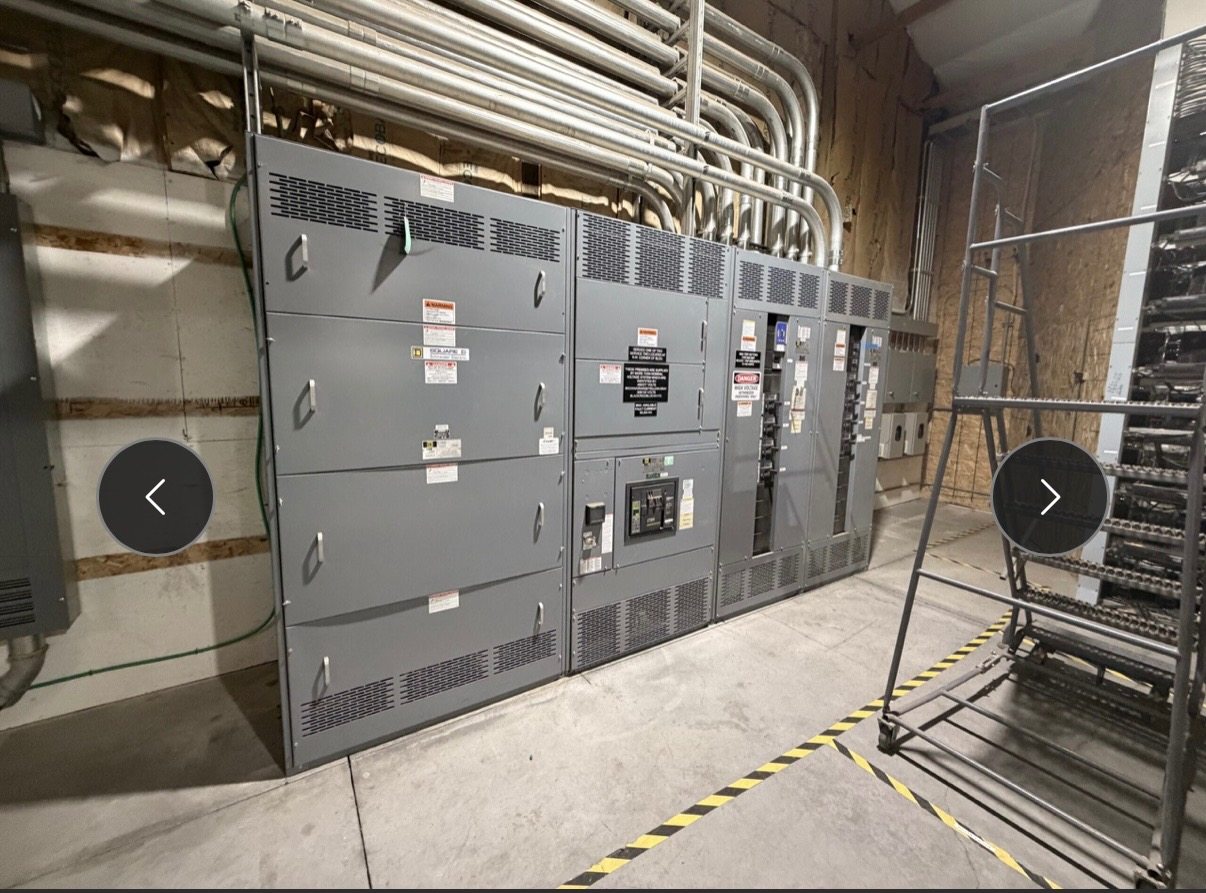
Identify the cabinet before describing the UPS system
A data-center UPS installation can include several distinct assets: distribution cabinets, UPS power modules, battery cabinets or racks, and separate battery strings. A distribution cabinet may route or protect power without containing the equipment that converts or stores it. A UPS module and its batteries are not automatically part of a cabinet sale simply because they share a system or location. When requesting an offer, describe the specific cabinet or cabinets you are considering and distinguish them from adjacent equipment.
Use information already available, such as an equipment list, project records, or safely accessible exterior labels and photographs. A cabinet’s nameplate can help identify its maker, type, ratings, and other marked details, but its rating is not proof of the live voltage at the equipment. If a detail is unknown or unverified, say so rather than treating an estimate as confirmed. You do not need to obtain information that is inaccessible or approach equipment to collect it.
Clarify exactly what is included
Describe the proposed sale boundary in plain terms. For example, indicate whether the equipment under consideration is the distribution cabinet alone, the cabinet with associated breakers, or a broader group of items. If UPS modules, battery cabinets, batteries, or other connected equipment are excluded, say that as well. If the boundary is uncertain, explain what you know and ask how the items should be identified for review.
This distinction matters because visually adjacent equipment may serve different functions and may have different ownership, condition, or disposition requirements. A photo or equipment schedule already available to you can help communicate what is included without requiring you to inspect anything. Do not assume that the name of a UPS system identifies every component or establishes that batteries are included.
Share known battery-related restrictions
If batteries are present, describe what is known about their type, location, ownership, and condition, and identify any restrictions or handling concerns already documented. These details may affect how the proposed group is reviewed. If battery status is unknown, state that clearly. Do not open cabinets, operate equipment, test batteries, or enter a restricted or unsafe area to answer questions.
Battery-related restrictions can also affect what is actually available for sale. A facility may be able to offer a distribution cabinet while excluding batteries or other components, or it may be considering a larger group. Explain known limits, including whether some items are not available for transfer, without assuming that the entire UPS installation is included. Never touch energized equipment.
Installed equipment can be discussed using available information
Equipment does not have to be removed before you inquire. Owners and authorized facility representatives may ask about gear that remains installed or operating, using information they already have. Do not open, operate, approach energized equipment, or enter an unsafe area to prepare a description. A question about a possible sale is separate from any decision about when or how equipment may be taken out of service.
Useful starting details can include the facility location, equipment quantity, ownership, known condition, and any safely accessible exterior nameplate information or existing photographs. Share what is available; no single detail should be treated as a reason to guess at missing facts. The business considers equipment across voltage classes, including surplus, used, and decommissioned equipment from data centers and other facilities.
Understand the purchase and handling arrangement
The business buys electrical equipment; it does not sell or install it. A cash offer may be considered after the equipment and proposed sale group are described, but neither an offer nor a purchase is guaranteed. The seller does not have to test equipment as a condition of making an inquiry. If equipment is purchased, payment is upfront, and freight is covered for the purchased equipment.
For purchased equipment, the buyer handles disconnects, crane and rigging arrangements, loading, freight, and hauling. The seller should not undertake or arrange those operations as part of this process. Discuss the site location and known access or scheduling constraints using information available to you, while leaving physical handling to the buyer. Whether a particular group can be purchased depends on review of the actual equipment and circumstances.
Make the inquiry specific, not speculative
A concise description can separate confirmed facts from open questions: identify the distribution cabinets, note whether modules or batteries are included or excluded, and report known restrictions. Add existing records or safely accessible photos if available. If a label is unclear, a component is not visible, or battery status is unknown, mark that as uncertain. This gives the buyer a more useful basis to assess the proposed equipment without asking facility personnel to investigate hazards.
Before proceeding, confirm who is authorized to discuss the assets and which items that person may offer. Keep the proposed sale boundary consistent across equipment schedules, photographs, and descriptions where possible. Clear distinctions between cabinets, modules, and batteries help prevent misunderstandings about what is being considered, while leaving all testing and physical handling decisions out of the seller’s inquiry.