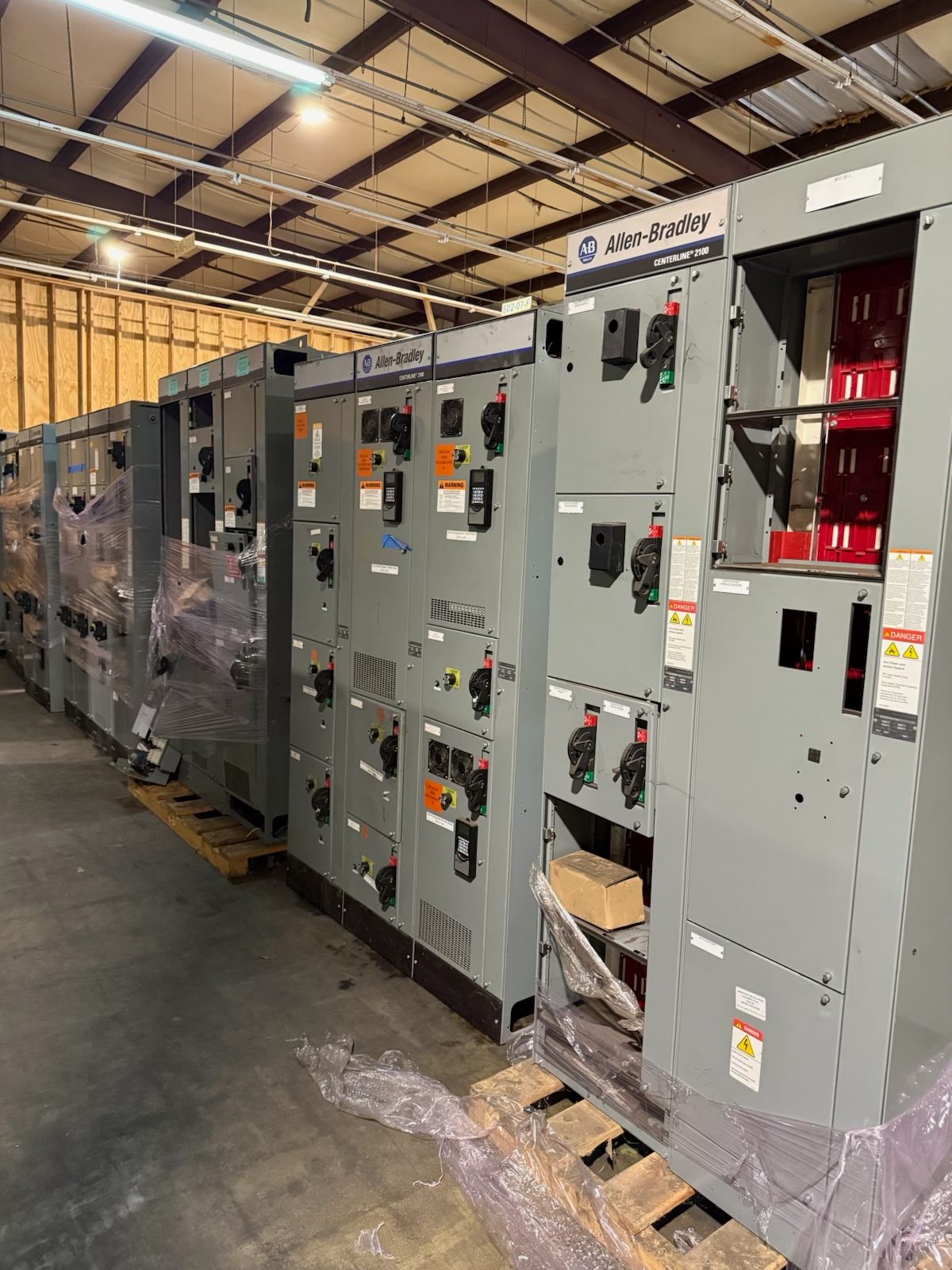
Describe the Floor-Standing Units You Have
If you are an Indiana facility owner or authorized representative with surplus data-center power distribution units, start with a simple inventory. Share the number of floor-standing units under consideration and, if readily available, their general location in the facility. Include associated panels in your description if they are part of the equipment you may sell, and clarify whether they are included or being considered separately. A count and a clear scope help establish what the inquiry covers without requiring you to inspect or operate anything.
If the units are still installed or operating, you may still ask about a possible sale using information already available to you. You do not need to make equipment available for inspection or obtain details you cannot safely access just to begin an inquiry. The business buys equipment rather than selling or installing it, and a purchase or offer is not guaranteed.
Share Visible Labels Without Operating Equipment
When safely accessible from outside the equipment, photos or transcriptions of visible input and output labels can help describe a PDU. Share what the label actually says, including units and any stated ratings, rather than interpreting the information from memory. A nameplate rating is not proof of the voltage present at a given moment. Keep the distinction clear: label information describes the equipment, while live voltage concerns its current electrical state, which you should not try to determine.
Never touch energized equipment. Do not open, operate, approach energized equipment, enter an unsafe area, or attempt to gather information from a position that does not feel safe. No electrical operation is needed to discuss a possible sale. If a label cannot be viewed safely, say that the information is unavailable rather than trying to reach it.
Clarify What Is Included in the Scope
Floor-standing PDUs may be part of a larger data-center power distribution arrangement. For a useful initial description, identify whether associated panels are included, excluded, or not yet determined. If you have an existing equipment list, photographs taken from a safe location, or records that identify related equipment, you can share them. Avoid treating nearby gear as part of the sale unless you have authority to include it.
It can also help to distinguish the PDU units from other surplus equipment at the site, such as switchgear, switchboards, motor-control centers, panelboards, busway, automatic transfer switches, breakers, or unit substations. The business considers equipment across all voltage classes, including equipment from closed data centers and power plants. That broad scope does not mean every item will be purchased; describe each group accurately so its potential inclusion can be assessed.
Report Known Condition and Uncertainty
Share condition information you already know, such as whether a unit is described in existing records as used, surplus, decommissioned, or of uncertain status. If an item’s condition is unknown, say so. Avoid presenting an assumption as a verified fact, and do not test or operate equipment to answer questions. The seller is not required to test equipment for the business to consider it.
Ownership and authority matter to the scope of any transaction. Be prepared to explain whether you own the units or are authorized to represent the owner, and identify any known limits on what may be included. If records conflict or a panel’s relationship to a PDU is unclear, state that uncertainty. Clear qualifications are more useful than a confident but unsupported description.
Understand Handling and Freight Responsibilities
For equipment that is purchased, the buyer handles disconnects and the physical handling arrangements, including crane work, rigging, loading, freight, and hauling. Freight is covered for purchased equipment. The seller does not perform or arrange those operations, and this arrangement is not an instruction to move, disconnect, lift, or prepare a unit. Do not attempt any of those tasks to support an inquiry.
You can share the facility location and any access or scheduling information already available to you, without entering a restricted or unsafe area to collect it. The buyer’s handling responsibilities apply to purchased equipment; they do not guarantee that a purchase will be made. An inquiry lets the equipment and circumstances be reviewed before any decision.
Ask for an Offer Without Assuming an Outcome
To request consideration, provide the unit count, visible input and output label details when safely accessible, whether associated panels are included, location, known condition, and your authority to represent the equipment. Existing photos or lists can help, but do not delay an inquiry to obtain information you cannot safely access. The business can consider the available description and may make a cash offer, but no offer, purchase, price, or timeline is guaranteed.
If equipment is purchased, payment is made upfront, and testing is not required. Those terms describe the purchase arrangement, not a promise that a particular PDU or panel will be accepted. A precise account of what is included, what is known, and what remains uncertain gives an authorized Indiana seller a practical basis for discussing surplus floor-standing PDUs without operating or handling them.