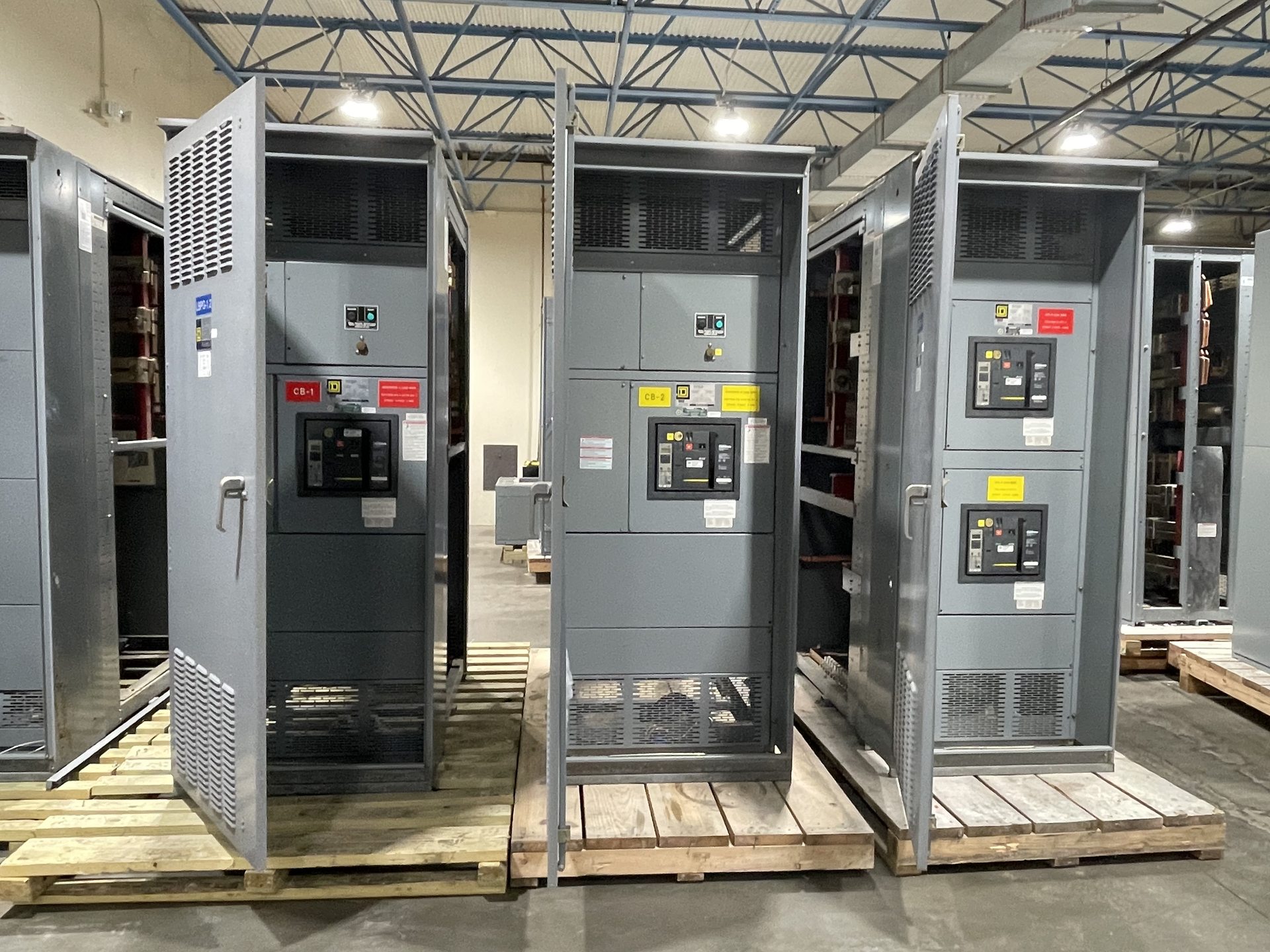
Define which medium-voltage assemblies are included
A data center’s medium-voltage distribution may involve several distinct assemblies rather than one saleable package. Depending on the site, the equipment under consideration could include switchgear, a switchboard, a unit substation, a motor-control center, breakers, or associated busway. Describe the actual assemblies you are authorized to discuss, and distinguish equipment that may be included from equipment that will remain. A buyer can assess a clearly bounded group more effectively than a broad reference to “the electrical gear.”
For example, an inquiry might identify one switchgear lineup and its associated breakers while excluding a separate transformer or equipment serving another tenant. The example is only a way to describe scope, not a recommendation about which equipment to remove or how to separate it. If the boundary is not yet clear, state what is known and what remains uncertain. Do not make assumptions about ownership or inclusion simply because assemblies are physically adjacent.
Separate data-center equipment from utility-owned gear
Medium-voltage equipment near a service entrance may belong to the data-center owner, a utility, or another party. Before representing an assembly as available, check records or information already accessible to you, such as asset inventories, ownership documentation, project drawings, or existing service records. If those sources do not settle the question, identify the ownership boundary as unconfirmed rather than presenting it as fact.
Keep the proposed sale limited to equipment the seller is authorized to offer. Utility-owned equipment should not be included in an inquiry as seller-owned surplus unless authority to include it is established. Where a lineup or substation contains equipment with different owners, explain the distinction in the description. Clear boundaries help prevent an offer discussion from being based on the wrong assets.
Share known ratings without confusing them with live conditions
Existing nameplate information can help identify an assembly. If safely accessible from the exterior, share legible details such as the manufacturer, equipment type, nominal voltage rating, current rating, interrupting rating, or other marked ratings that are relevant and available. A photograph of an accessible nameplate may be useful, but do not approach equipment or enter an area to obtain one. Information already in an equipment list or facility record can be shared instead.
A marked voltage rating describes the equipment’s rating; it does not establish the voltage present at the equipment now. Likewise, a rating on one component should not automatically be assigned to an entire lineup or connected assembly. If a label is unreadable, a record is incomplete, or a rating has not been confirmed, say so plainly. The buyer considers all voltage classes, but that does not mean every assembly will receive an offer.
Describe installed status and condition only as known
Equipment does not have to be described as removed or tested before an owner can inquire. A seller may ask about gear that is still installed or operating using information already available, including its location, listed assets, exterior photographs, and known condition. State whether the information comes from a record, a visible label, or someone’s knowledge of the equipment. This distinction lets the recipient understand what is verified and what is only believed.
Do not open, operate, test, disconnect, move, lift, rig, load, ship, or haul equipment for an inquiry. Never touch energized equipment. Sellers must not approach energized equipment or enter an unsafe area. If a detail cannot be obtained without doing so, leave it unknown. The seller is not expected to make equipment safe or perform work before discussing a possible sale.
Explain scope, access, and timing without promising a purchase
Along with the equipment description, provide the facility location and any known constraints relevant to a potential transaction, such as whether the assemblies remain installed and whether the site has a planned closure or decommissioning period. Share only information you are authorized to provide. A basic asset list can be enough to begin; every rating, photograph, or condition detail is not a prerequisite for an initial inquiry.
The business buys surplus, used, and decommissioned electrical equipment, including medium-voltage assemblies from data centers, and considers equipment across voltage classes. It does not sell gear. A cash offer is not guaranteed, and an inquiry should not be treated as confirmation that equipment has been accepted for purchase. The available description and the seller’s authority to offer the equipment both matter to the evaluation.
Clarify who handles purchased equipment
For equipment that is purchased, the buyer handles disconnects and the physical logistics, including crane, rigging, loading, freight, and hauling; freight is covered by the buyer. The seller does not perform or arrange those operations. Do not infer from this division of responsibility that a purchase, pickup date, or particular price is assured. Payment is upfront for purchased equipment, and the seller is not required to test it.
When discussing a possible transaction, keep the equipment boundary, ownership, known ratings, location, and uncertainties consistent across the information you provide. That gives both sides a clearer basis for considering the assemblies while avoiding unsafe information gathering or assumptions about utility assets. A purchase remains subject to the buyer’s assessment and is not guaranteed.