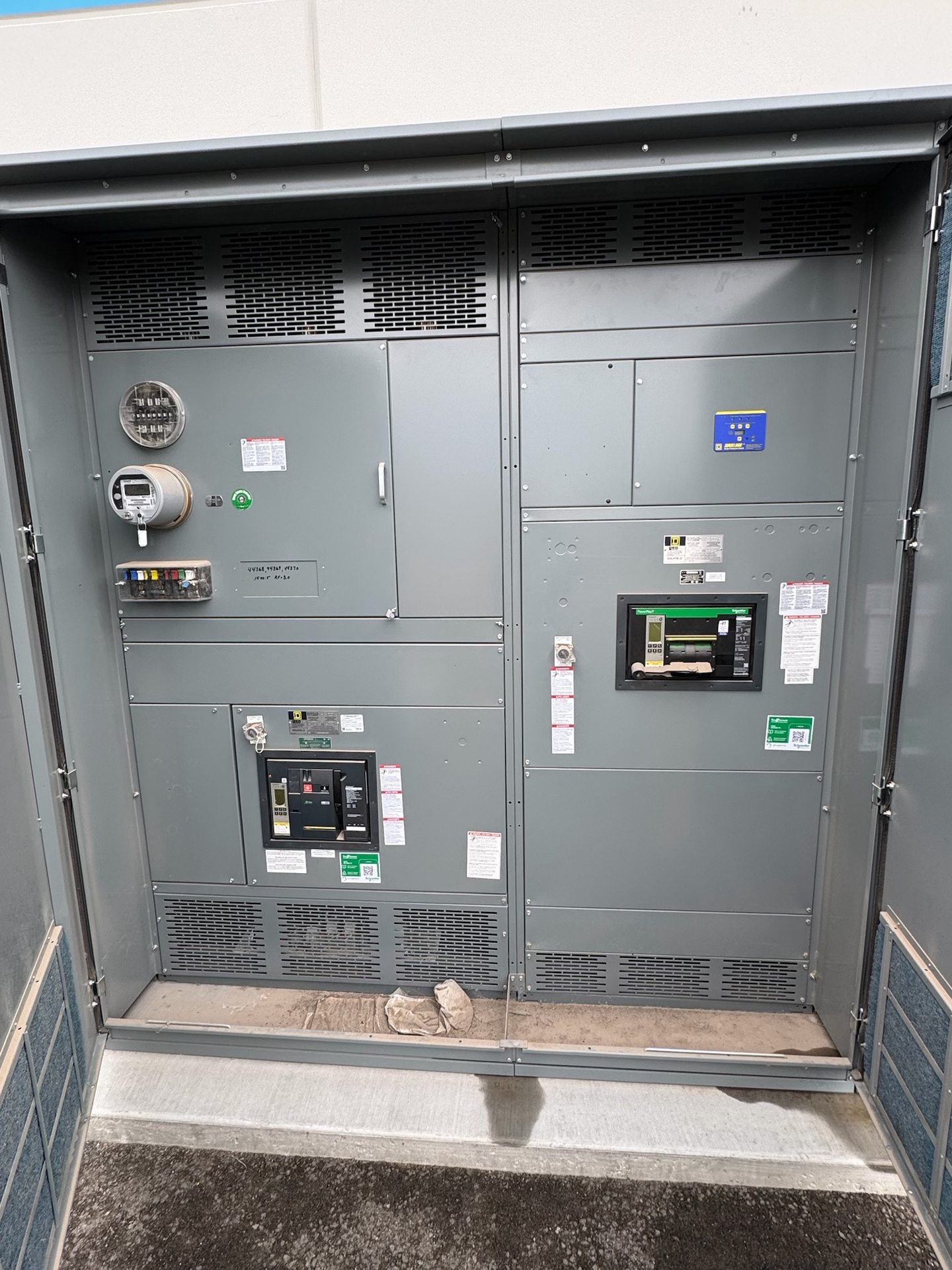
Separate the retiring hall from the infrastructure it shares
When one data hall is being retired, the equipment in its rooms may not all belong to that hall alone. A switchboard, motor-control center, panelboard, busway section, automatic transfer switch, breaker, or unit substation could support another hall or a common building load. Start an inventory by room or electrical area, then note whether each asset appears dedicated to the retiring hall, shared, or uncertain. That distinction helps an authorized seller describe what may be available without treating every nearby item as surplus.
Use existing records, equipment lists, labels visible from a safe location, and knowledge already available to facility personnel. If an asset’s role is unclear, mark it as unconfirmed rather than assuming it can be released. A prospective buyer can consider the information provided; the seller does not need to resolve every technical or ownership question before making an inquiry.
Describe release phases as planning information
A phased closure can make an inventory more useful than a single undifferentiated list. Identify which rooms or groups are associated with an earlier planned release, which are expected to become available later, and which remain in service or support another area. These are planning descriptions, not a request for sellers to disconnect, move, or prepare equipment. If dates are uncertain, say so; do not present a tentative schedule as a confirmed release.
For example, an inventory might identify a dedicated distribution board in the retiring hall, a busway section whose assignment is not yet verified, and a shared transfer switch that will remain in use. The point is to give each asset an accurate status. A buyer can review potential equipment while it is still installed or operating, based on information already available, without the seller approaching it or changing its condition.
Record identity without confusing ratings and operating conditions
Where safely accessible without approaching energized equipment, exterior nameplate details or existing records may help identify equipment type, manufacturer, catalog information, and stated ratings. A rating printed on a label describes the equipment’s marked capability; it does not establish the voltage present at that moment. Keep label information distinct from any verified operating data, and identify unknowns plainly instead of inferring live conditions from a nameplate.
Useful context can include room or area, apparent equipment function, ownership, known condition, and whether supporting documentation is available. Photos may help when they can be taken safely from an existing accessible location. None of these details should be obtained by opening equipment or entering restricted or unsafe areas. If information is not readily available, note that it is unknown rather than trying to inspect the asset.
Make the inventory useful without promising a transaction
An authorized Indiana seller can present the equipment as a grouped inventory with room, release phase, apparent function, and any known shared-service concern. This lets a buyer assess a mix of surplus, used, or decommissioned gear, including equipment from a closed or closing data center. The business considers all voltage classes and buys switchgear, switchboards, motor-control centers, panelboards, busway, automatic transfer switches, breakers, and unit substations.
There is no need to test equipment for an inquiry. Share only information already available and distinguish observed facts from estimates or recollections. A review may lead to a cash offer, but neither an offer nor a purchase is guaranteed. The equipment’s details and circumstances matter, so avoid treating an initial inventory as a commitment by either party.
Clarify what happens if equipment is purchased
For equipment the buyer purchases, the buyer handles disconnects, crane and rigging, loading, freight, and hauling, and covers freight. The seller should not arrange or carry out those operations as part of describing the opportunity. Payment is made upfront for purchased equipment, but this does not guarantee a purchase, a particular amount, or a specific schedule.
Keep the boundary clear in planning discussions: identifying equipment and its possible release phase is different from performing work on it. Sellers should not open, operate, disconnect, lift, load, ship, or haul equipment, or hire someone to do those tasks for this inquiry. Any handling arrangements for purchased equipment are the buyer’s responsibility.
Keep safety and shared operations ahead of the sale
Never touch energized equipment. Sellers must never open or operate energized equipment, approach it, or enter an unsafe area. Do not attempt to make equipment safe or alter its operating status to support a sale. If a hall is still operating, an authorized person may inquire using existing records and information already known, while leaving access and operations unchanged.
A careful room-by-room inventory helps distinguish potentially releasable assets from equipment that serves other halls, records uncertainty honestly, and gives a buyer a practical basis for review. It need not be exhaustive or obtained through physical inspection. That approach allows an Indiana facility team to discuss surplus electrical equipment while respecting ongoing operations and leaving any purchased-equipment handling to the buyer.