Establish who owns the equipment before requesting an offer
In a multi-tenant Indiana data center, the equipment serving a particular room or customer may not belong to the party managing the building. Before presenting electrical gear for sale, identify the legal owner of each asset and confirm that the person making the inquiry has authority to discuss a sale on that owner’s behalf. A facility operator, property manager, tenant, contractor, or decommissioning coordinator may have different responsibilities; access to equipment alone does not establish ownership or permission to sell it.
Ownership records, asset schedules, lease terms, project documents, or an internal approval process may help clarify who controls the equipment. Requirements differ among facilities and agreements, so do not assume that a building owner can sell tenant assets or that a tenant can dispose of shared infrastructure. If authority is uncertain, resolve that question through the relevant organization before representing an asset as available.
Separate tenant property from shared electrical infrastructure
Equipment dedicated to one tenant may be identified differently from equipment that serves common areas, multiple suites, or the wider facility. A tenant’s electrical assets might include gear assigned to its installation, while shared service equipment may remain under the building owner’s control. These are useful distinctions to investigate, not automatic rules: configuration and ownership documents determine what can be offered.
When assets are mixed, describe them as separate groups rather than combining everything into a single proposed sale. For example, an inquiry might identify tenant-assigned equipment as one group and facility-owned shared equipment as another, while noting that ownership of a particular item is still being confirmed. This makes the scope clearer and helps avoid presenting another party’s property as yours.
Protect tenant information while describing the gear
An initial equipment inquiry need not disclose tenant names, customer identities, room labels, security arrangements, operating schedules, or other sensitive details. Use neutral descriptions such as “tenant-assigned electrical equipment” or “shared facility gear.” If a location reference is helpful, a general building area or equipment-room identifier may be enough; share more specific information only when authorized and necessary.
Information already available to the authorized seller can help identify the equipment. Examples include equipment lists, safely accessible exterior nameplate details, existing photographs, general location, ownership status, and known condition. Share what you can access without entering an unsafe area or approaching equipment. Do not seek information that is inaccessible merely to complete an inquiry, and distinguish a confirmed detail from an estimate or an unknown.
Describe ratings accurately, including uncertainty
Voltage class is relevant when evaluating electrical equipment, and the buyer considers all voltage classes. An equipment rating shown on an available nameplate is not the same as the live voltage present at a facility. Report the label information as a rating, not as proof of current operating conditions. If a rating is unreadable or not available, say so rather than guessing.
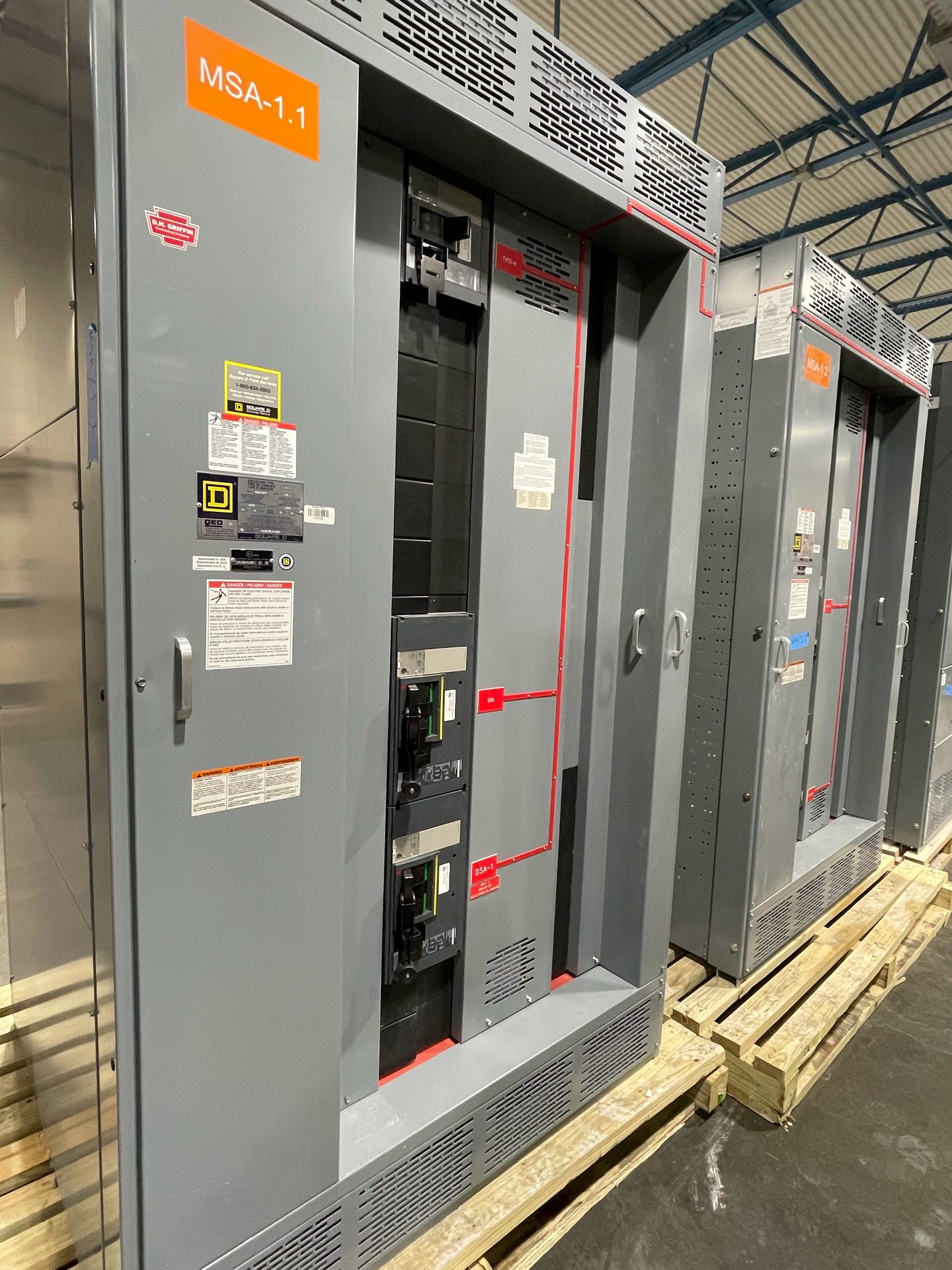
Useful descriptions may include equipment type, manufacturer or identifying text if already visible, approximate quantity, location, and whether the gear is installed, removed, or in storage. Avoid treating different categories as interchangeable: a switchboard, motor-control center, panelboard, busway, automatic transfer switch, breaker, or unit substation each describes a different kind of asset. An accurate inventory supports a more informed review, but every detail is not required to begin a conversation.
Make an inquiry without disturbing operating equipment
Equipment may still be installed or operating when an owner first asks whether it could be considered. An authorized seller can inquire using information already available; the equipment does not have to be removed or tested before an inquiry. Do not open or operate equipment, approach energized gear, or enter an unsafe area to collect details. Never touch energized equipment.
If the equipment’s condition, status, or ownership is uncertain, describe that uncertainty plainly. A buyer can review the information provided and determine whether to make a cash offer. An inquiry is not a guaranteed offer or purchase, and submitting information does not commit an owner to a sale.
Understand handling responsibilities if a purchase proceeds
For equipment purchased, the buyer handles disconnects, crane and rigging arrangements, loading, freight, and hauling. Freight is covered for purchased equipment. The seller should not be expected to perform or arrange those operations. No seller-side testing is required for consideration, so do not test equipment as a condition of making an inquiry.
If the parties agree to a purchase, payment is made upfront. That arrangement applies to a completed purchase, not to every inquiry: whether equipment is purchased and the terms of any transaction remain subject to review and agreement. The buyer buys surplus, used, and decommissioned electrical equipment, including gear from data centers, but does not sell equipment to the facility.
Keep the proposed scope clear through approval
Before an authorized representative submits an asset group, confirm internally which party owns it and whether that representative may negotiate its sale. Keep tenant-owned and shared assets distinct, avoid disclosing tenant details that are not needed, and flag unresolved ownership or equipment information. This careful framing helps the buyer assess the proposed equipment without confusing facility access, operational responsibility, and the legal right to sell.