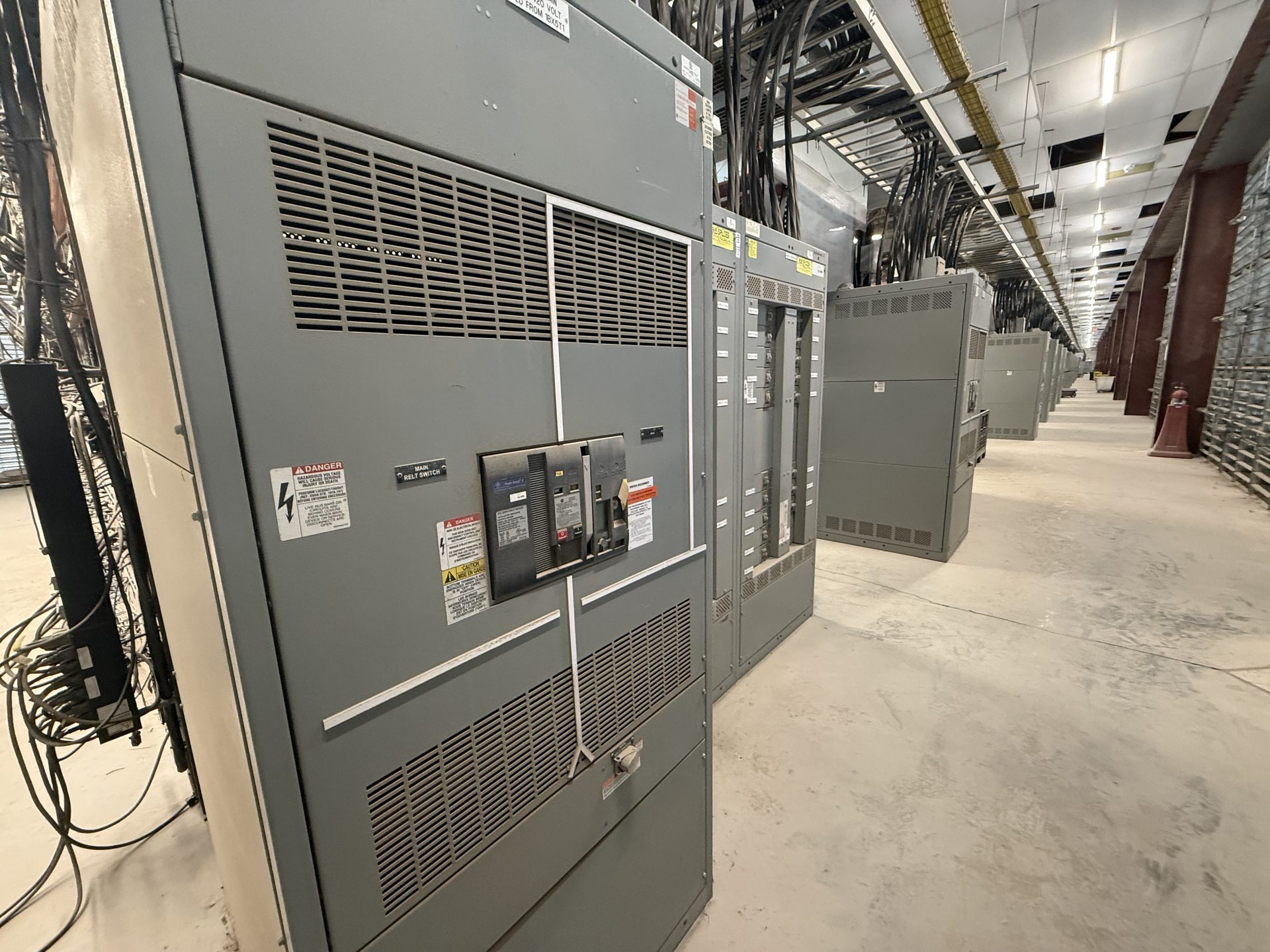
Start with the room, not a removal plan
When a data center has surplus electrical equipment, an organized description of the room can make an initial review more useful. Think of the inventory as a record of what is present, where it is located, and what the facility intends to retain—not as a work plan for preparing equipment. The company buys used, surplus, and decommissioned electrical equipment; it does not sell equipment. A review may include switchgear, switchboards, motor-control centers, panelboards, busway, automatic transfer switches, breakers, or unit substations.
Group the information by electrical room, lineup, or other facility section. For example, describe the main distribution area separately from a UPS-related room or a section serving mechanical loads, if those distinctions are already known. Identify equipment by visible labels, existing records, or an equipment list. Do not enter a restricted or unsafe area to gather details, and do not open or operate equipment for an inventory.
Separate included equipment from what must stay
A room can contain equipment that is available for consideration alongside equipment the facility must retain. Make that distinction explicit in the description. You might identify a particular lineup as potentially available while noting that a named panel, busway section, or other item is excluded because it remains part of the operating facility. If only some equipment in a section is being considered, describe the boundary using information already available rather than asking anyone to inspect or alter the installation.
Clarity about exclusions helps prevent an assumption that every visible item is included. Note relevant relationships where known, such as equipment that belongs to a shared system or connects areas with different ownership or retention plans. If the scope is uncertain, say so plainly. An uncertain boundary is not a confirmed inclusion, and it is better to identify the question than to represent the whole room as available.
Give each section a useful identity
For each group, share details that are already safely accessible: the equipment type, manufacturer and catalog information if recorded, visible nameplate information, approximate quantity, and location within the facility. Existing photographs or drawings can help distinguish similar sections, provided they can be shared without entering an unsafe area or exposing information the facility needs to keep confidential. Not every field will be available, and an inquiry does not depend on obtaining inaccessible details.
Voltage information deserves careful wording. A nameplate rating describes an equipment rating; it does not establish the voltage present at the equipment now. Report the label as a label, and distinguish it from a verified operating condition. If the rating or present status is unknown, say that it is unknown rather than estimating. All voltage classes are considered, so uncertainty about a voltage class is not a reason to omit an otherwise useful inquiry.
Name one access coordinator
Identify a facility representative who can clarify the inventory, explain which sections are retained, and coordinate any later site communication. The coordinator may be an owner, facility employee, or authorized representative; the key is that the person understands the scope or knows who can confirm it. Include the coordinator’s role and the appropriate way to reach them in the inquiry, without assuming that this person should perform physical work on the equipment.
For equipment that is still installed or operating, an authorized seller may ask about it using information already available, such as records, safely accessible exterior nameplate details, or existing photographs. Sellers must never open, operate, or approach energized equipment or enter unsafe areas. Never touch energized equipment. Do not seek additional information by testing equipment or by accessing a location that is not safe to enter.
Understand the purchase and handling responsibilities
The company considers equipment from closed data centers and power plants as well as other surplus sources, and it considers all voltage classes. A purchase is not guaranteed; the equipment description and available information are inputs to a review, not a promise of an offer. If the equipment is purchased, payment is upfront. Testing by the seller is not required, and freight is covered for purchased equipment. A cash offer may be considered, but neither an offer nor a purchase is assured.
For equipment it purchases, the buyer handles disconnects, crane and rigging arrangements, loading, freight, and hauling. The seller should not carry out or arrange those operations as part of the sale. An inquiry can establish the proposed scope and identify the access coordinator without asking facility personnel to prepare, move, or test equipment. Keep the inventory focused on what is available, what must remain, and what is known; leave physical handling to the buyer if a purchase proceeds.
Make uncertainty visible in the inventory
Useful records do not need to make every detail appear settled. Mark a section as available for review, retained, or not yet determined, and explain any known boundary or ownership question. Note whether a condition is recorded, observed from an accessible exterior, or simply unknown. This gives an authorized seller a practical basis for requesting consideration while avoiding unsupported claims about equipment status or scope.