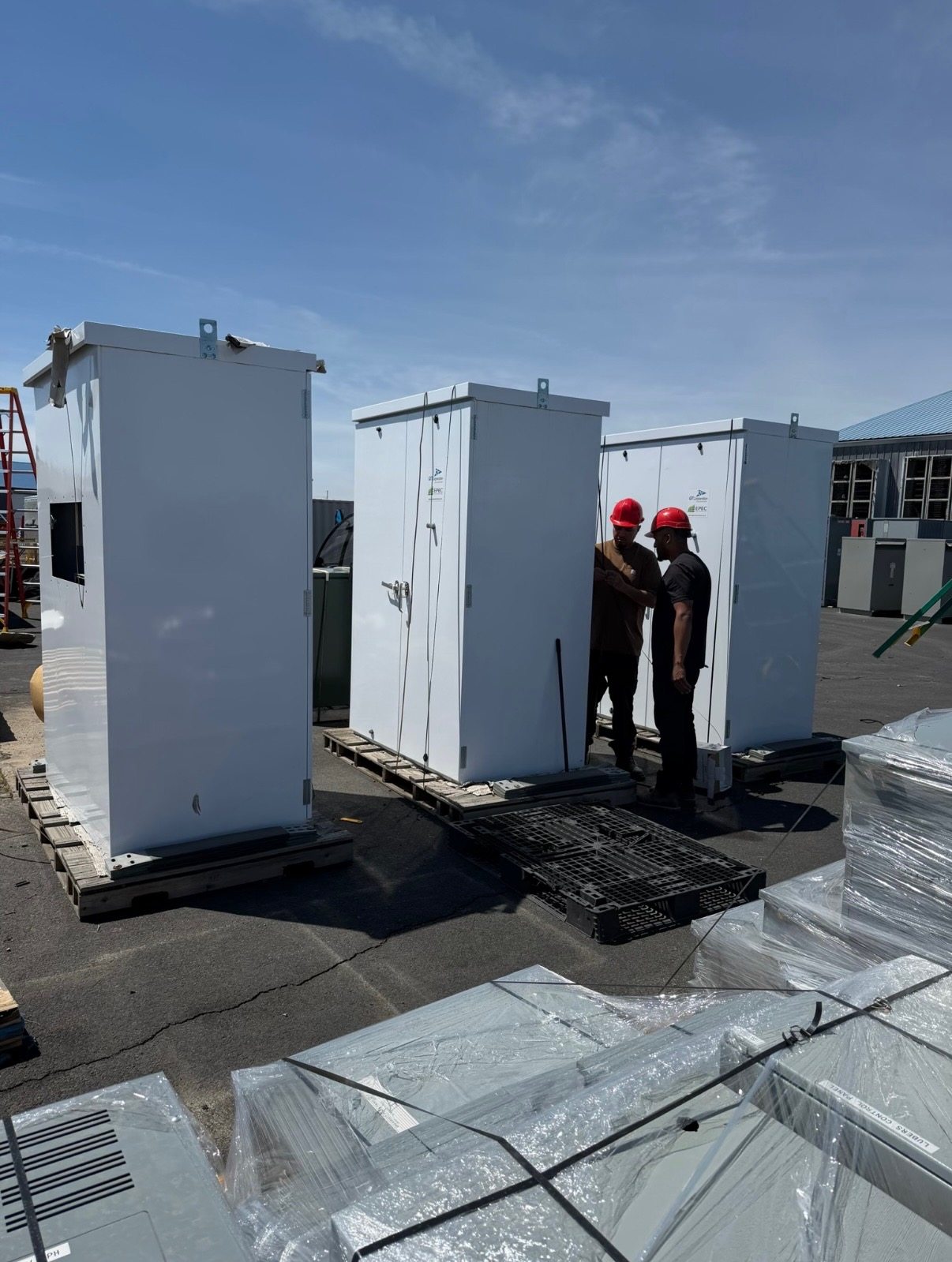
Describe the equipment as a system, not just a group of breakers
If you are arranging a possible sale of surplus switchgear in Covington, Indiana, begin by identifying the main equipment and the breakers stored near it as separate parts of the inventory. A lineup may include connected sections, frames, compartments, or other components that belong together. Nearby loose breakers may be spares, removed units, or parts intended for a different lineup. Their proximity does not establish that they are included in the same offering.
Make clear whether you are offering the assembled equipment, loose breakers, or both. If the relationship between a breaker and a lineup is uncertain, say so rather than describing it as a matching spare. This simple distinction helps an authorized buyer understand what is actually available and avoids treating adjacent storage as proof of compatibility or common ownership.
Use existing records and safely available details
Useful information may already appear on equipment lists, facility records, prior photographs, or exterior nameplates that are safely accessible. You can share the manufacturer, equipment type, stated ratings, section count, and any identifiers that are visible without approaching an unsafe area. A photo can show whether breakers are installed in equipment or stored separately, but do not put yourself at risk to obtain one.
Ratings identify how equipment is marked; they do not establish the voltage present at a particular moment. Keep those concepts distinct when describing the inventory. If a label is unclear, a record is incomplete, or a detail has not been verified, say that plainly. You do not need to supply every possible specification before making an inquiry, and inaccessible information should remain unknown rather than guessed.
Explain what “complete” means in your inventory
There is no need to claim that a lineup is complete unless you have a reliable basis for that description. Instead, explain what is included in practical terms: for example, whether the offering covers the main sections you have identified, whether loose breakers are included, and whether any known components are absent or being retained. If your records call the equipment a complete lineup but you cannot confirm the details, identify that as a description from the records rather than a verified condition.
For loose breakers, share their count only if known and distinguish an approximate count from a confirmed one. If they are stored with the equipment but offered separately, state that. If you are willing to offer them only with the lineup, make that condition clear. These details let the buyer assess the proposed group of assets without assuming that every breaker fits, belongs to, or is being sold with the larger equipment.
Separate known condition from assumptions
Describe condition using information you already have, such as whether the equipment is recorded as used, surplus, decommissioned, or still installed. Mention documented damage or missing parts if known, and distinguish observations from assumptions. A breaker stored nearby should not be called tested, operable, or suitable for a particular lineup unless that status is established by information you can responsibly share. Testing is not required to make an inquiry.
Never touch energized equipment. Sellers must not open, operate, or approach energized equipment, or enter unsafe areas, to gather details. If equipment remains installed or operating, you may ask about a potential sale using information already available to you. Do not try to make the equipment safe or arrange physical work as part of submitting basic information.
Clarify ownership and the scope of the offer
Before describing equipment as available, establish what your organization is authorized to offer and whether loose breakers are included in that authority. If several departments or parties control different items, explain which items you can represent. Share the site location and relevant ownership information as available, without exposing details you are not authorized to disclose. The buyer can consider switchgear, switchboards, motor-control centers, panelboards, busway, automatic transfer switches, breakers, and unit substations across voltage classes; the actual equipment and its details matter.
A buyer may review the information and make a cash offer, but neither an offer nor a purchase is guaranteed. The business buys surplus, used, and decommissioned equipment; it does not sell equipment to the person making an inquiry. For equipment it purchases, payment is upfront, and the seller is not required to test it.
Understand handling arrangements for purchased equipment
If a purchase is agreed, the buyer handles disconnects and the physical handling and transportation of the purchased equipment, including crane, rigging, loading, freight, and hauling. Freight is covered for purchased equipment. The seller does not perform or arrange those operations. These arrangements apply to equipment that is actually purchased, so identify clearly whether the agreed scope includes the lineup, loose breakers, or both.
When contacting a buyer, a concise account of what is offered, what is known, and what remains uncertain is more useful than an unsupported claim that everything is a matched, complete set. Include existing records or safely available exterior information where practical, and label the status of each detail. That gives an authorized Indiana seller a clear starting point without requiring unsafe inspection or an assumption that a sale will proceed.