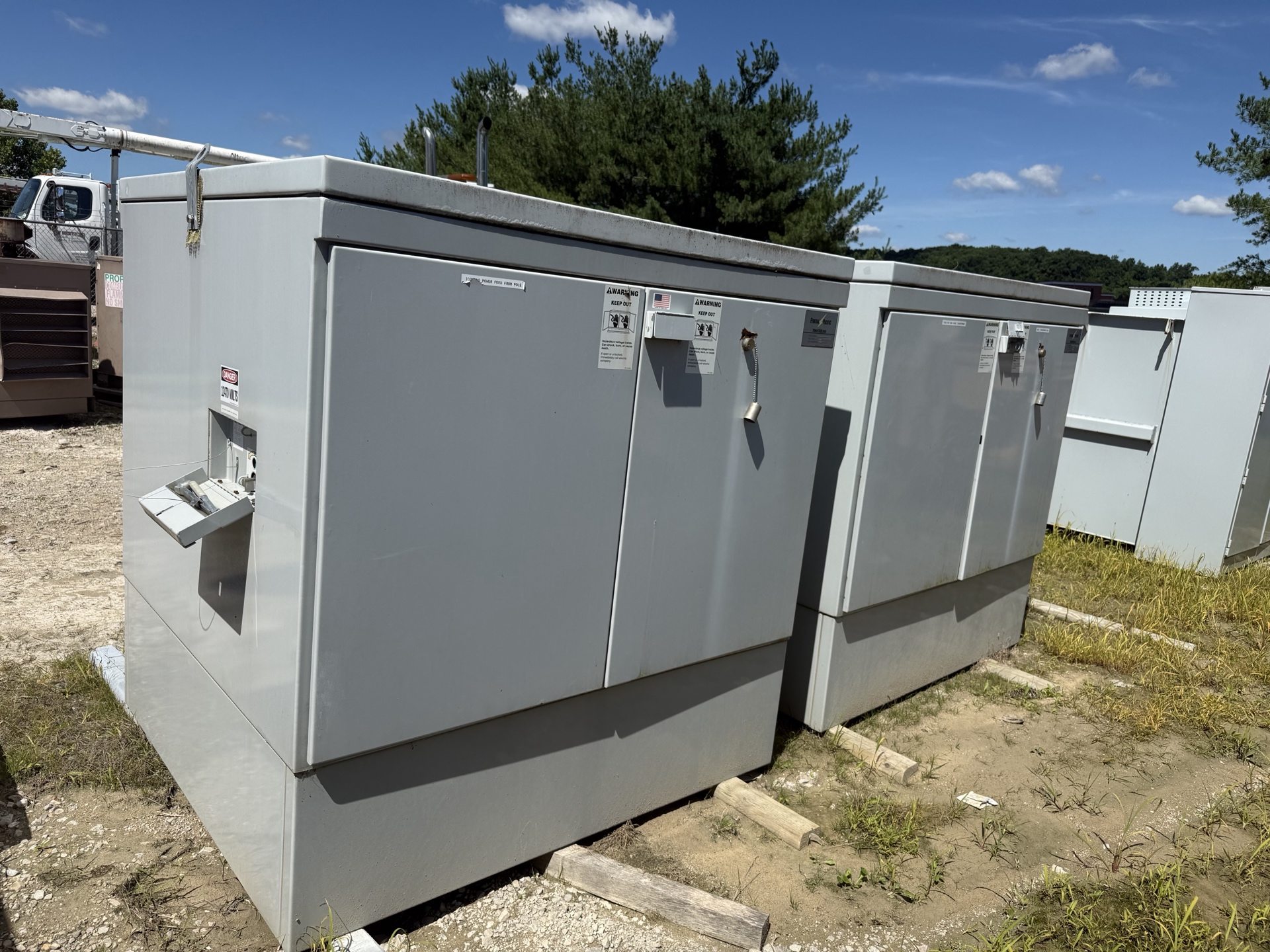
Start With What Is Already Known About the Equipment
Missing drawings do not prevent an owner or authorized representative from asking about surplus switchgear in Butler, Indiana. Begin with information already available in facility records, equipment lists, prior project documents, or observations made from a safe location. The goal is to describe the equipment well enough for an initial review, not to produce a complete engineering package.
Share the site location, who owns the equipment, whether it is still installed, and whether it is operating, if those details are known. If ownership or authority to discuss a sale is not clear, resolve that internally before representing the equipment as available. An inquiry is possible even when gear remains installed or operating; do not enter an unsafe area or approach equipment to gather details.
Use Exterior Labels Without Confusing Ratings With Live Conditions
If a nameplate or exterior label is already visible from a safe, accessible position, its wording can help identify the equipment. You may share the manufacturer name, type or designation, catalog or serial information, and stated electrical ratings as shown. A clear description or photograph can be useful, but do not put yourself at risk to obtain one, and do not remove covers or open equipment.
A printed voltage rating describes equipment specifications; it does not establish the voltage present at a particular moment. State the label information as a rating, and describe actual operating or electrical conditions only when they are already verified by a qualified source or existing records. If the live condition is unknown, say it is unknown rather than treating the nameplate as confirmation.
Describe the Layout in Practical, Approximate Terms
When formal drawings are unavailable, a rough section count can still provide useful context. For example, report that an assembly appears to have a certain number of adjoining sections, or describe its general arrangement based on what is already known. Make clear that a count is approximate if it has not been confirmed. Do not climb, move anything, or enter a restricted or unsafe area to improve the estimate.
Other existing information may clarify what is being discussed: whether the equipment is a switchgear lineup, switchboard, motor-control center, panelboard, busway, automatic transfer switch, breaker, or unit substation. A facility equipment list or project record may provide that identification. If the equipment type is uncertain, describe it as uncertain instead of guessing from appearance.
Report Known Condition and Mark Uncertainty Honestly
Share condition details that are already known, such as whether the equipment is surplus, used, decommissioned, still installed, or associated with a closed facility. Mention documented damage, missing components, or known maintenance concerns if those facts are available. Separate observed facts from assumptions: “reported decommissioned” is more useful than implying a verified status when no record confirms it.
Testing is not required for an initial sale inquiry. Do not open, operate, or test equipment to answer questions, and do not ask facility staff to do so for the inquiry. Never touch energized equipment. Sellers must not approach energized equipment, enter unsafe areas, or attempt to make equipment safe for a potential transaction.
Identify the Best Site Contact for Follow-Up
Provide the name or role of the person who can clarify existing records, ownership, location, and access coordination. That might be an authorized owner representative, facility contact, or project contact, depending on the site. Include a reliable way for the buyer to reach that person if you are authorized to share it; the contact need not personally perform electrical or material-handling work.
If more information is requested, explain what is unavailable rather than sending someone to retrieve it from an unsafe or inaccessible location. A site contact can help distinguish confirmed details from estimates and can identify who is authorized to discuss a possible sale. That keeps the conversation grounded in available information, even when drawings, complete inventories, or condition records are missing.
Understand the Purchase Review and Handling Responsibilities
The company buys surplus, used, and decommissioned electrical equipment; it does not sell equipment to the inquirer. It considers equipment across voltage classes, including gear associated with data centers and power plants. Information from the label, rough section count, known condition, and site contact can help the buyer assess whether to make a cash offer, but neither an offer nor a purchase is guaranteed.
For equipment that is purchased, payment is upfront, testing by the seller is not required, and freight is covered. The buyer handles disconnects, crane and rigging work, loading, freight, and hauling for purchased equipment; the seller does not perform or arrange those operations. Share what is safely available, then let the buyer clarify any remaining commercial questions without taking on electrical or handling tasks.