Separate the upgrade surplus from the project scope
An electrical upgrade can leave a contractor with equipment that is no longer needed for the job, even when it remains installed or forms part of a larger assembly. An initial discussion can identify known ownership and explain which items the contractor may be authorized to offer; uncertain details can be clarified before a transaction. Ownership may rest with the facility, a project client, a leasing party, or another entity. Confirming that authority early helps avoid evaluating gear that cannot be transferred.
Aurora-area contractors can describe the surplus without preparing it for removal. Share the site location, the equipment’s general role, and whether it is still installed, already removed, or expected to become available later. If ownership or the upgrade schedule is not settled, say so. A possible purchase depends on the details and is not guaranteed.
Give an honest estimate of when equipment may be available
Approximate availability is useful even when a project date could change. Explain whether the equipment is surplus now, tied to a planned replacement, or dependent on a client decision or schedule. If several sections will become surplus in stages, distinguish the expected timing for each group rather than presenting the entire lineup as immediately available.
These are planning details, not a request for the seller to move or disconnect anything. Sellers must never open, operate or approach energized equipment or enter unsafe areas. Never touch energized equipment. If gear remains installed or operating, an inquiry can still be made using information already available. Do not enter a restricted or unsafe area to collect details.
Describe what is included with the assembled gear
For an assembly being retired, explain what appears to accompany it: for example, associated breakers, control sections, busway, or other devices that are part of the surplus being offered. Clarify whether a device is included, excluded, or simply uncertain. This is more helpful than describing a lineup as complete when the scope has not been verified.
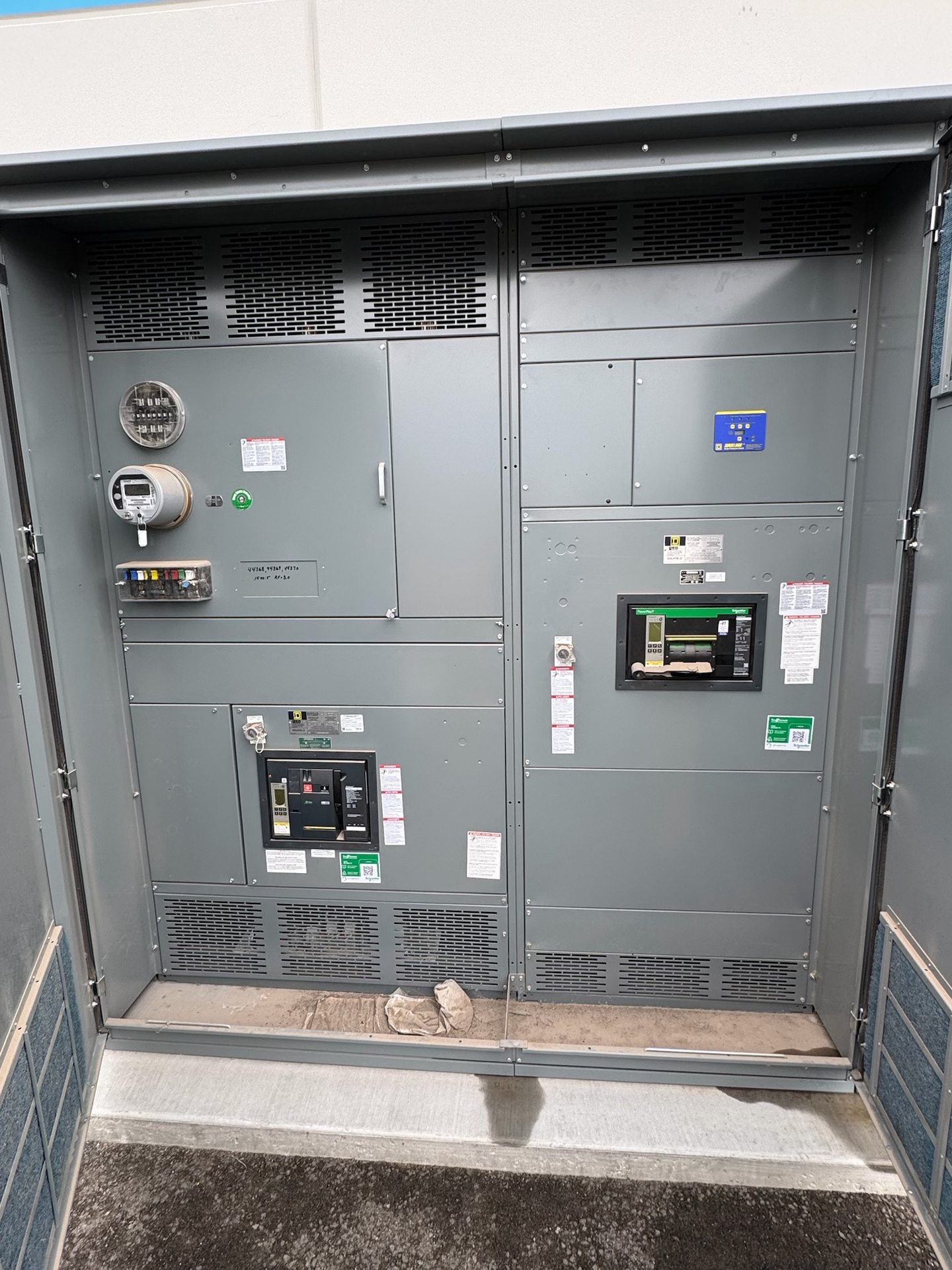
Where equipment is being offered as separate items, distinguish those items from devices that remain in service or belong to another project. An available equipment list, project record, or safely accessible exterior photograph may help establish the scope. Do not open enclosures or remove covers to answer questions. If a component cannot be confirmed from information already available, identify that uncertainty rather than guessing.
Share identifying information without treating estimates as facts
Useful information may include the equipment type, manufacturer name shown on existing records or a safely accessible exterior nameplate, approximate quantity, location, ownership, and known condition. Photos already on hand can provide context, but they are not required if obtaining them would mean approaching equipment or entering an unsafe area. No single detail has to be available before an inquiry can begin.
Keep ratings distinct from live operating conditions. A nameplate voltage rating describes equipment information; it does not establish the voltage present at a particular moment. Likewise, an estimated rating or an uncertain description should not be presented as verified. The buyer considers all voltage classes, but the actual markings and available records still matter when evaluating a specific lot.
Explain condition and testing status plainly
Describe what is known about the gear’s history and condition, including whether it is used, decommissioned, or part of a recent upgrade. Note visible damage or missing devices only when that information is already available. Avoid making claims about internal condition that have not been verified. A contractor can say that testing records are unavailable or that the equipment has not been tested for a potential sale.
Testing is not required to submit equipment for consideration. The business buys surplus, used, and decommissioned electrical equipment, including switchgear and related assemblies. It does not sell equipment to the contractor; an inquiry is for a possible purchase, and any cash offer depends on review of the specific equipment and scope.
Understand the handling boundary for a purchase
For equipment that is purchased, the buyer handles disconnects, crane and rigging work, loading, freight, and hauling. Freight is covered for purchased equipment. The seller does not perform or arrange those operations, and an inquiry does not authorize anyone to access, operate, or alter equipment. Until a purchase is agreed, do not assume that a sale, pickup, or payment is certain.
For purchased equipment, payment is made upfront, and the seller is not required to test it. Those terms do not guarantee that every lot will be purchased, establish a price, or promise a schedule. Providing a clear account of ownership, approximate availability, included devices, and known condition gives the buyer a practical basis to assess whether a transaction may fit the upgrade surplus.