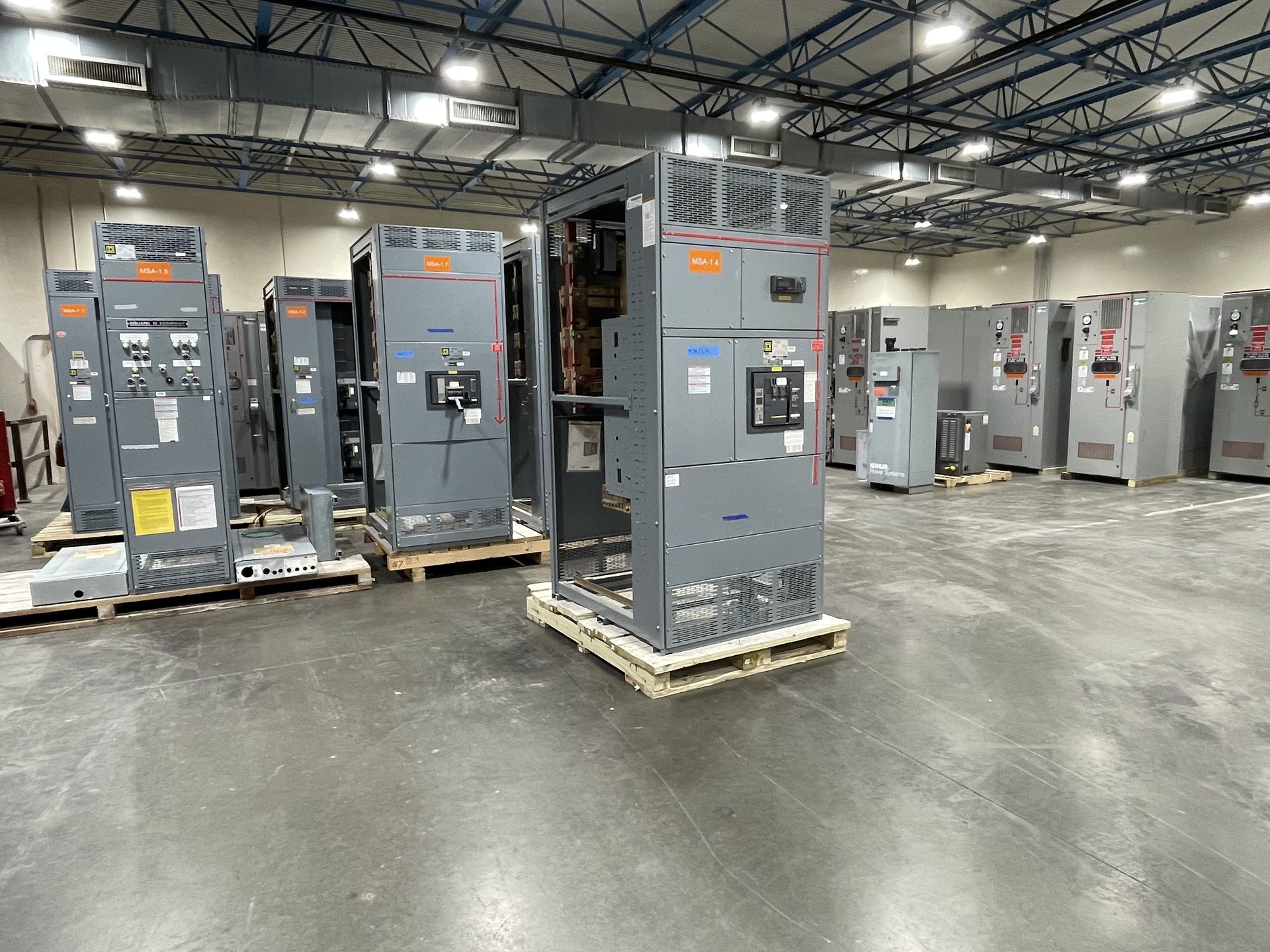
Describe the lot as separate pieces, not one uniform lineup
A surplus equipment lot may include switchgear sections, motor-control equipment, breakers, and other electrical assemblies collected at one facility over many years. Even when units sit together or appear to form one lineup, they may differ in rating, age, manufacturer, configuration, or condition. A useful first description identifies the equipment as a mixed lot and distinguishes what is known about each group. Avoid assigning one set of details to every section unless the available records confirm that they match.
You do not need to create a perfect inventory before making an inquiry. Share what is already available, such as an equipment list, exterior photos that can be taken safely, or records identifying the units. If the information is incomplete, say which details apply to particular sections and which remain uncertain. Clear limits on what you know are more helpful than a confident guess.
Keep ratings tied to the equipment they identify
For a mixed lot, voltage, current, interrupting, and other ratings should be associated with the specific section or component named on its label or in existing documentation. A rating printed on one section does not establish the rating of an adjacent section, a separate motor-control lineup, or every breaker in the lot. If a label is difficult to read or its connection to a particular unit is unclear, describe that uncertainty rather than extending the number to the whole group.
A nameplate rating is not a statement of the voltage present at the equipment now. Treat those as different kinds of information: report a rating only when it is legible or recorded, and describe operating voltage as unknown unless you have reliable information already available. All voltage classes are considered, so an incomplete or unfamiliar rating does not by itself prevent an inquiry.
Identify manufacturers without assuming they match
Adjacent sections can have different manufacturers, and components within a lineup may not share the same origin. Record a manufacturer only where an existing label, record, or other reliable source identifies it. If several sections are marked differently, name the variation where practical. If a mark is missing, obscured, or uncertain, say so; do not infer a manufacturer from the appearance of neighboring equipment.
Likewise, distinguish between a complete lineup and equipment that has been assembled from separate purchases or replacements. You can describe the lot as “mixed manufacturer” or “manufacturer information incomplete” when that is what the records support. The goal is to help evaluate what is actually included, not to make unlike sections sound interchangeable.
Share condition and completeness with useful qualifications
Use specific, grounded descriptions of known condition. For example, you might report that existing records identify a section as removed from service, or that a particular component is absent according to an inventory. Separate documented facts from visual impressions and from questions you cannot answer. If the equipment is still installed or operating, you may inquire using information already available; you do not need to approach it or obtain new information to start a conversation.
Testing is not required to submit an inquiry. Do not open, operate, or approach energized equipment to gather details, and do not enter an unsafe area. Never touch energized equipment. If a photo, label, or component cannot be accessed safely, leave it out and explain that the information is unavailable. An inquiry can begin with partial information rather than a seller taking risks to complete a checklist.
Explain where the equipment is and who can authorize its sale
Give the facility location and clarify your relationship to the equipment, including whether you are the owner or are authorized to represent the owner. For a mixed lot, mention whether all sections are included in the same potential sale or whether some are excluded. If equipment comes from a closed data center, power plant, or another facility, that context can help identify the lot, but it does not substitute for section-specific details.
Existing equipment schedules, removal records, and inventory notes can help describe scope. You are not expected to create records that do not exist or retrieve details from inaccessible equipment. Mark estimates as estimates and unknowns as unknowns. This keeps the discussion focused on the available facts and gives the buyer room to ask about particular items.
Understand the purchase and handling arrangement
The business buys surplus, used, and decommissioned electrical equipment; it does not sell equipment to the person making an inquiry. It considers switchgear and motor-control equipment across voltage classes, including mixed lots, but a purchase or cash offer is not guaranteed. For equipment it purchases, payment is made upfront, testing is not required, and freight is covered. These terms apply to purchased equipment, not automatically to every inquiry or every item in a proposed lot.
For a completed purchase, the buyer handles the crane, rigging, disconnects, loading, freight, and hauling. The seller does not perform or arrange those operations. Do not move, disconnect, lift, load, ship, or haul equipment to prepare it for review. Share the information already available and let the buyer assess whether the equipment is a fit for a potential purchase.