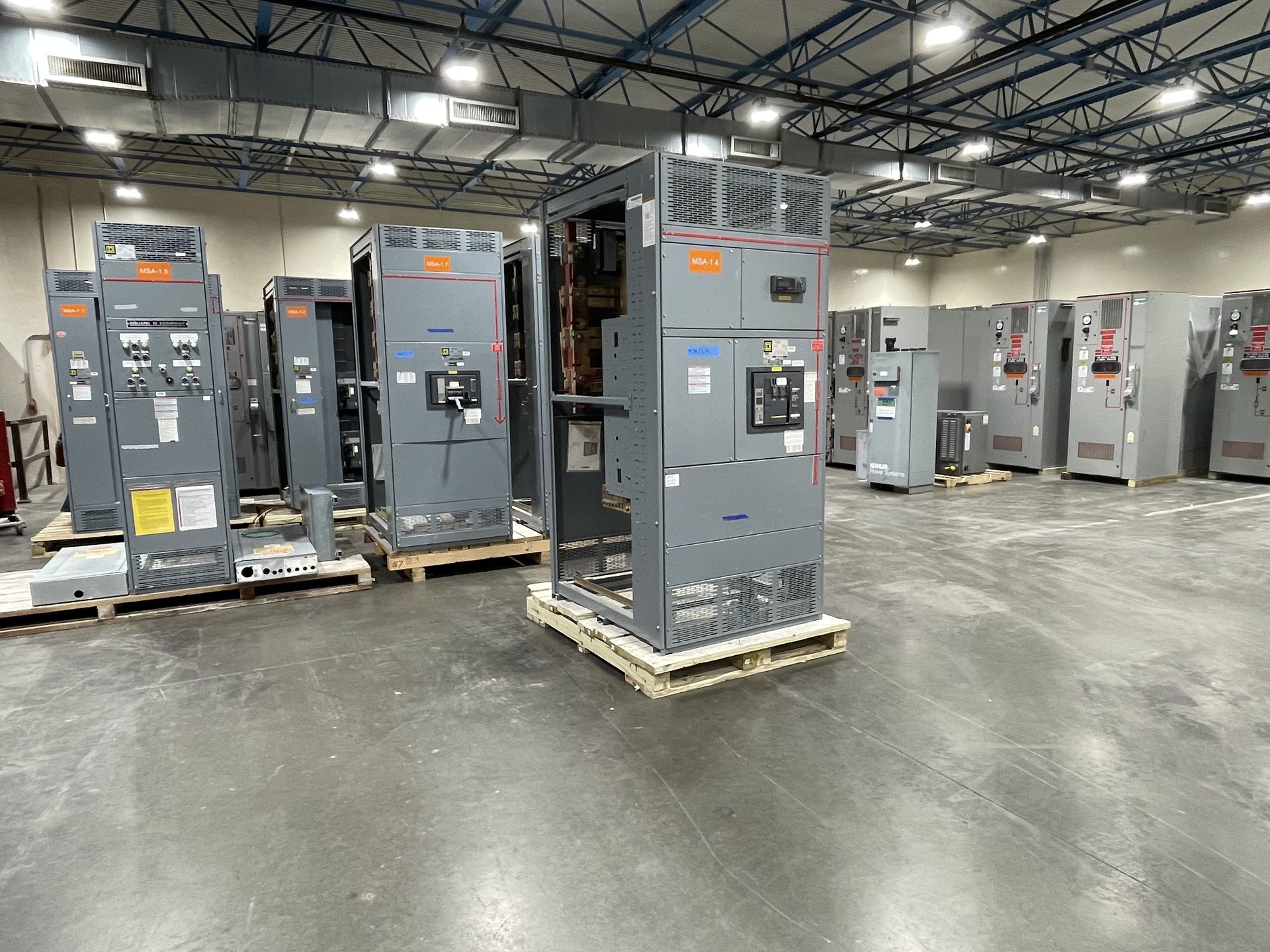
Start with the label, not the appearance
If you are assessing surplus Powell switchgear in Indiana, the safest useful starting point is information already available from the equipment’s exterior label or existing facility records. A manufacturer name on a safely accessible nameplate can help identify the equipment as Powell. A cabinet’s shape, paint, arrangement, or apparent age cannot establish its manufacturer or model. Do not infer a model from appearance, and do not approach equipment to obtain details.
Never touch energized equipment. Sellers must never open or operate gear, approach energized equipment, or enter unsafe areas. You may ask about equipment that remains installed or operating using information you already have; it does not need to be made safe or removed before an initial discussion. If a label is inaccessible, leave that information unknown rather than trying to reach it.
Use several clues without overstating certainty
A useful description may include the manufacturer shown on the label, the number of lineup sections, and a known voltage rating. These are separate clues, not substitutes for one another. A section count describes the lineup’s visible configuration; it does not, by itself, identify a model or establish the equipment’s electrical characteristics. Record the count only if it is apparent from a safe location or existing documentation.
When reporting voltage, distinguish the equipment’s marked rating from the voltage presently supplied to it. A rating on a nameplate is not proof of live voltage or current operating status. Share whether a figure comes from a label, a record, or another known source. If you are unsure, say so; a buyer can evaluate confirmed details and uncertainties without asking you to inspect the gear.
Share the information you already have
For an initial review, an owner or authorized seller can provide safely accessible exterior nameplate information, existing photographs, equipment lists, the site location, ownership details, and known condition. No single piece of information needs to be available before you make an inquiry. Do not open doors, take new photographs from an unsafe position, or obtain a missing rating through inspection. Existing records can be more useful than a guess based on cabinet design.
It also helps to describe the equipment’s context accurately. For example, say whether the lineup is surplus, used, or decommissioned if that is known, and whether it came from a facility such as a data center or power plant. Avoid describing uncertain information as verified. Clear distinctions let the buyer assess what is known while recognizing that identification and evaluation may remain incomplete.
Explain what is included in the opportunity
A switchgear lineup may be only one part of a larger surplus group. If available records identify related switchboards, motor-control centers, panelboards, busway, automatic transfer switches, breakers, or unit substations, mention them as separate items rather than assuming they belong to the Powell assembly. The buyer considers equipment across voltage classes, but that does not guarantee interest in or a purchase of any particular item.
Share the location and what equipment is included, especially if the available information describes a complete lineup or only some sections. Do not dismantle or move equipment to establish what is present. The buyer can review the information provided and determine whether to make a cash offer. An offer or purchase is not guaranteed, and a manufacturer label alone does not determine value.
Clarify payment and logistics before a purchase
For equipment that is purchased, payment is upfront, and the buyer covers freight. The seller does not need to test equipment as a condition of making an inquiry or receiving consideration. These terms do not promise that an offer will be made, establish a purchase price, or set a guaranteed schedule; confirm the applicable arrangements for the specific transaction.
For purchased equipment, the buyer handles disconnects, crane and rigging work, loading, freight, and hauling. The seller does not perform or arrange those operations. Do not disconnect, lift, load, ship, or haul the gear yourself. Keeping the responsibilities clear is particularly important when a lineup is installed or remains part of an operating facility.
Make the inquiry precise and cautious
A concise inquiry can identify the equipment as labeled Powell switchgear, state the known section count and marked voltage if available, and note what is uncertain. Add the Indiana location, ownership or authorization to discuss the equipment, and any existing photos or records that can be shared safely. You need not provide inaccessible details or claim a model that the label does not confirm.
This approach gives an equipment buyer a sound basis for review without confusing appearance with identification or a rating with live conditions. It also keeps the conversation focused on the actual surplus equipment, its known context, and whether a purchase may be possible, without performing unsafe inspection; the buyer handles purchased-equipment removal.