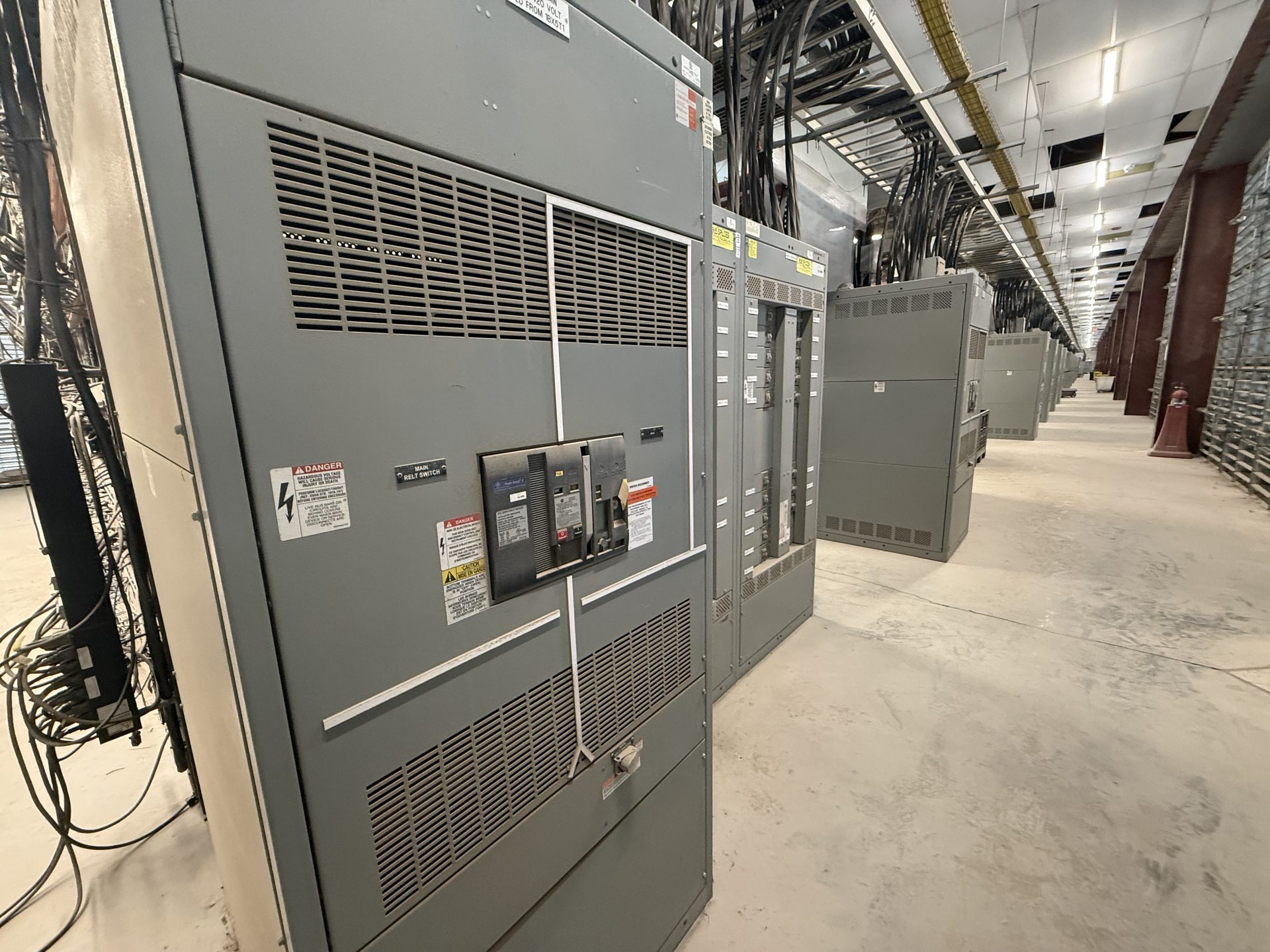
Separate surplus from equipment still serving the plant
A partial shutdown can leave one electrical lineup out of service while adjacent equipment continues to support production, utilities, or building systems. An initial inquiry can identify known assets and note which are released, remain in operation, or have an uncertain status. That distinction matters more than whether a room, process area, or production line has been described as closed.
Use records already available to identify the equipment under consideration: an equipment schedule, asset list, shutdown plan, or safely accessible exterior nameplate information may help. If the boundary between released gear and operating gear is uncertain, describe that uncertainty rather than treating the whole lineup as surplus. Never touch energized equipment. Sellers must not open, operate, or approach energized equipment or enter unsafe areas.
Keep shared electrical paths out of the sale by assumption
Equipment can appear dedicated to a closed process yet still support another area through a shared bus, feeder, control source, or transfer arrangement. Conversely, a unit that remains physically near active equipment may be fully released. Do not infer ownership or operating status from appearance alone. Refer to information already available from facility records or authorized personnel, and identify unresolved connections as questions for the plant’s responsible team.
A prospective buyer can consider information about equipment that is still installed or operating; it does not need to be represented as already removed or ready for pickup. The seller should not investigate by opening cabinets or interacting with gear. Clear boundaries allow the buyer and facility representatives to discuss a potential purchase without confusing sale scope with the plant’s operating responsibilities.
Describe ratings carefully and flag what is unknown
Useful existing information may include equipment type, manufacturer shown on a label, lineup or asset identification, location, ownership, known condition, and available photographs. Share what is safely accessible, but do not treat every detail as a prerequisite. If a nameplate cannot be read without approaching unsafe equipment, leave that information unknown. A photograph or schedule can be provided only when it is already available to the seller.
A voltage rating printed on a nameplate describes the equipment’s rating; it does not establish the voltage present at that moment. Likewise, a listed rating should not be substituted for verified operating conditions. State whether information comes from a label, a record, or someone’s report, and distinguish those facts from assumptions. All voltage classes are considered, but consideration does not guarantee that a particular asset will receive an offer.
Coordinate availability around the shutdown sequence
For a partial closure, the expected release date may be as important as the equipment description. Explain when the facility expects the asset to become available, whether that date is firm or provisional, and whether shutdown milestones could change it. Avoid promising access or a handoff date before the plant has confirmed that the equipment is released and the sale is authorized.
Also clarify whether the proposed scope is one component, a complete lineup, or several separate assets. If equipment remains installed while the facility determines the final boundary, say so. The buyer can evaluate the information and discuss timing, while the seller coordinates internally with the people responsible for plant operations and asset disposition. A discussion or preliminary cash offer is not a guarantee of purchase.
Understand what happens if equipment is purchased
The business buys surplus, used, and decommissioned electrical equipment; it does not sell equipment to the facility. For equipment it purchases, payment is upfront, testing is not required, and freight is covered. A purchase and its terms are not guaranteed, so confirm the proposed scope and arrangements rather than assuming that every item identified in a shutdown inventory will be accepted.
For purchased equipment, the buyer handles disconnects, crane and rigging arrangements, loading, freight, and hauling. The seller does not perform or arrange those operations. Do not move, disconnect, lift, load, ship, or haul equipment as part of making an inquiry. Keeping responsibility for those activities clear is especially important when operating plant areas remain beside the assets being considered.
Prepare a concise, accurate inquiry
An authorized seller can begin with the facility and asset location, a description of the equipment released, ownership status, known condition, available records or photos, and the expected availability date. Explain any uncertainty about shared service or shutdown timing. There is no need to obtain inaccessible nameplate details or create new records before asking whether the equipment may be of interest.
Switchgear, switchboards, motor-control centers, panelboards, busway, automatic transfer switches, breakers, and unit substations may all be considered, including equipment from closed data centers and power plants. A focused inquiry helps distinguish truly surplus gear from assets needed for remaining operations and gives the buyer a basis to assess the opportunity without asking facility staff to test or handle equipment.