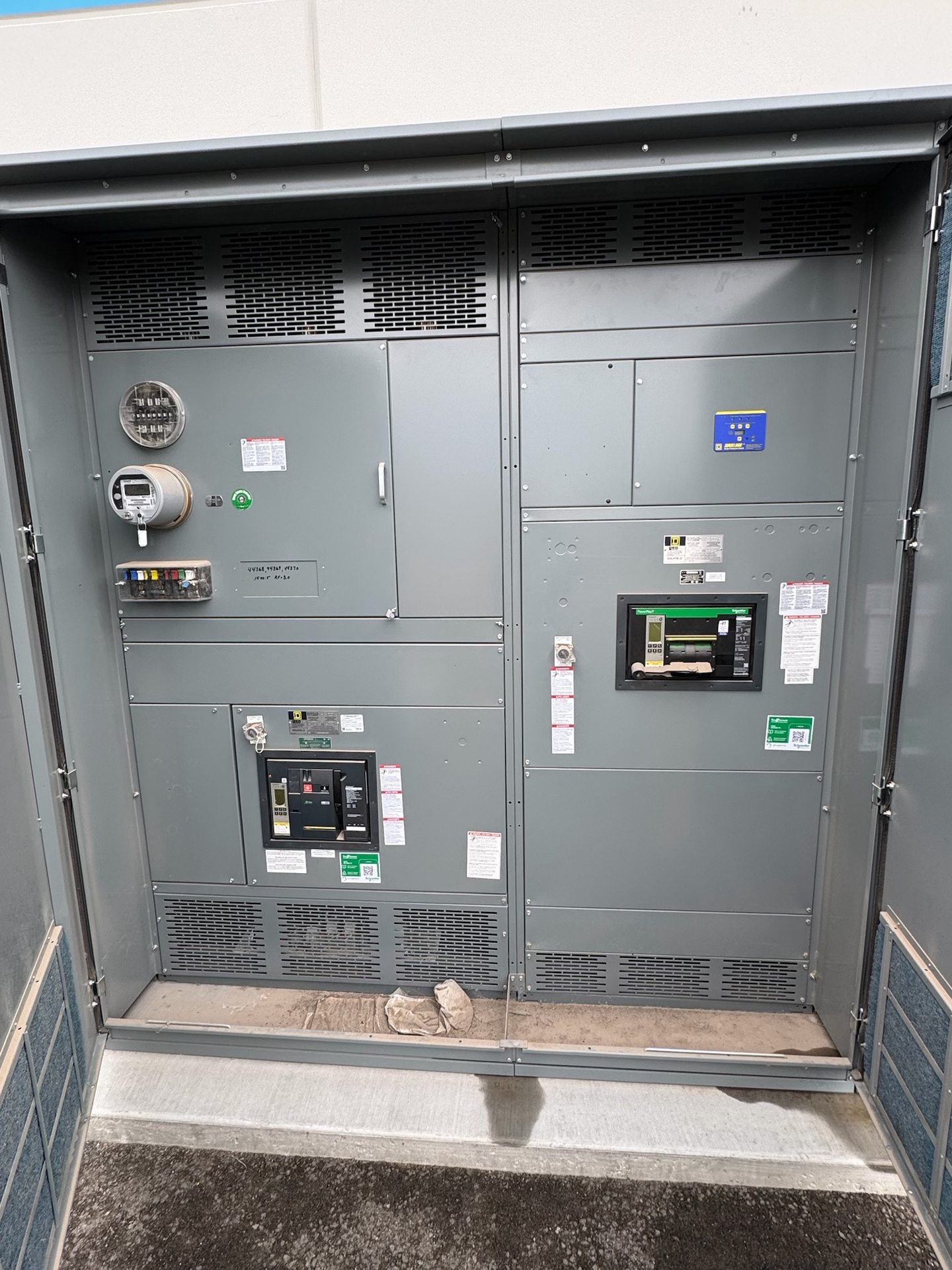
Separate retired switchgear from equipment still serving the plant
A plant closure can leave several electrical lineups in the same room, but not every lineup is necessarily surplus. Start with records already available to you: closure inventories, one-line diagrams, asset registers, equipment schedules, or decommissioning documents. Compare those records with safely accessible exterior labels and the physical lineup’s location. The goal is to describe which equipment is retired, which equipment remains in service, and where their boundaries appear to be—not to operate or inspect gear internally.
Where a lineup contains sections with different statuses, explain that clearly rather than presenting the entire row as retired. Note any known connections to operating equipment or shared assemblies, and distinguish confirmed information from assumptions. If the boundary is uncertain, say so. A buyer can review the information with you before deciding whether to consider a purchase; you do not need to resolve uncertainty by entering a restricted area or approaching equipment.
Describe ratings without treating them as live conditions
Information on an exterior nameplate may help identify a lineup, including its manufacturer, type, catalog or serial information, and stated ratings. Share only details you can access safely, along with existing photographs or records if available. A rating describes a marked equipment characteristic; it does not establish the voltage present at a particular moment. Do not interpret a nameplate rating as proof that equipment is energized, de-energized, or safe to approach.
If the label is obscured, missing, or difficult to read, report that rather than trying to reach it. Voltage class should not be guessed from appearance or from the facility’s service description. The buyer considers equipment across voltage classes, so an unknown or uncertain rating is useful context, not a reason to invent a number. Never touch energized equipment.
Gather useful closure information from existing sources
A concise description can help establish whether a retired lineup merits review. Provide the plant’s Indiana location, the equipment’s general area, the number of sections if known, and any existing inventory or photographs. Add the lineup’s known purpose, such as distribution or motor control, only when that information is supported by records or knowledge you can verify. Mention known condition or missing components as observations, and label estimates or secondhand information as such.
You are not expected to produce a complete technical file or test the equipment. For this buyer, testing is not required to discuss a potential purchase. Do not open, operate, or approach energized equipment to gather details, and do not enter unsafe areas. Information that is unavailable can simply remain unknown; an inquiry can begin with what is already accessible.
Confirm who has authority to discuss a sale
At a closing facility, ownership of the building, equipment, and closure inventory may rest with different parties. Before representing switchgear as available, establish who owns it or who has authority to act for the owner. That contact might be an asset manager, company representative, authorized seller, or other designated decision-maker. If your role is limited to providing facility information, make that distinction clear and identify the appropriate contact when known.
Clarify whether the proposed sale concerns a complete lineup, particular retired sections, or equipment already included in another asset transaction. Existing contracts, internal approvals, or unresolved ownership questions may affect whether a sale can proceed. Do not imply that an inquiry itself transfers ownership or commits the facility. The buyer can consider a cash offer, but a purchase and offer are not guaranteed.
Understand what the buyer handles if equipment is purchased
The business buys surplus, used, and decommissioned switchgear and related electrical equipment; it does not sell equipment to the facility. It considers all voltage classes, including equipment from closed manufacturing plants, data centers, and power plants. If equipment is purchased, payment is upfront, testing is not required, and freight is covered. These terms describe the buyer’s approach, not a promise that every lineup will be purchased or that a particular value will be offered.
For purchased equipment, the buyer handles disconnects, crane and rigging arrangements, loading, freight, and hauling. The seller should not perform or arrange those operations as part of discussing a sale. Do not move, lift, disconnect, load, ship, or haul equipment to prepare it for review. Any consideration of equipment that remains installed or operating can begin using information already available; sellers should not make it safe or change its status for an inquiry.
Make the initial inquiry clear and bounded
When contacting the buyer, summarize which lineup is retired, what remains in service, what records or safely accessible exterior information are available, and who is authorized to discuss a transaction. State plainly where details are uncertain. This gives the buyer a practical basis for review without requiring unsafe access, testing, or premature handling. If the buyer needs clarification, the authorized contact can respond using available records and information.