Start With the Retirement Scope, Not an Assumed Plant Closure
A steel facility may retire, replace, or consolidate distribution equipment without closing the entire site. For an authorized seller, the first useful step is to identify the specific gear being considered and distinguish confirmed retirement plans from possibilities still under review. A clear scope helps the buyer assess the equipment without treating a hypothetical project as a completed closure or assuming every electrical asset is available.
Describe the facility and the equipment group at a level you can confirm. For example, you might identify a group of switchgear associated with a retired process area while noting that other distribution equipment remains in service. If the retirement schedule or equipment ownership is not settled, say so. A cash offer is not guaranteed, and submitting information does not commit the facility to a sale.
Build an Inventory From Records You Already Have
Useful starting points include existing asset records, equipment schedules, project documents, and information already visible from a safely accessible exterior nameplate. You can share equipment type, manufacturer and model information when recorded, approximate quantity, location, and known condition. Photos can also help if they can be taken without entering an unsafe area or approaching energized equipment. Do not put anyone at risk to fill gaps in an inventory.
Describe what is known rather than converting estimates into facts. If a record lists a voltage rating but no one has verified the installed configuration, identify the rating as information from the record. A rating is not the same thing as live voltage at the equipment. If details are inaccessible or uncertain, say that plainly; the buyer can consider the information available rather than requiring you to obtain every detail.
Include More Than One Kind of Distribution Gear
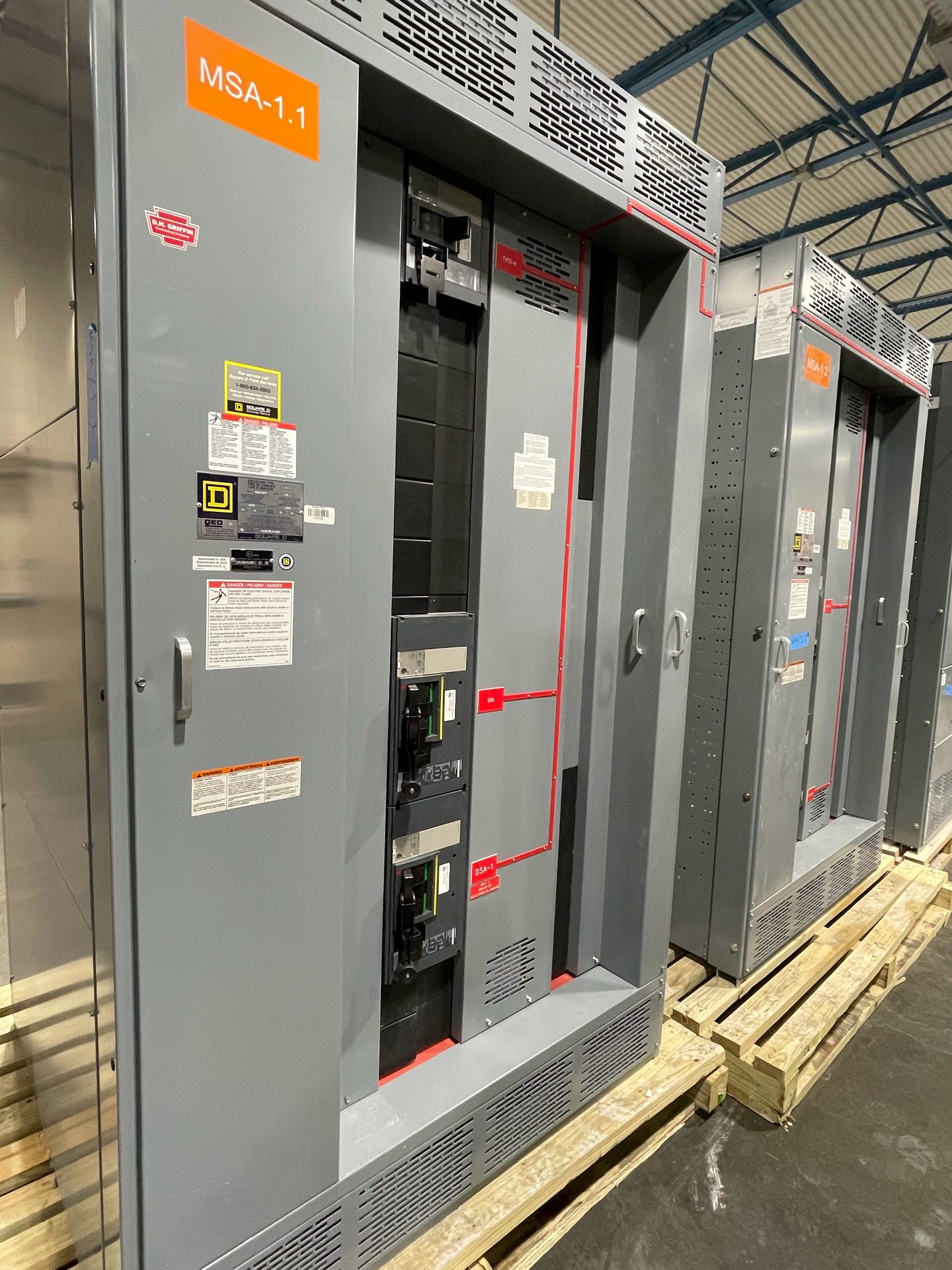
Steel facilities can have distinct equipment categories serving different parts of a site. An inventory might include switchgear, switchboards, motor-control centers, panelboards, busway, automatic transfer switches, breakers, or unit substations. Record categories separately where possible: a breaker may be an individual item, while a switchgear lineup or motor-control center is an assembly with its own identification and context. These items are not interchangeable simply because they are all part of electrical distribution.
Include equipment from varied voltage classes if it falls within the proposed retirement scope. The buyer considers all voltage classes, along with equipment from closed data centers and power plants, but consideration does not establish value or guarantee a purchase. If a schedule uses shorthand or conflicting descriptions, preserve the original wording and flag the discrepancy instead of guessing at a specification.
Document Access Limits and Known Condition
For each group, note whether it is still installed, whether it is operating, and any access restrictions already known to your team. Such information helps frame an evaluation; it does not mean the seller must make equipment safe, take it out of service, or arrange access beyond what is authorized. You may inquire about equipment that remains installed or operating using information already available.
Share known condition in specific, measured terms. For instance, distinguish a documented maintenance note from a visual description or an unverified report. If records are incomplete, state that rather than promising a condition that has not been established. Never touch energized equipment. Sellers must not open or operate equipment, approach energized equipment, or enter unsafe areas to collect details or support a potential sale.
Clarify Ownership and the Retirement Boundary
Before presenting equipment for consideration, confirm that the person making the inquiry is authorized to discuss it and that the facility can identify who owns the assets. Steel sites may include equipment associated with different operating areas, projects, or parties. If ownership or the retirement boundary is unclear, identify the uncertainty and resolve it through the appropriate internal process rather than presenting every item on site as available.
It can also help to distinguish equipment included in the proposed scope from gear that must remain in place or is still needed by an operating area. Existing location records and equipment lists are useful for that purpose. Do not infer that a whole building, production area, or plant is closing merely because some distribution equipment is being retired.
Understand What Happens if Equipment Is Purchased
The company buys surplus, used, and decommissioned electrical equipment; it does not sell equipment to the facility. A purchase is not guaranteed, and any offer depends on the information and equipment under consideration. Testing by the seller is not required. For purchased equipment, payment is upfront, and freight is covered; these terms do not guarantee that particular items will be purchased or establish a payment method or schedule before an agreement is made.
The buyer handles disconnects and the physical handling and transport of purchased equipment, including crane, rigging, loading, freight, and hauling. The seller does not perform or arrange those operations. In your initial documentation, focus on the equipment, ownership, location, available records, known condition, and access restrictions. Do not open, test, disconnect, move, lift, rig, load, ship, or haul equipment. Clear boundaries and candid records give an authorized seller a practical basis for discussing a possible retirement-equipment sale.