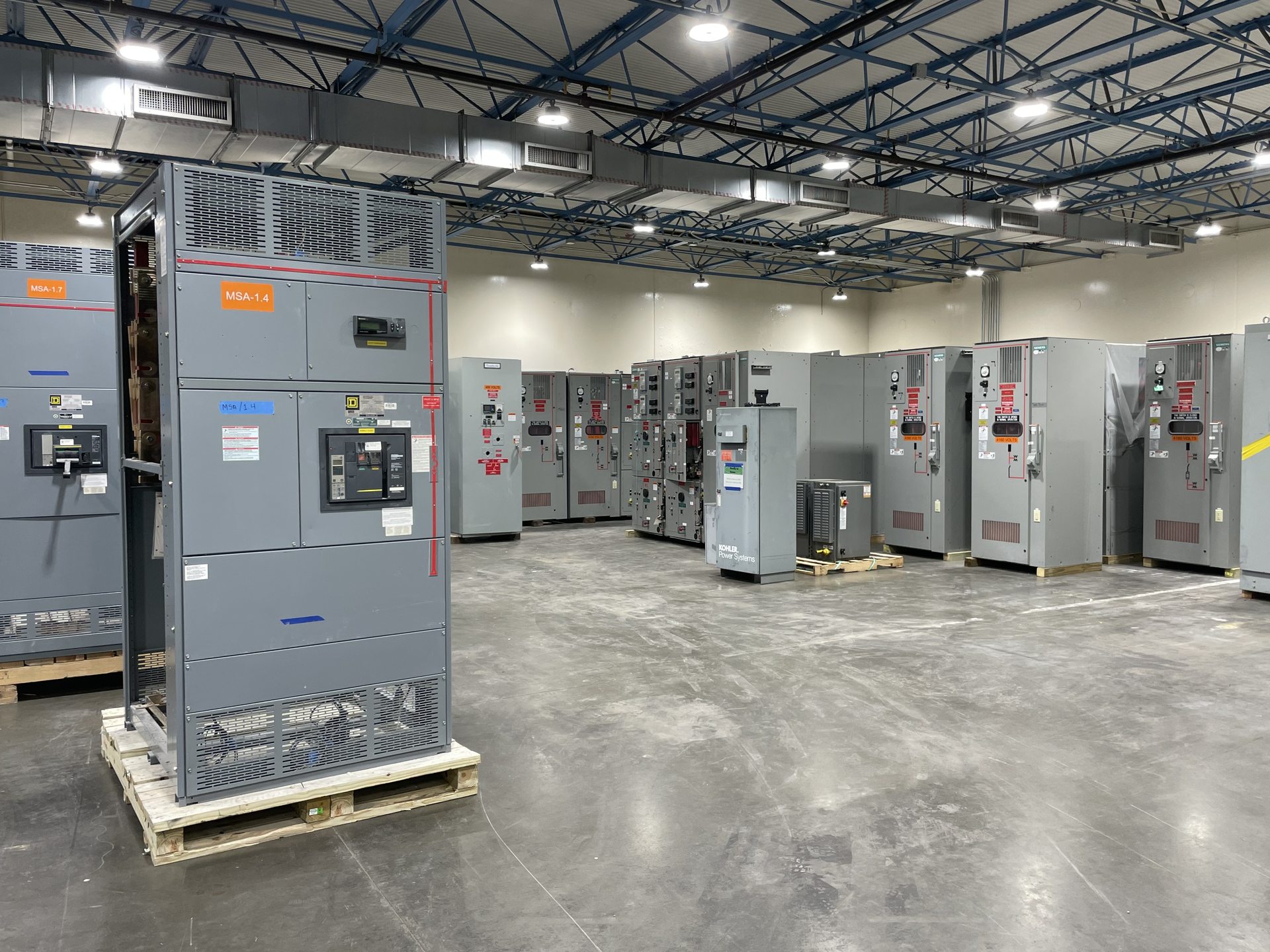
Start with the lineup as it exists
When an Indiana facility is considering a sale of installed or decommissioned switchgear, the buyer needs a clear picture of what is present before planning removal and transport. Existing overall dimensions, the number of lineup sections and the equipment’s location can help establish the scale and complexity of the handling plan. These details are useful for early evaluation; they do not require the seller to move, open or prepare the equipment.
Share information already available in facility records, equipment lists or prior documentation. If dimensions are unknown, say so rather than estimating as though a measurement were verified. A lineup’s apparent size in a photograph may not show its full extent, and a recorded dimension may describe one section rather than the entire assembly. Identifying what a number refers to helps the buyer interpret it correctly.
Section count helps describe the scope
Report the known number of sections and, if records show it, their arrangement or relationship to the rest of the electrical system. A lineup made up of several sections presents a different planning question from a single cabinet, even when the equipment category is the same. Section count can help the buyer understand the extent of the equipment under consideration and ask focused follow-up questions.
Do not assume that each section can be handled separately, or that a visible seam means the equipment is designed to separate there. The buyer will assess the equipment and determine the appropriate approach for any purchased gear. Sellers should not open, dismantle or alter a lineup to provide more detail. If the available count is uncertain, identify it as an estimate or explain that it has not been confirmed.
Location can matter as much as size
Describe where the equipment is situated using information you can share safely: for example, whether it is in a room, at a particular level of a building, or within a larger facility area. Existing site plans or facility records may help clarify the location. Access constraints visible in documentation, such as a narrow passage noted on a plan, can also be useful to disclose without asking anyone to inspect an unsafe area.
Location informs the buyer’s review of the removal and transport plan, but it does not make the seller responsible for planning or performing the work. Do not approach energized equipment or enter an unsafe area to collect measurements or photographs. Never touch energized equipment. If the switchgear is still installed or operating, an inquiry may still be made using information already available; do not put yourself at risk to gather additional details.
Share dimensions without creating a new task
Useful records might include exterior height, width or depth, but only when those figures are already available and their scope is clear. Note whether a dimension refers to one section, the whole lineup or a documented shipping configuration, if that distinction is known. Existing photographs can provide context, but should not be treated as a substitute for confirmed measurements.
It is equally useful to say when dimensions are unavailable. The buyer can decide whether further information is needed and how to evaluate the equipment. Sellers should not measure near equipment, remove covers, disconnect wiring, lift components or arrange for someone else to do those tasks. No seller testing is required for consideration, and an inquiry does not depend on obtaining information that cannot be accessed safely.
Keep ratings separate from live conditions
Equipment records may state a voltage rating, but that rating describes the equipment’s designation, not necessarily the voltage present at the moment. Share the label information only if it is safely accessible from existing records or an exterior view. Do not treat an assumed rating as verified, and distinguish documented facts from uncertainty. The buyer considers equipment across all voltage classes, so an unknown or unusual rating can be identified as such rather than used to rule out an inquiry.
Known condition, ownership, location and equipment type can also help the buyer review a potential purchase. Provide what is available without entering restricted spaces or examining equipment. The business buys surplus, used and decommissioned switchgear and related electrical equipment; it does not sell switchgear. A cash offer is not guaranteed, and neither a particular price nor a purchase is assured.
Clarify who handles purchased equipment
If equipment is purchased, the buyer handles disconnects, crane and rigging arrangements, loading, freight and hauling, and covers freight. The seller is not expected to perform or arrange those operations. This division matters when discussing an installed lineup: the seller’s role is to share available information and confirm relevant ownership or facility details, not to prepare the equipment for removal.
For purchased equipment, payment is made upfront, and testing is not required from the seller. These terms do not promise that an offer will be made or that every item will be purchased. A useful initial description focuses on what is known: approximate or recorded dimensions, section count, location, equipment identification and any documented condition. Clear labels about what is confirmed and what remains uncertain give the buyer a sound basis for reviewing the opportunity without placing the seller in charge of rigging or unsafe work.