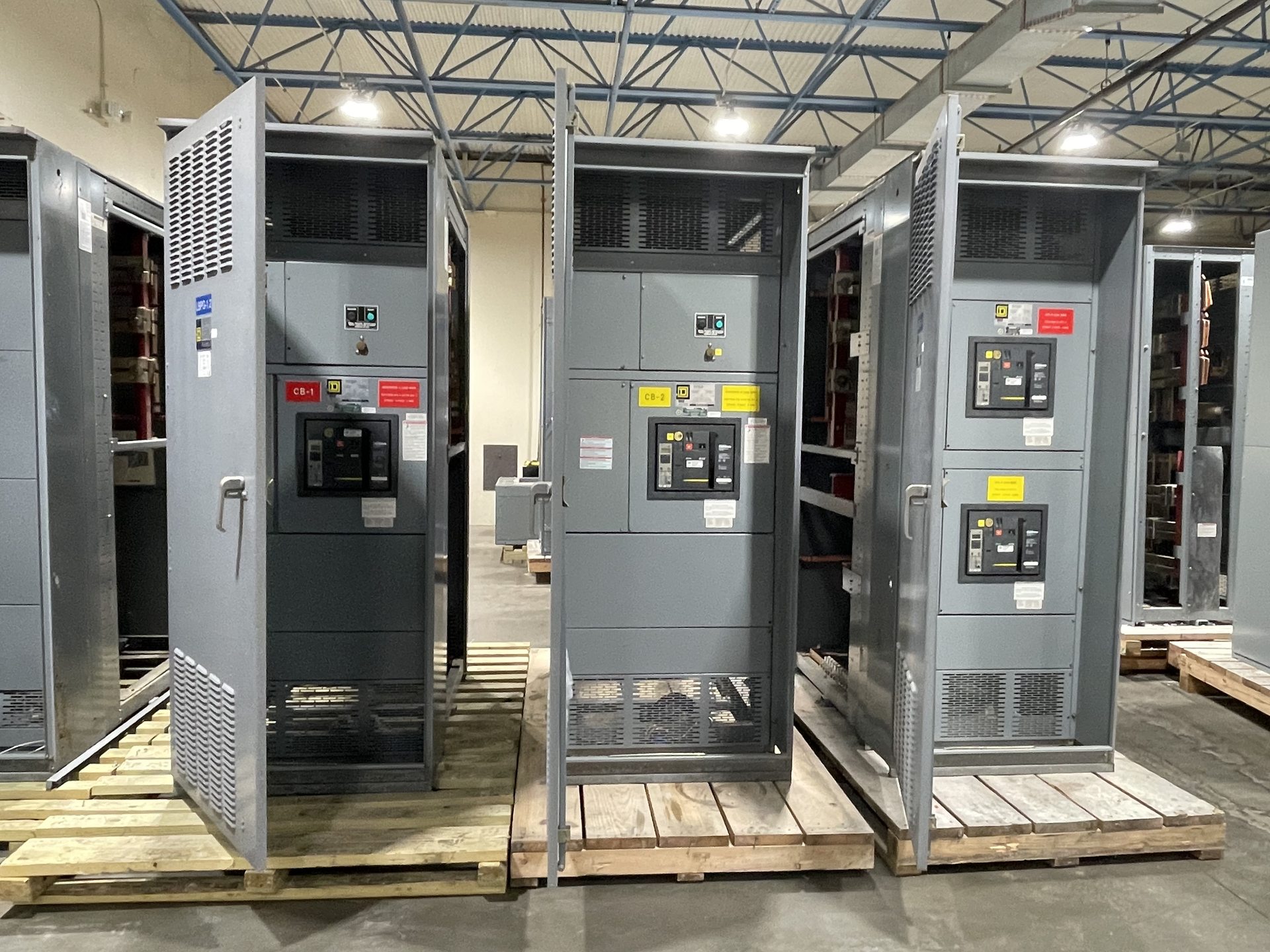
Why Exit Constraints Matter Before a Switchgear Sale
A narrow doorway, low overhead clearance, tight corridor, or restricted service entrance can affect how a buyer evaluates equipment removal from an Indiana facility. Sharing these constraints early helps the buyer consider the site alongside the equipment description, rather than treating removal as a separate detail discovered later. It does not establish that a particular route or removal method will work; that depends on the equipment and the actual conditions.
The useful starting point is information already available to you. Existing building plans, prior project records, equipment schedules, or previously recorded measurements may describe the route. If you do not have reliable information, say so. You are not expected to enter a restricted area or obtain measurements that would require approaching equipment or creating a safety risk.
Describe the Route Without Taking New Risks
When records are available, identify the relevant doorway or passage and share its recorded clear width and height, if known. Other useful context may include a turn in the corridor, a change in floor level, a low ceiling, a doorway threshold, or a route that passes through another room. These details help explain why a listed doorway dimension alone may not describe the full path.
Do not open, operate, or approach energized equipment, and do not enter an unsafe area to inspect a route. Never touch energized equipment. A seller may ask about equipment that remains installed or operating using information already available, such as existing records or safely accessible exterior nameplate details. A conversation does not require you to make the equipment safe or to verify information you cannot safely access.
Separate Recorded Dimensions from Assumptions
Be clear about what a measurement describes and where it came from. A plan dimension, a prior measurement, and a rough estimate are not equally certain. Label an estimate as an estimate, note when a drawing may be outdated, and distinguish an unobstructed opening from a passage whose usable space may be reduced by features shown in the records. This gives the buyer context without presenting uncertain details as verified facts.
Equipment information can be shared in the same careful way. Existing equipment lists, safely accessible exterior photographs, location, ownership, and known condition may help identify what is being considered. A nameplate rating is not the same as the voltage currently present, and an unclear or unavailable label should remain an uncertainty rather than be guessed. You do not need to collect every detail before making an inquiry.
Removal Planning Depends on More Than the Doorway
Route constraints are one part of a broader review. The equipment’s general configuration, available records, location, and the building conditions described by the seller may all inform planning. A buyer may need to assess the situation further before determining whether a purchase is practical. Sharing a tight turn or limited overhead clearance is useful even when you do not know how it will affect the eventual plan.
For that reason, avoid assuming that a particular passage guarantees removal or that a constrained route rules it out. No specific method can be promised from a doorway measurement alone. The buyer considers the information provided and determines what can be evaluated; the seller should not be asked to test, disconnect, move, lift, load, ship, or haul equipment as part of making an inquiry.
What the Buyer Handles for Purchased Equipment
The business buys surplus, used, and decommissioned electrical equipment, including switchgear and related power equipment, and considers all voltage classes. Equipment from a closed data center or power plant may also be considered. It buys equipment rather than selling it. For equipment it purchases, the buyer handles disconnects, crane and rigging arrangements, loading, freight, and hauling, and covers freight. These responsibilities do not mean a purchase or a particular removal plan is guaranteed.
Testing is not required from the seller. If the equipment remains installed or operating, you can still inquire using information already available, without approaching it or changing its condition. If the buyer is interested, the next discussion can account for the route constraints and available records. Do not treat an inquiry as authorization to begin removal work.
Prepare a Useful, Cautious Inquiry
A concise description can include the equipment type, facility location, ownership, known condition, and any existing route information that is safe to share. Include the source or uncertainty of doorway dimensions where helpful, but do not feel obliged to supply measurements you do not already have. The buyer may review the information and, if appropriate, make a cash offer; an offer or purchase is not guaranteed. If equipment is purchased, payment is upfront, but neither payment terms nor a purchase should be assumed before the buyer confirms an agreement.
Keeping the conversation within known facts helps both sides assess the opportunity without turning the seller into the removal planner. Share records and observations you already possess, identify constraints plainly, and leave the evaluation and handling of purchased equipment to the buyer.