Start with a separate site record for each location
When electrical equipment is spread across Indiana facilities, describe the opportunity site by site rather than treating it as one undifferentiated inventory. A useful first record identifies the facility or site, its address or location description, the equipment believed to be available, and the person authorized to discuss access and release. If several buildings share a location, note the building or area when that information is already available. This helps an evaluator distinguish equipment at one site from similarly described gear elsewhere without assuming that every item can be handled in the same way.
Include a contact who can answer ownership and scheduling questions, and clarify that person’s role. The person providing equipment details may not be the one who controls facility access or authorizes release. If authority is shared, identify the appropriate contacts rather than assuming one employee can approve every item. Do not include private access instructions in an initial inventory; coordinate any necessary access discussion with the appropriate facility representative.
Describe release timing as a planning input
For each site, give the earliest date equipment could be released, a preferred period, or a known restriction such as a scheduled project milestone. Mark dates as tentative when approvals, building plans, or other work could change them. If multiple locations have different timing, preserve those differences. A release date helps clarify the seller’s expectations; it is not a commitment that a buyer can collect equipment on that date or follow a particular pickup schedule.
There may be reasons to coordinate equipment from more than one site, but the locations should still be evaluated individually. Access arrangements, available information, ownership approval, and the scope of a possible purchase can differ from facility to facility. Ask what timing and coordination may be feasible after the equipment and sites have been reviewed, rather than promising a single visit or fixed sequence in advance.
Make the equipment description useful without filling gaps by guesswork
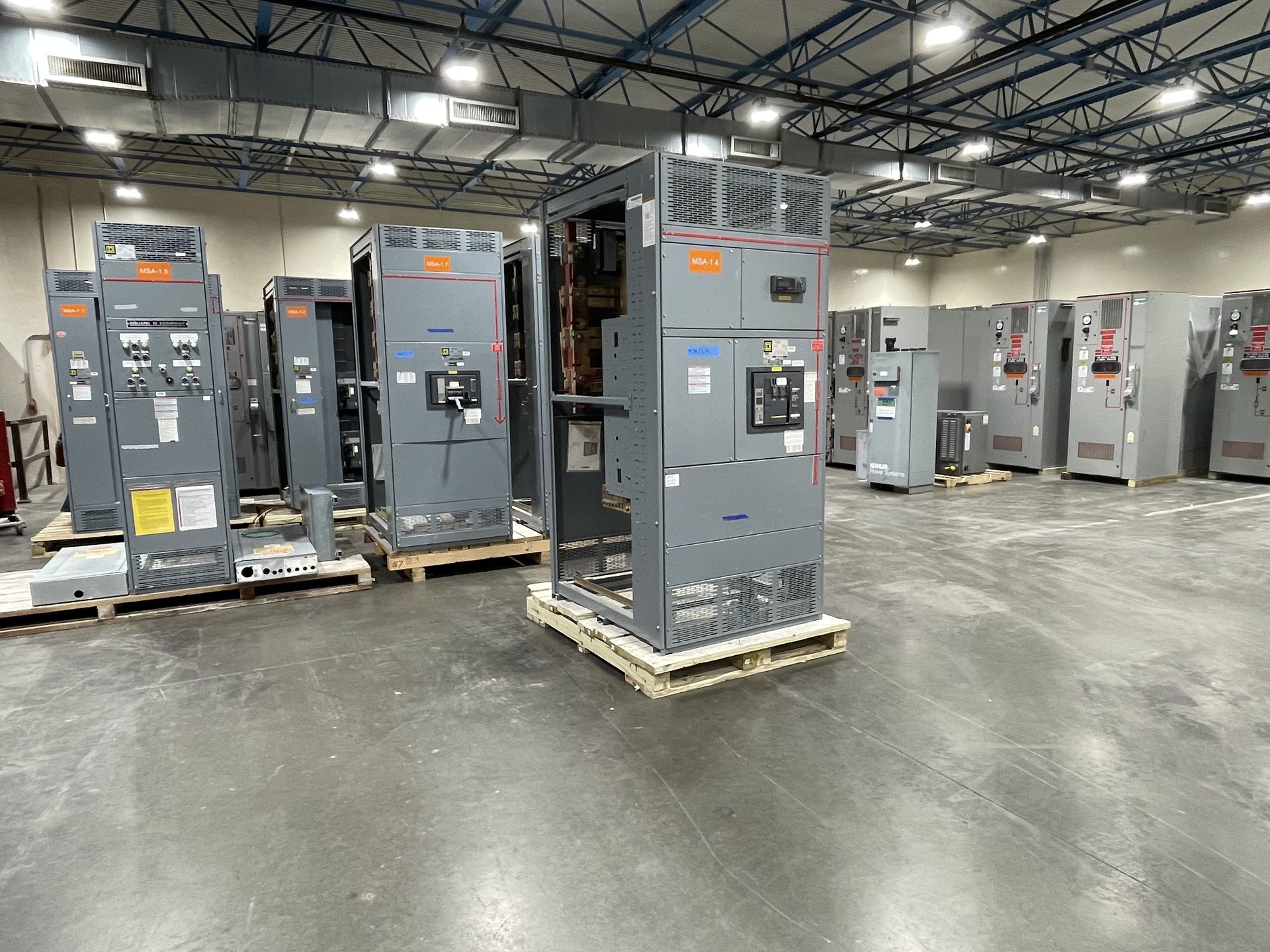
Share information already available, such as equipment type, quantity, manufacturer markings, nameplate details that can be read safely from an accessible exterior, photographs, existing equipment lists, location, ownership, and known condition. Relevant categories may include switchgear, switchboards, motor-control centers, panelboards, busway, automatic transfer switches, breakers, or unit substations. The buyer considers surplus, used, and decommissioned equipment across voltage classes, including equipment associated with closed data centers and power plants; that does not mean every item will be purchased.
Keep a rating shown on a nameplate distinct from a statement about live voltage. A rating describes marked equipment characteristics, while whether equipment is energized is a separate matter. If a detail is uncertain, label it as unknown or unverified instead of presenting an assumption as fact. A seller does not need to test equipment, and missing information that cannot be obtained safely should not be treated as a reason to approach it or access an unsafe area.
Define what is included in the proposed sale
Clarify which items the seller is offering and which are excluded, especially where nearby equipment, connected assemblies, or material at the same facility could be mistaken as part of the same scope. An existing inventory can help, but note any uncertainty about quantity or boundaries. Confirm who owns the equipment or is authorized to represent its owner. A site contact’s ability to discuss access does not, by itself, establish authority to sell; keep those questions distinct.
The business buys equipment; it does not sell gear to the facility. A cash offer may be considered after the available information and proposed scope are reviewed, but neither an offer nor a purchase is guaranteed. For equipment that is purchased, payment is upfront. These terms do not establish a purchase price, a minimum value, or a fixed collection date, so keep commercial decisions separate from tentative site planning.
Confirm handling responsibilities before coordinating a site
For purchased equipment, the buyer handles disconnects, crane and rigging work, loading, freight, and hauling, and covers freight. The seller should describe access constraints already known and identify the appropriate site contact; the seller is not expected to perform or arrange those handling operations. Discuss how the buyer’s responsibilities apply to the specific purchase and location before treating the scope as settled. Freight being covered does not guarantee a particular pickup time or remove the need to agree on what equipment is included.
Never touch energized equipment. Sellers must not open or operate equipment, approach energized equipment, or enter unsafe areas. An inquiry can still be made about gear that remains installed or operating, using information the seller already has. Do not move, disconnect, test, or otherwise prepare equipment for a potential sale. If access or release conditions are unclear, record the uncertainty and discuss it with the buyer without entering the area or asking someone to make the equipment safe.
Keep multi-site discussions traceable
Use consistent site labels across equipment descriptions, photographs, ownership information, access contacts, and timing notes, while keeping each location’s facts separate. When information changes, identify what changed and which site or item it concerns. This reduces confusion when a proposed scope is reviewed and gives both parties a clearer basis for discussing which equipment, if any, may be purchased. A complete record supports planning, but it should not be mistaken for a confirmed sale or a guaranteed pickup schedule.