Selling switchboard equipment
Planning to sell switchboard equipment in Terre Haute, Indiana? An owner or authorized representative can describe the equipment and request a cash offer. The business buys electrical distribution equipment across voltage classes, pays upfront for a purchase and covers freight. Testing is not required. The actual equipment, condition and transaction details matter, and an offer or purchase is not guaranteed.
Understand the equipment and project
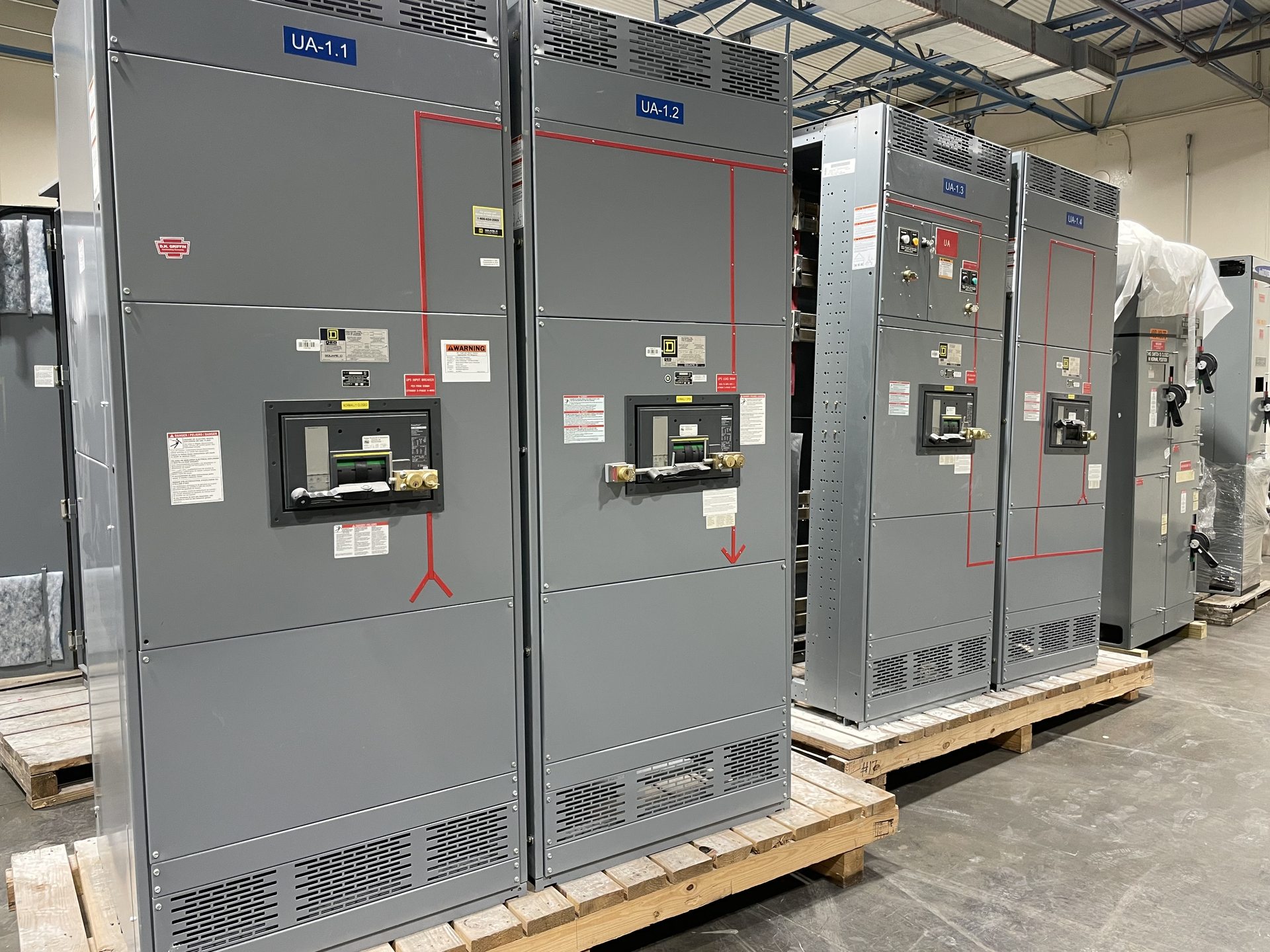
A switchboard may include a main section and distribution sections, so note whether the available material is a complete assembly or individual sections. If safely visible, identify the main current rating, the manufacturer, protective devices and the approximate section count. Panel schedules or drawings can add context, but they are not required to make an initial inquiry.
Plan around the actual site
A seller in Terre Haute, Indiana may be describing equipment from a renovation, a change in operations or an inventory of stored surplus. Identify the switchboard equipment offered and its location. If several sections or devices are involved, group them by type and condition so the buyer can understand the scope without assuming everything at the site is for sale.
A practical starting point
The first step is to define the property being offered. An owner might have one item, a multi-section lineup or a combination of loose electrical devices. For switchboard equipment in Terre Haute, Indiana, note the approximate count and where each group is located. If the sale depends on an upcoming project, an estimated availability date is useful, but it is fine to say that the date is not yet established.
Information that helps identify equipment
Think of the nameplate as a starting point, not a requirement to investigate live electrical equipment. A written list of manufacturer, model, voltage, current rating and quantity can also be useful. Include any available list or drawing if it clarifies what belongs to the lot. Do not infer a specification from appearance or collect information by accessing energized parts.
Describe condition without testing
An honest condition description can be simple. Let the buyer know whether switchboard equipment is in storage, remains installed or has visible missing parts, and share photographs where safe and available. Avoid promising a condition you cannot verify. An inquiry is considered on its own facts.
Organizing a mixed inventory
A single inquiry can describe a mixed group, provided the seller makes the boundaries clear. Record where each group is stored, its approximate quantity and any markings already known. Where several items have different manufacturers or ratings, list them separately rather than assigning one label to the whole group. Approximate counts are useful at the beginning; identify them as estimates if a final inventory is still being prepared.
Cash offers and upfront payment
A cash offer begins with an understanding of what is being offered and where it is located. This business is a buyer only, and payment for a purchase is upfront. The offer, if made, depends on the information and circumstances of the particular lot; it is not a promise to purchase every item. The seller can review the proposed transaction before proceeding.
Rigging, disconnects and logistics
For a purchase, the buyer handles all rigging and logistics: crane, rigging, disconnects, loading, freight and hauling are on us. The seller does nothing but get paid. To coordinate the work, share the equipment location, whether pieces are together or spread out, and the expected availability date. Mention any access restrictions or site contact requirements that are already known.
Safety and authority to sell
Only someone authorized to sell the equipment should arrange the transaction. Coordinate access with the facility owner and explain any site procedures. Never open, operate, test or disconnect equipment merely to obtain details for an inquiry; the buyer handles disconnects. If equipment is still in service, explain its status and the expected project schedule instead.
Prepare for the next conversation
The next step is to request a cash offer for the identified equipment. Mention any uncertainties so the buyer can ask focused follow-up questions. A straightforward account of the equipment and the project is more valuable than a polished but inaccurate inventory. Request a cash offer and discuss any remaining questions before the transaction.